Category: Hindu Goddesses

Explore the sacred stories, traditional symbolism, and spiritual significance of Hindu goddesses with Awake and Conquer.

Discover Durga and her nine forms celebrated during Navratri, along with Lakshmi, Saraswati, Parvati, Kali, and more. Through respectful introductions and thoughtful reflections, explore themes of devotion, courage, wisdom, abundance, and compassion.

This collection includes Shorts, longer videos, and original affirmations inspired by these themes, with reverence for the Hindu traditions from which these sacred stories come.

  • The 9 Forms of Durga Explained | Navratri’s Divine Feminine Wisdom

    The 9 Forms of Durga Explained | Navratri’s Divine Feminine Wisdom

    Strength can take many forms. Sometimes it is the courage to speak. Sometimes it is patience. And sometimes it is the compassion that helps us begin again.
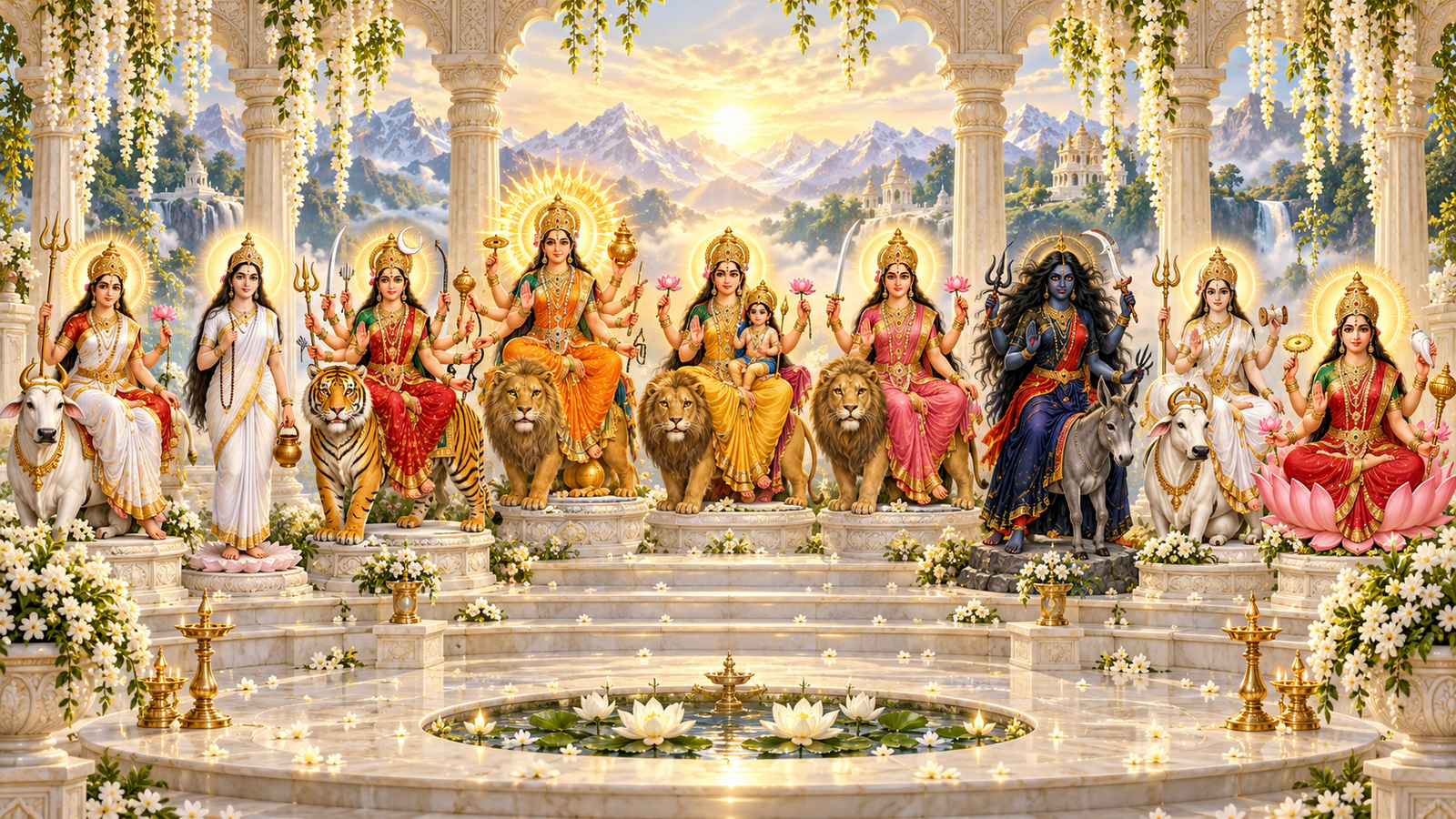
    Navratri offers a sacred occasion to encounter these qualities through the worship of Goddess Durga. In the Navadurga tradition, devotees honor nine distinct forms of the Goddess, each with her own name, sacred stories, and imagery.
    In our Awake and Conquer video, “The 9 Forms of Durga Explained | Navratri’s Divine Feminine Wisdom,” we introduce these nine goddesses and pause with a reflection inspired by each.
    These reflections are invitations for everyday life, offered with respect for their Hindu roots.


    What Is Navratri?
    Navratri means “nine nights.” Across Hindu communities, its observances include worship, prayer, fasting, music, dance, and gatherings. Practices vary by region, family, and tradition.
    The Navadurga are nine forms of Goddess Durga honored in a traditional sequence during the festival. Learning about them offers an introduction to the richness of Hindu devotion and an opportunity to reflect on how we live.

    1. Maa Shailputri: Steadiness and a Grounded Beginning
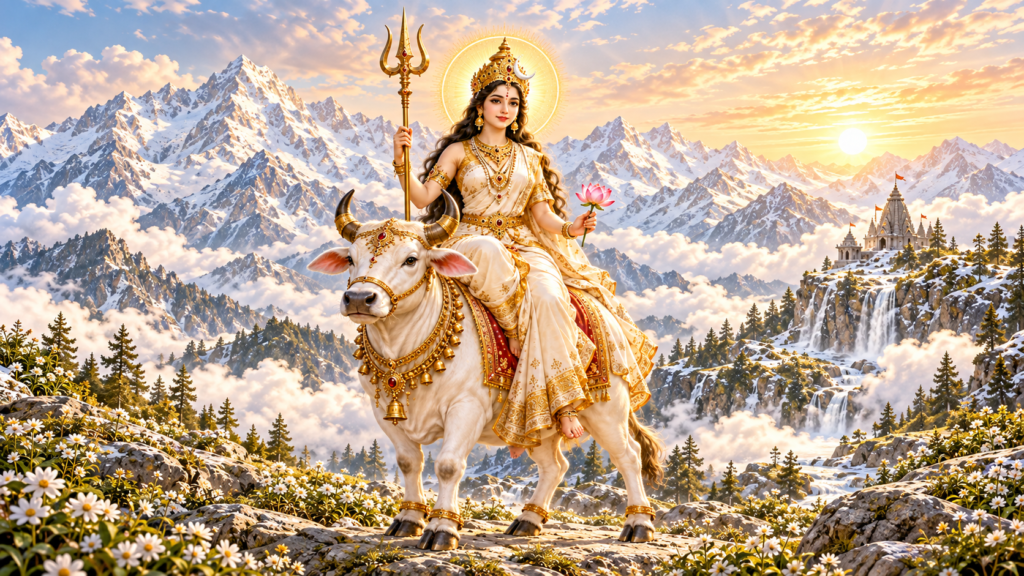
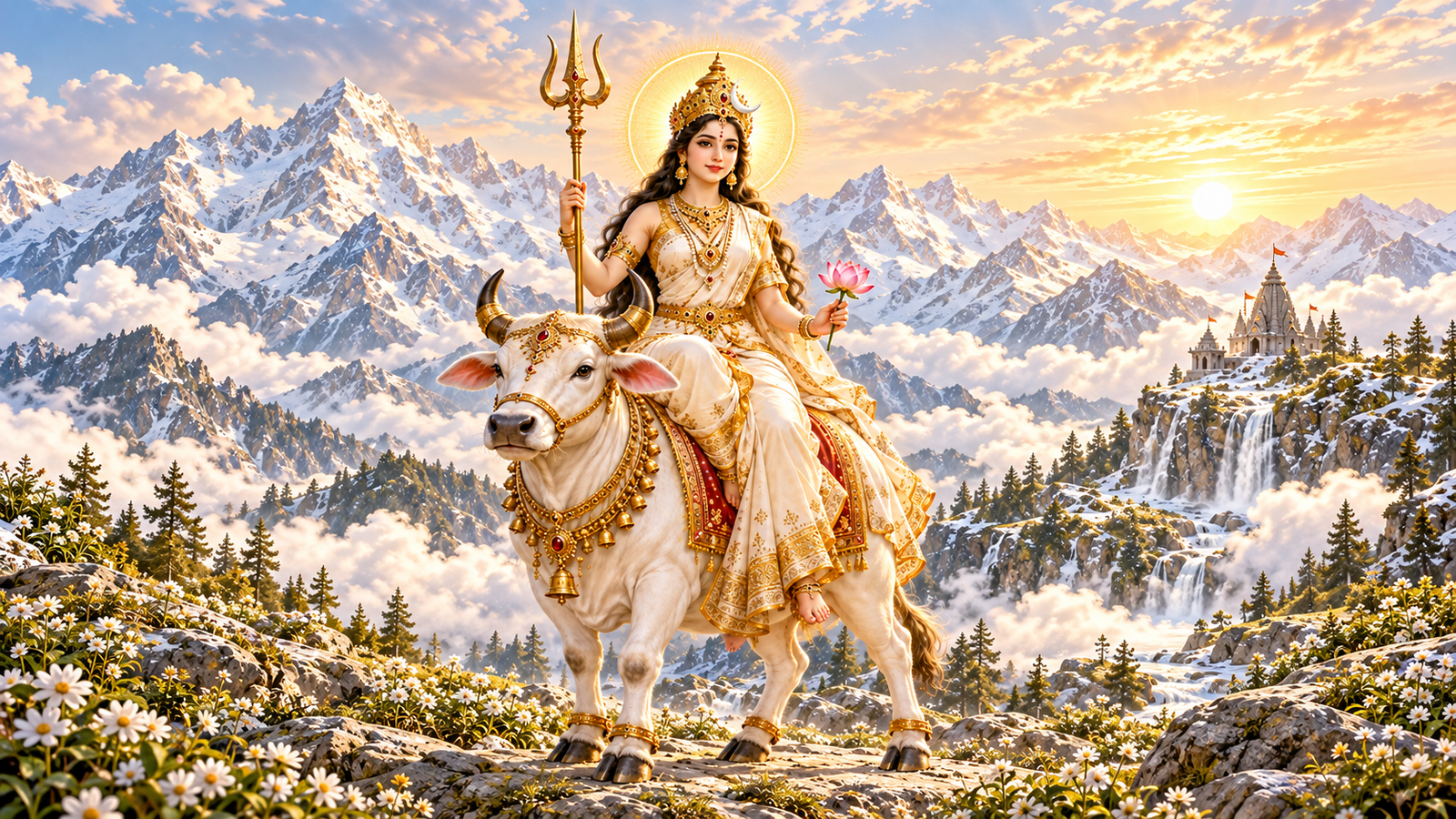
    Maa Shailputri opens the Navadurga journey. Her name means “daughter of the mountain.” She is depicted riding a bull and holding a trident and lotus.
    For our reflection, let the mountain remind you of steadiness.
    Feel the support beneath you. Notice what helps you remain grounded: a dependable routine, a trusted relationship, a quiet moment, or a clear sense of purpose.
    Ask yourself: What would help me become more grounded today?
    Choose one step you can take with courage.

    Maa Brahmacharini: Devotion and Patient Practice
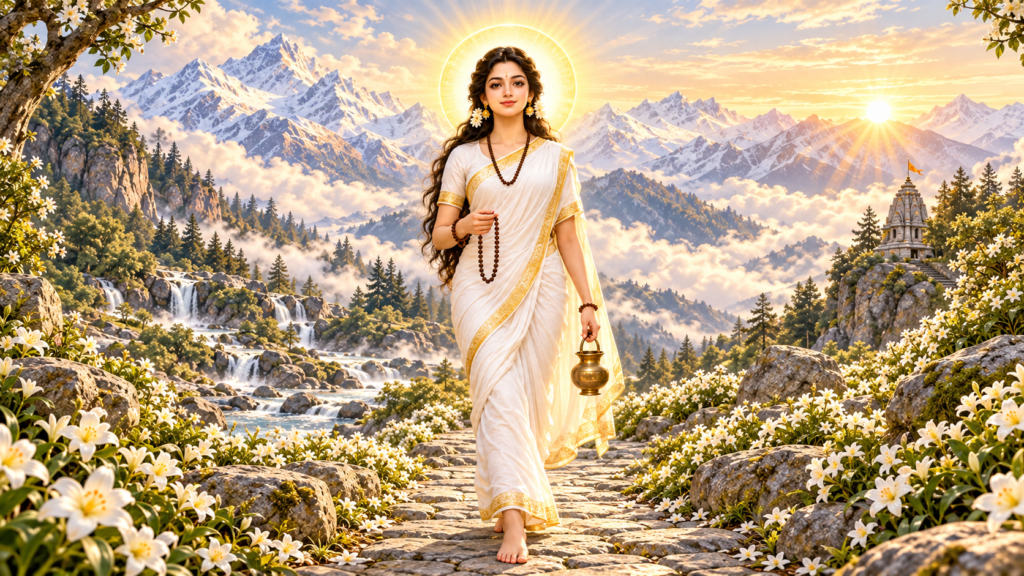
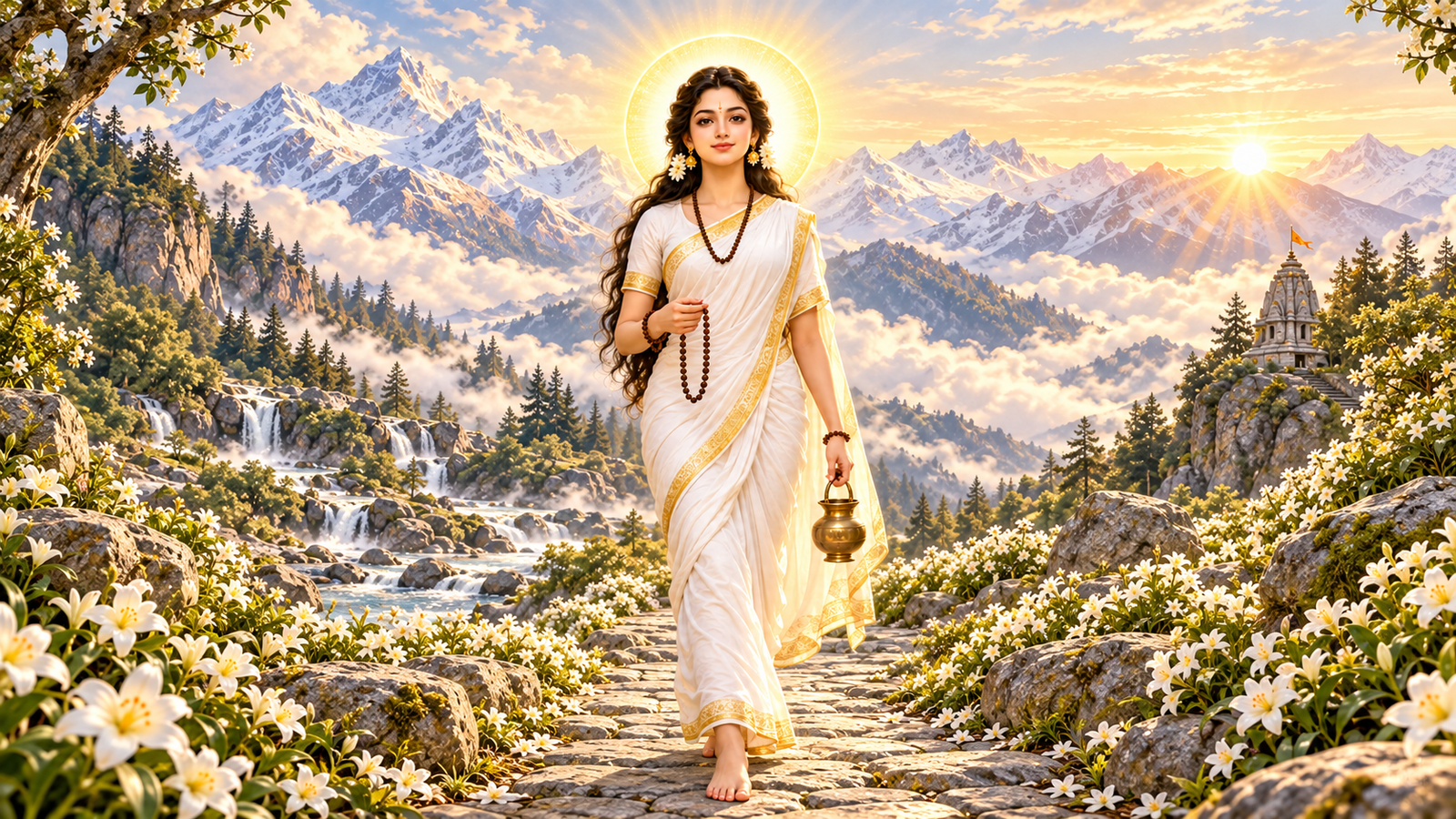
    Maa Brahmacharini is associated with spiritual discipline and austerity. She is depicted walking barefoot, holding prayer beads and a sacred water pot.
    Her example invites a reflection on sustained attention.
    Consider something meaningful that deserves your care. It might be prayer, study, a creative project, or a commitment you want to honor.
    Ask yourself: What deserves my patient attention?
    Return to it for a few manageable minutes. Let consistency develop through a practice you can sustain.

    Maa Chandraghanta: Courage and Protection
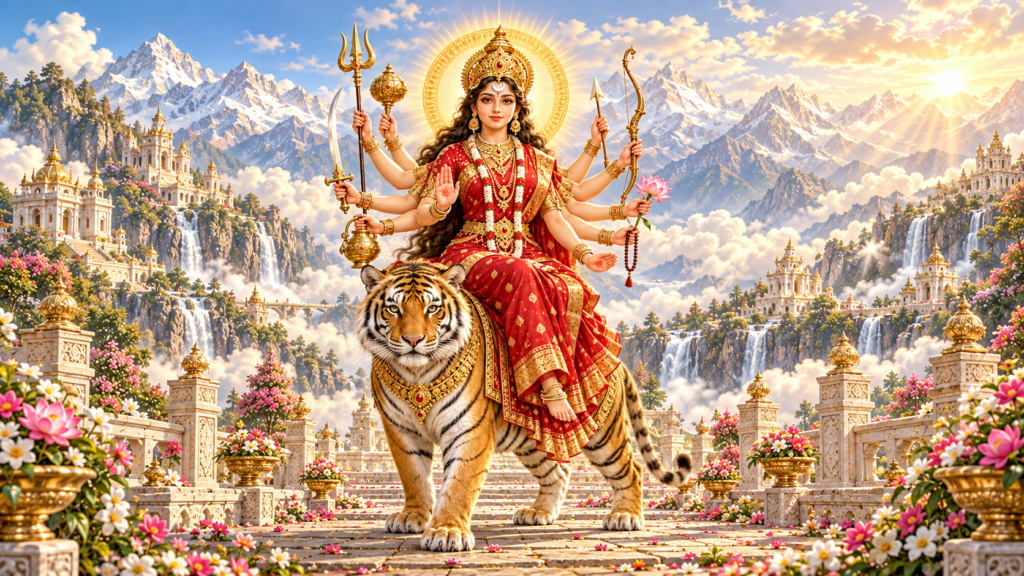
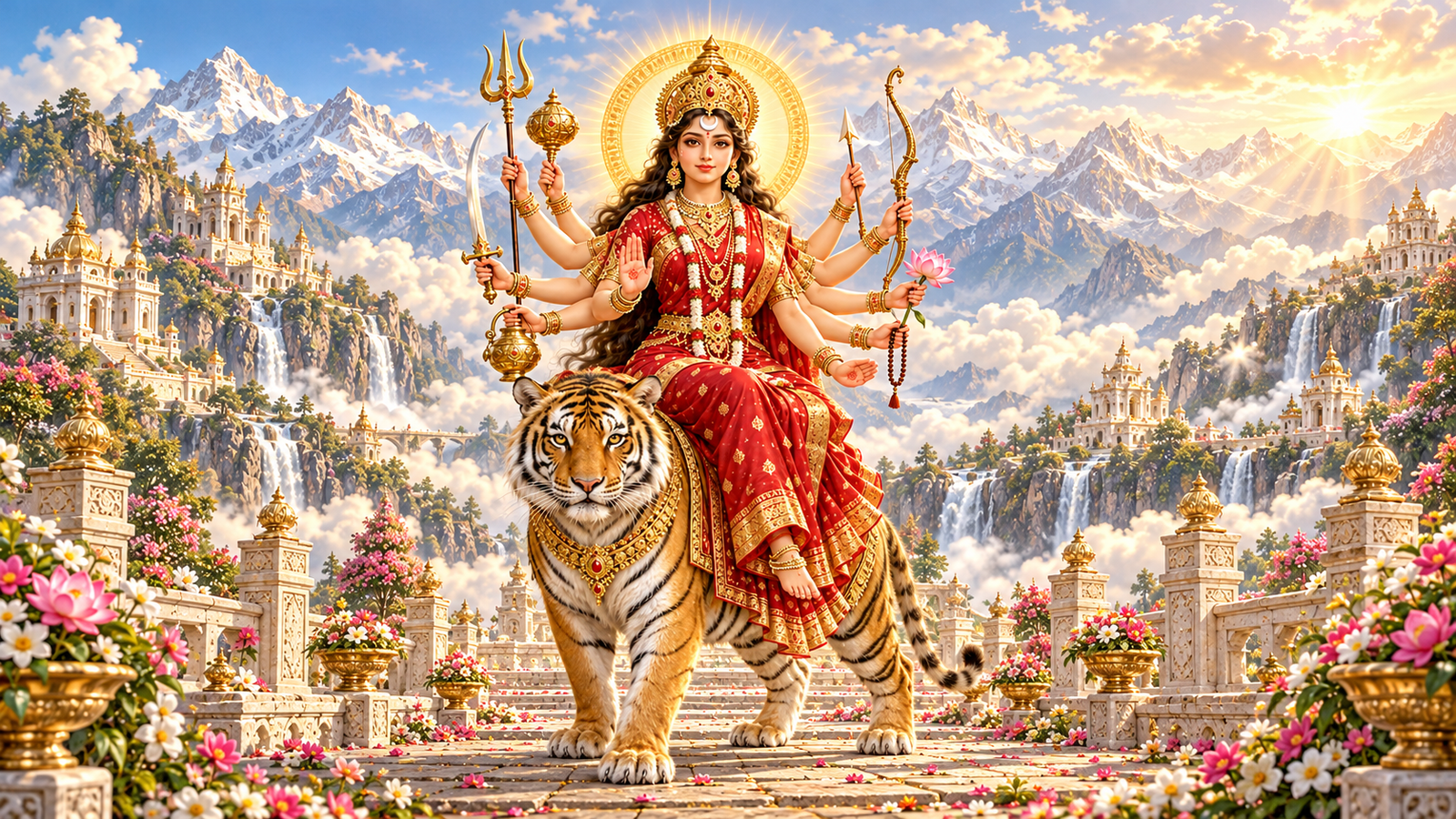
    Maa Chandraghanta is traditionally depicted with ten arms, riding a tiger and wearing a bell-shaped crescent moon on her forehead.
    For our everyday reflection, consider where you need to stand firm.
    A clear boundary, an honest conversation, or asking for support can be an act of courage. Strength and kindness can exist together.
    Ask yourself: Where would a courageous, thoughtful response help me today?
    Choose an action that respects your needs and the people involved.

    Maa Kushmanda: Creativity and Possibility
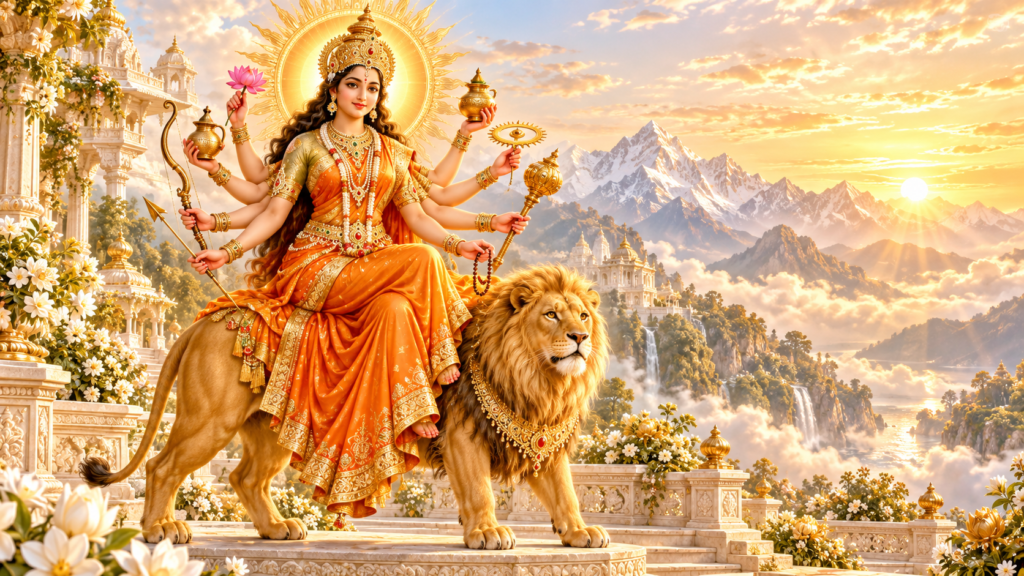
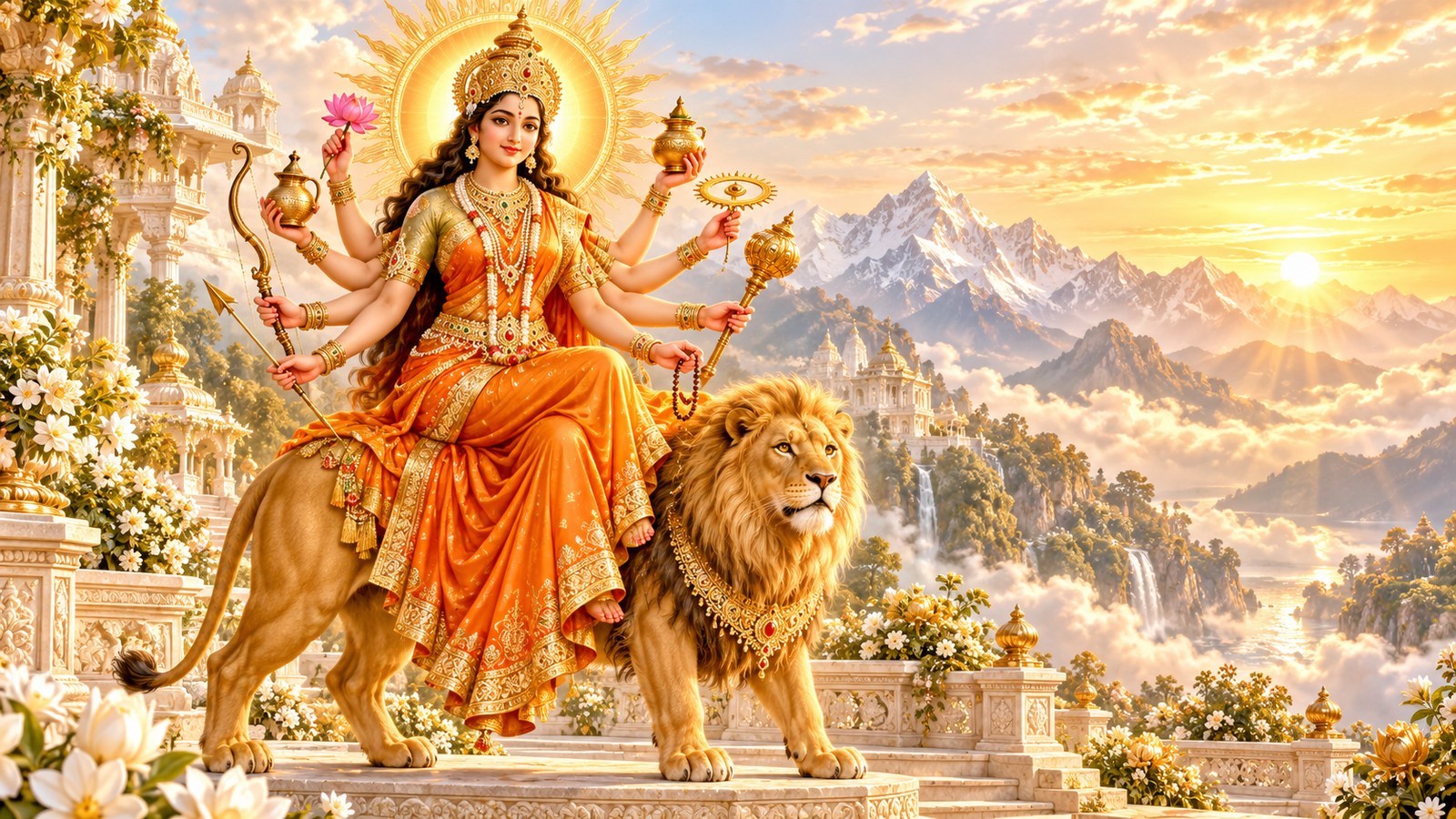
    Maa Kushmanda is associated in devotional tradition with the creation of the universe through her radiant smile. She is commonly depicted with eight arms, riding a lion.
    Her imagery offers a starting point for reflecting on creativity.
    A new beginning may be a small idea waiting for your attention: a page to write, a space to refresh, a skill to explore, or a solution you have not tried.
    Ask yourself: What am I ready to create or begin?
    Give that possibility one practical opening today.

    Maa Skandamata: Nurturing and Compassion
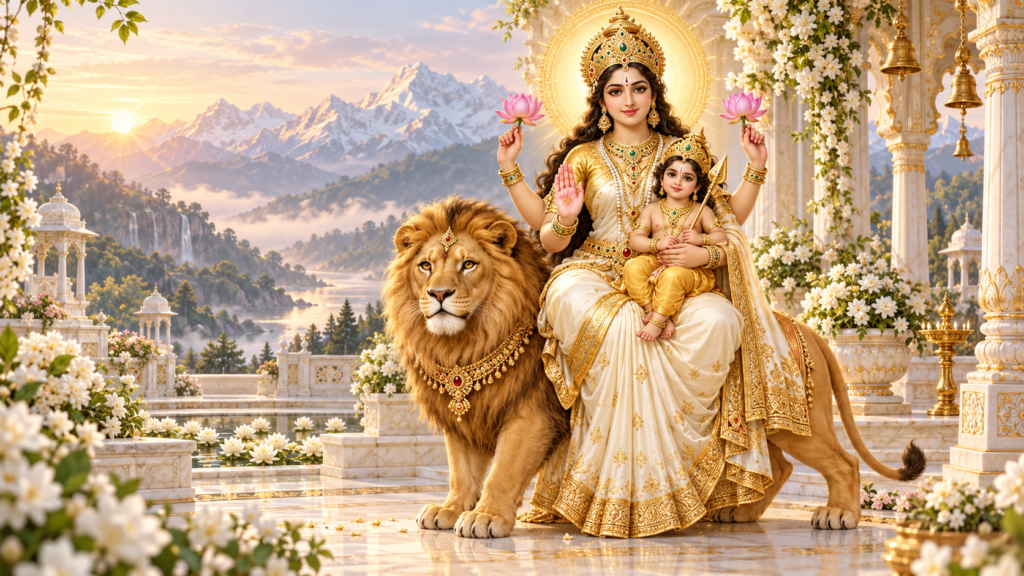
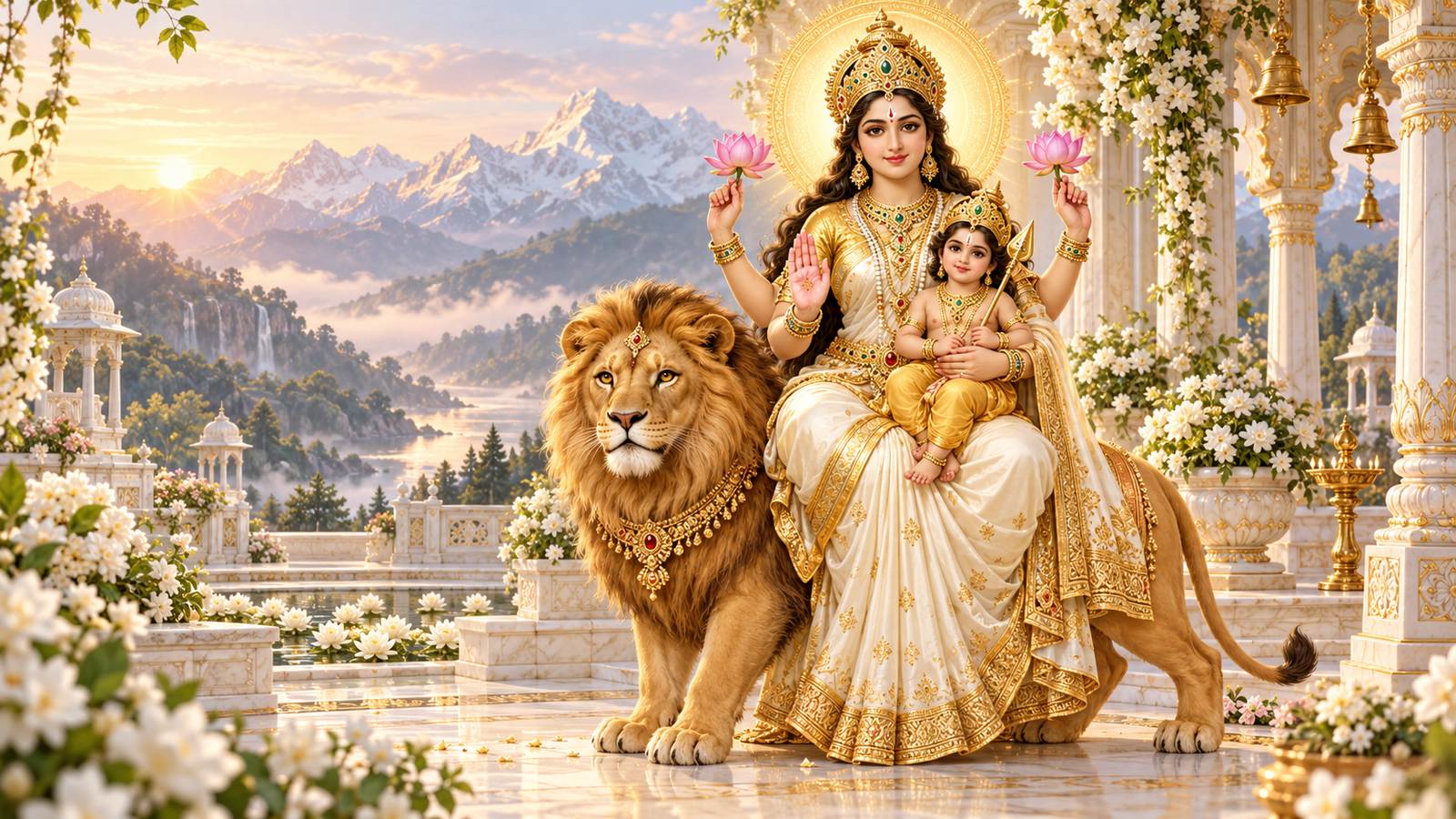
    Maa Skandamata is the mother of Skanda, also known as Kartikeya. She is depicted holding her child, with four arms, lotus flowers, and a lion as her mount.
    Pause to consider how you nurture life around you.
    Offer someone your attention. Care for something entrusted to you. Include yourself in that circle of compassion.
    Ask yourself: Where is my care needed, and what care do I need to receive?
    Let your answer include both generosity and realistic limits.

    Maa Katyayani: Purposeful Action
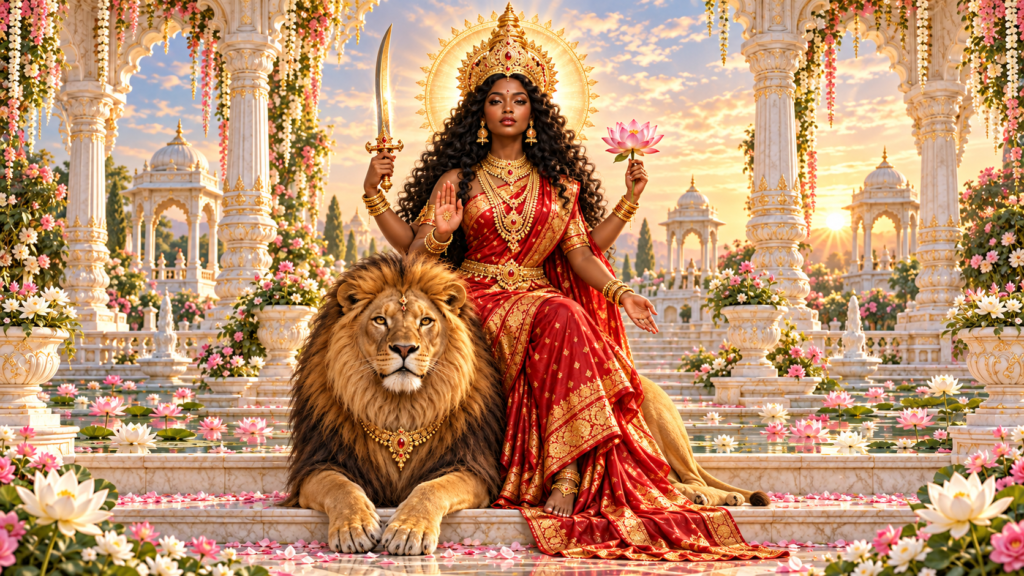
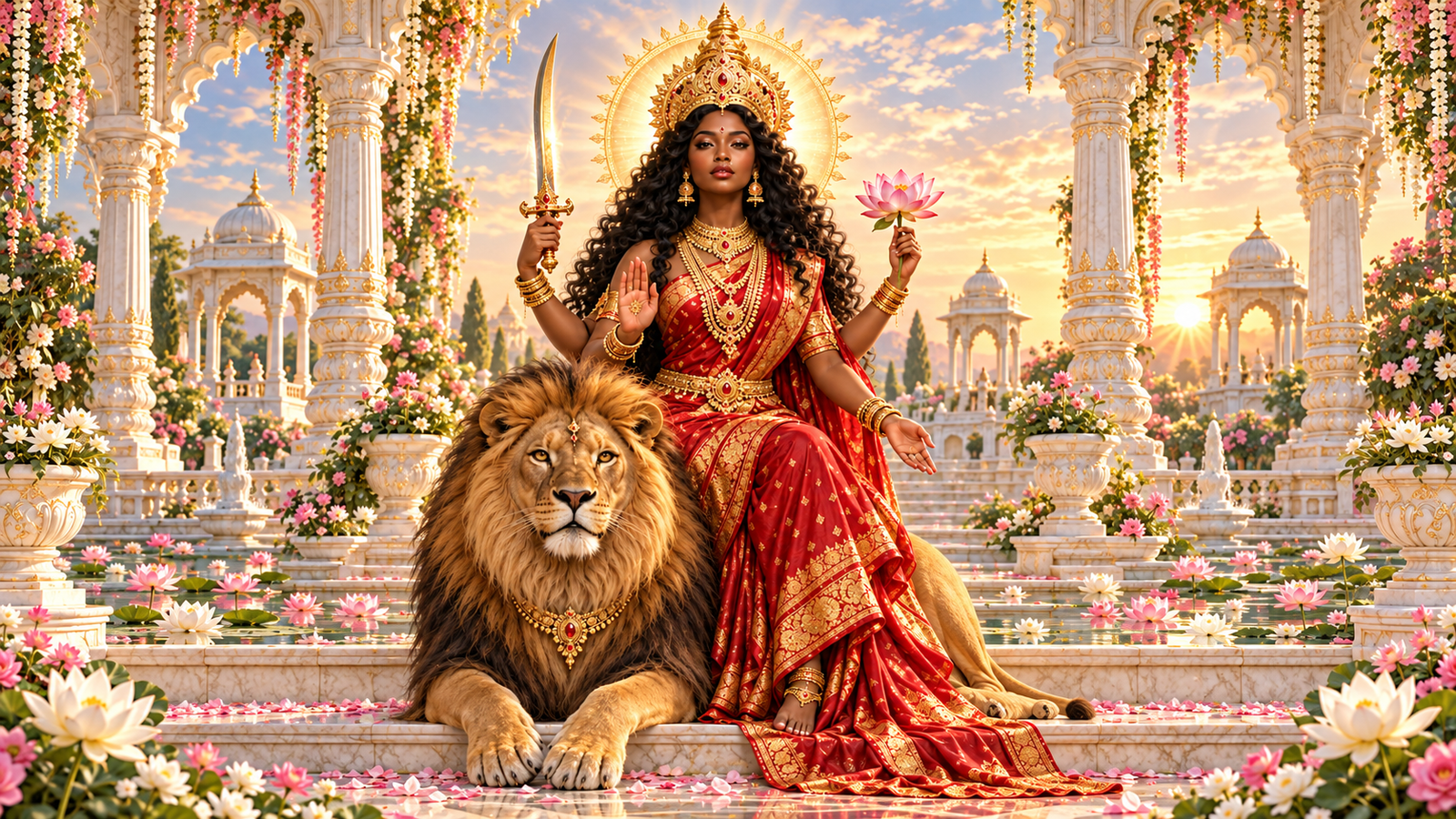
    Maa Katyayani is a powerful form of Durga, commonly depicted riding a lion, with a sword, lotus, and gestures of protection and blessing.
    For our reflection, consider courage directed by purpose.
    What problem needs your attention? Approach it thoughtfully. Gather information, seek support, and take a step that reflects your values.
    Ask yourself: What action would honor what matters to me?
    Give yourself a clear, achievable place to begin.

    Maa Kalaratri: Meeting Fear With Support
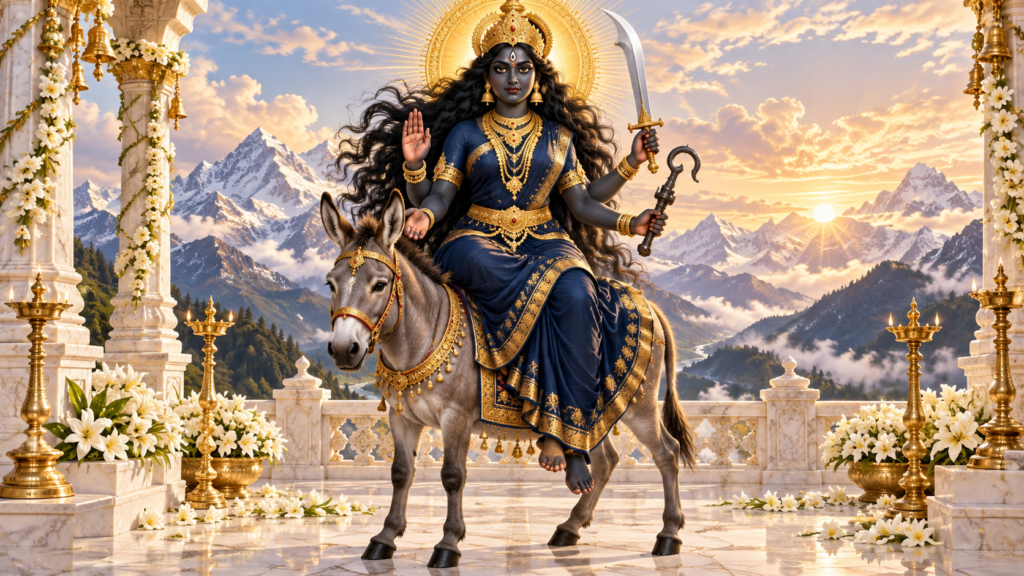
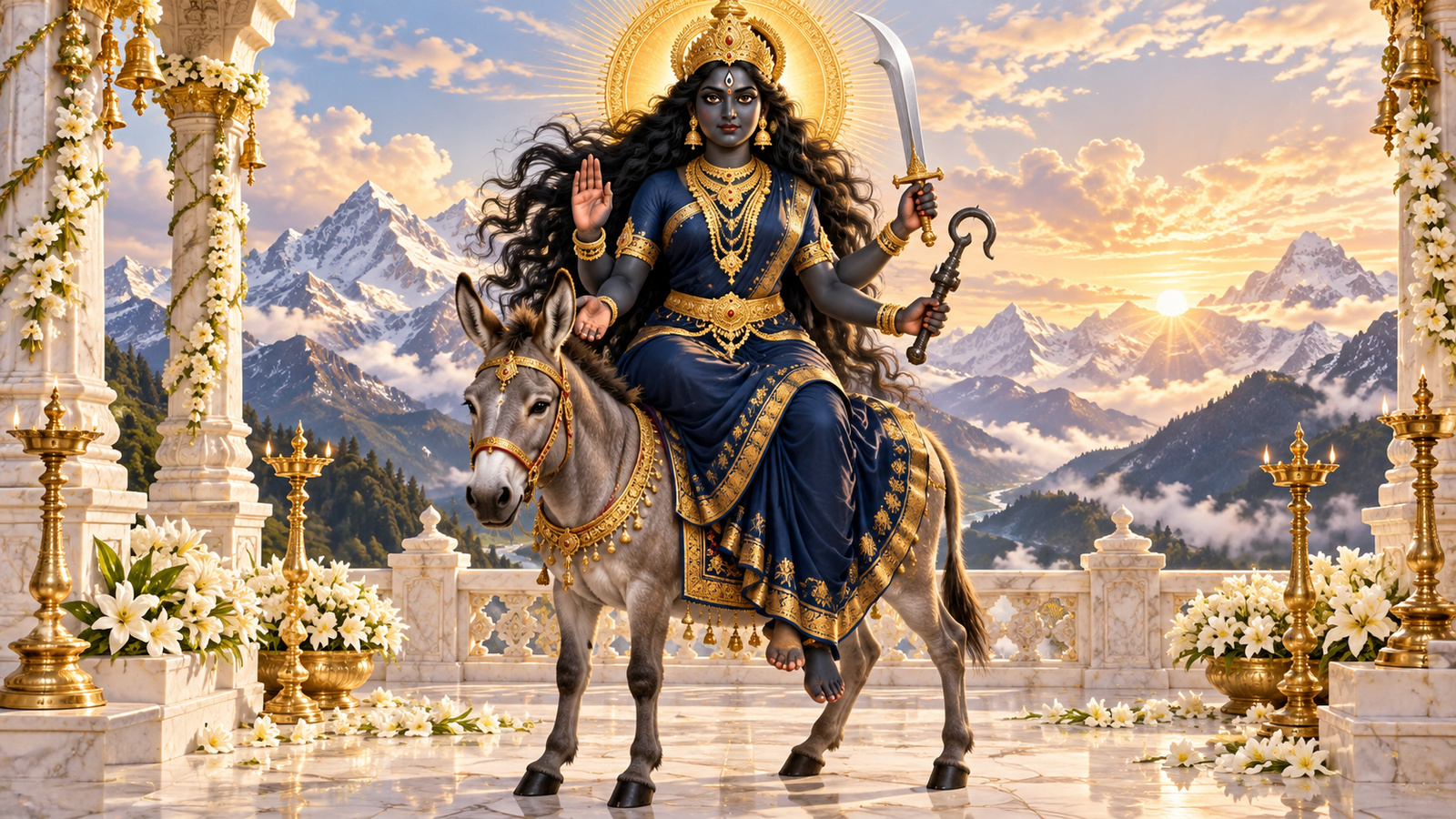
    Maa Kalaratri is a fierce form of the Goddess, associated with overcoming darkness and protecting devotees. Her traditional imagery includes a dark complexion, loose hair, four arms, and a donkey as her mount.
    Her presence invites us to reflect on how we respond to fear.
    Begin by naming what concerns you. Consider what information, preparation, or support would help you respond.
    Ask yourself: What would help me face this situation with greater steadiness?
    Courage can include reaching out to someone you trust.

    Maa Mahagauri: Serenity and Renewal
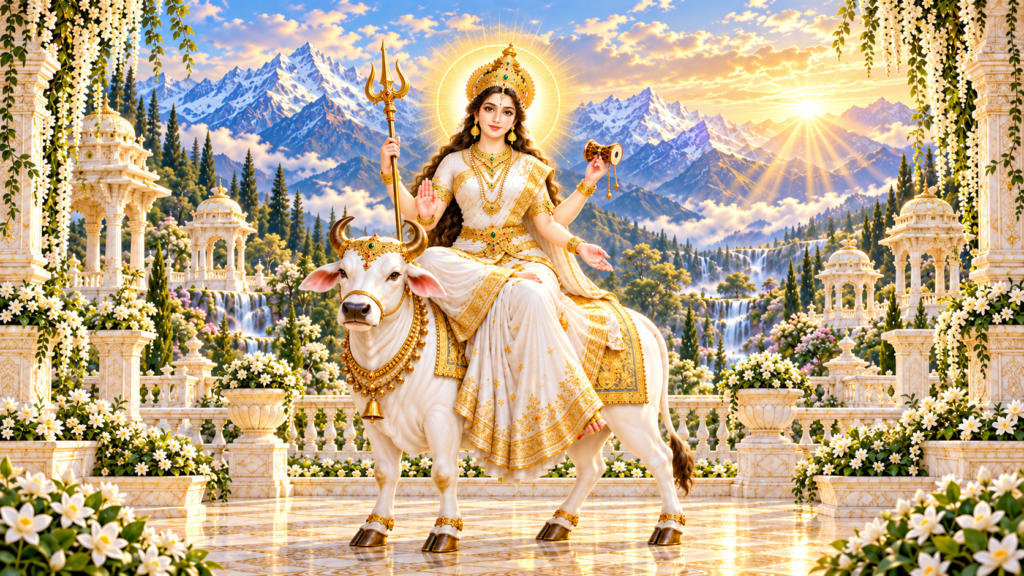
    Maa Mahagauri is associated with purity and a serene form of Parvati. Traditionally depicted in white, she rides a white bull and has four arms, holding a trident and a small damaru drum, with her other hands offering protection and blessings.
    Let this moment invite renewal.
    Release an unnecessary demand on yourself. Make room for rest, a clearer intention, or a kinder way of speaking to yourself.
    Ask yourself: What can I simplify so that I have more room to breathe?
    Choose one gentle adjustment that supports your day.

    Maa Siddhidatri: Wisdom and Gratitude
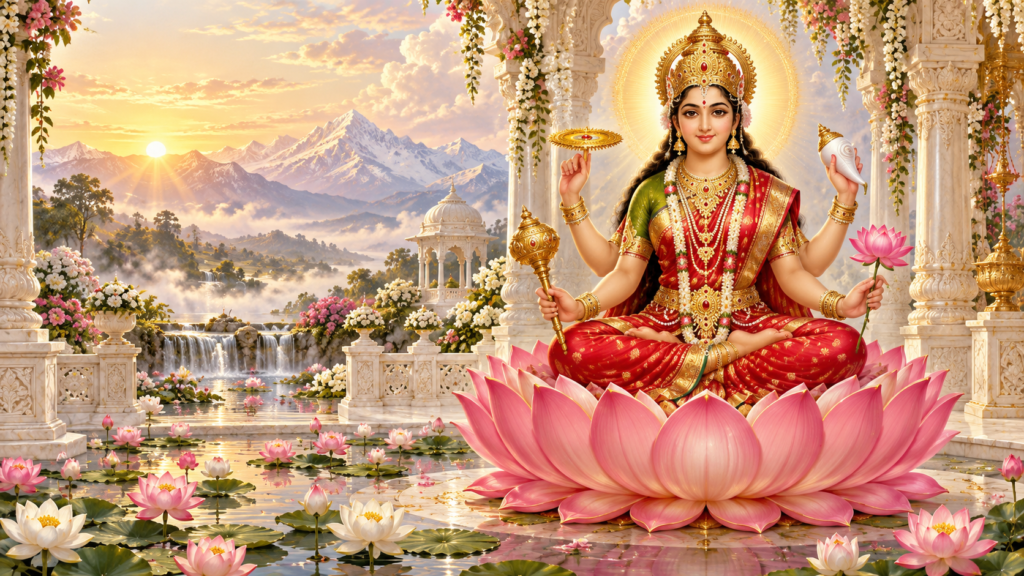
    Maa Siddhidatri is the ninth form of Durga, revered as the bestower of spiritual attainments. She is often depicted seated on a lotus, holding a discus, conch, mace, and lotus in her four hands.
    For our closing reflection, recognize what you have learned.
    What strength have you developed? What wisdom can you put into practice? Let your learning shape one meaningful choice.
    Ask yourself: Which lesson am I ready to live more fully?
    Take a moment to appreciate the people, experiences, and effort that have supported your growth.

    A Simple Reflection to Carry Forward

    After watching the video, choose one reflection that speaks to your current circumstances.
    Write down:

    • The quality I want to practice.
    • Why it matters to me.
    • One action I can take today.
      You might choose steadiness before a difficult conversation, patience with a project, compassion toward yourself, or gratitude for someone who has helped you.
      This optional journaling exercise is an everyday reflection, separate from traditional Hindu rituals and worship.

    Affirmations for the Journey

    These original affirmations bring together the themes explored in our video:
    I can remain grounded while taking a brave step forward.
    I give patient attention to what matters to me.
    I practice strength with kindness.
    I make room for creativity, care, and renewal.
    I honor my growth and put what I learn into practice.

    Watch the Full Video
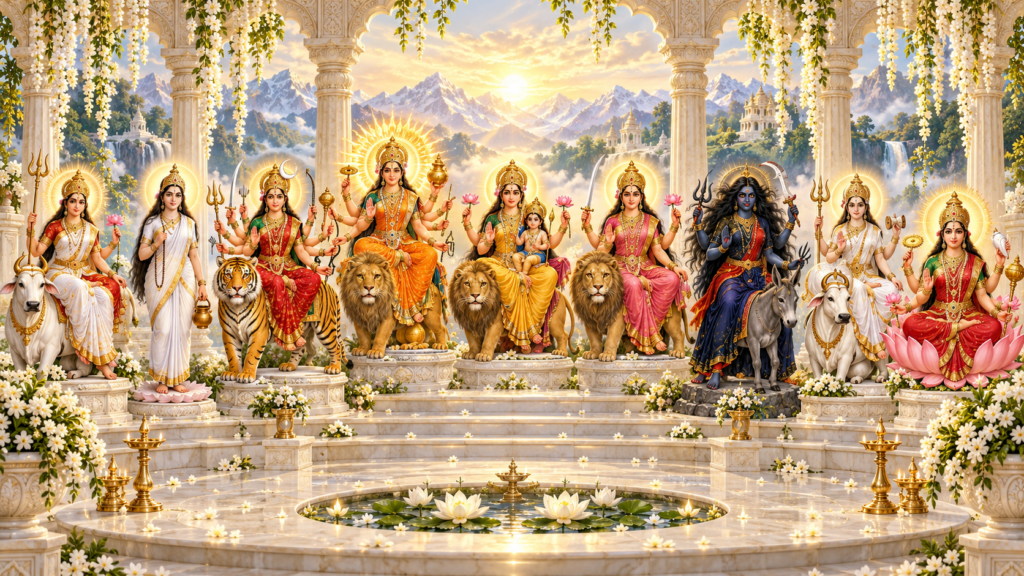
    Watch “The 9 Forms of Durga Explained | Navratri’s Divine Feminine Wisdom” on Awake and Conquer for an introduction to all nine goddesses and a brief reflection inspired by each.
    For a closer look at each form, explore our Hindu Goddesses: Divine Feminine Wisdom & Sacred Stories playlist and the individual Navratri Day 1–9 posts.
    Which reflection speaks to you most right now: steadiness, devotion, courage, creativity, compassion, purposeful action, facing fear, renewal, or wisdom?
    Share your answer in the comments. Visit awakeandconquer.com for more sacred stories, affirmations, and reflections for intentional living.
  • Maa Siddhidatri: Wisdom & Gratitude | Navratri Day 9

    Maa Siddhidatri: Wisdom & Gratitude | Navratri Day 9

    Before you rush toward your next beginning, take a moment to recognize how far you have come.
    Perhaps you have practiced patience. Perhaps you have spoken with greater courage, made room for rest, or offered yourself compassion during a difficult moment. Some changes are quiet enough that we overlook them.
    As our nine-part Navratri journey reaches its final reflection, we turn to Maa Siddhidatri and consider how learning can become wisdom through the choices we make each day.
    Who Is Maa Siddhidatri?
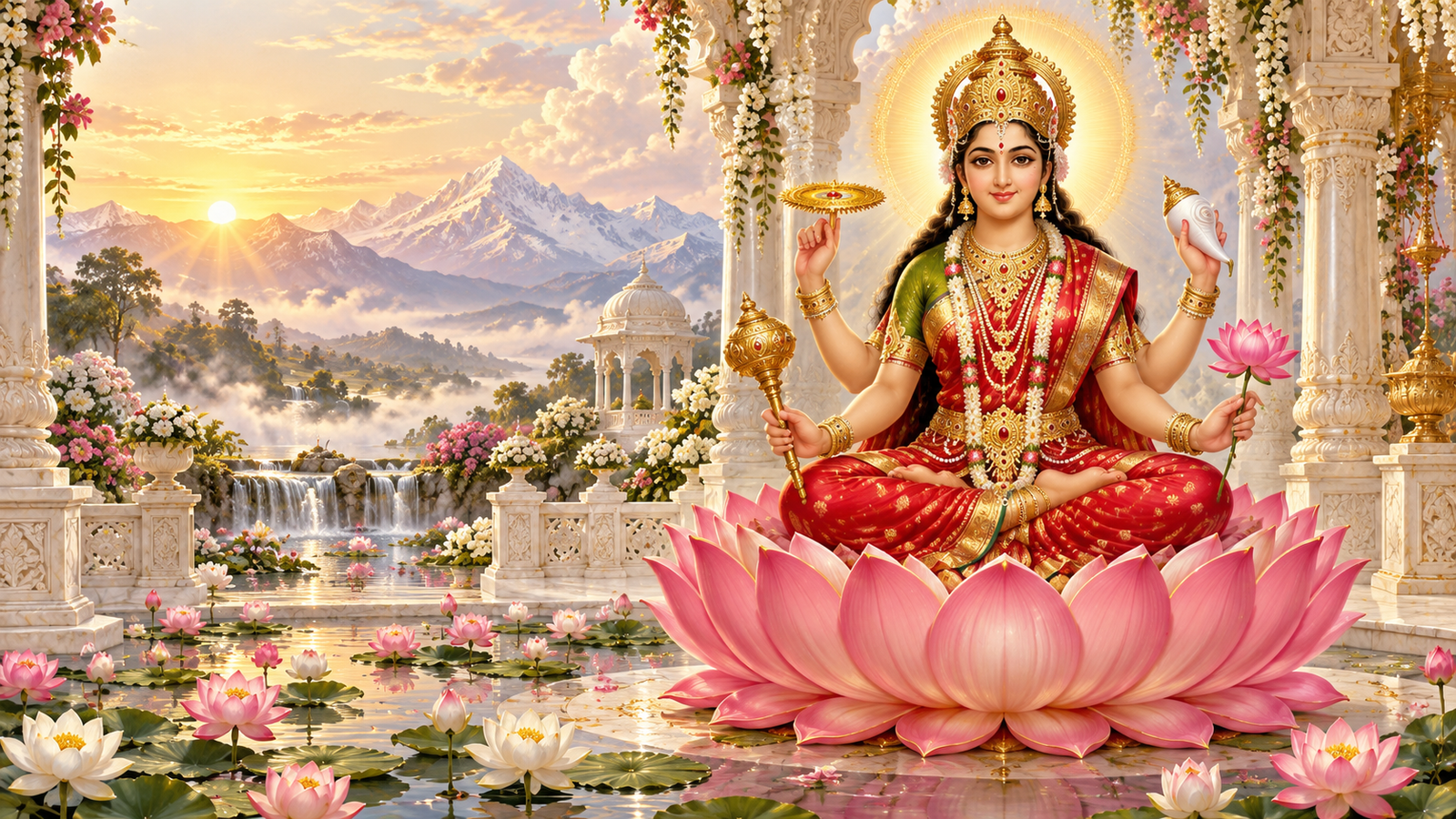
    Maa Siddhidatri is the ninth and final form of Goddess Durga in the Navadurga tradition, honored on the ninth day of Navratri. Her name is commonly understood as “the bestower of siddhis,” referring to spiritual attainments or perfections.
    She is traditionally depicted with four arms, holding a discus, conch, mace, and lotus. Often shown seated upon a blooming lotus, her serene appearance offers a beautiful focus for this closing moment of devotion and reflection.
    Her place in Hindu worship has its own sacred meaning. The everyday practices offered here are personal reflections inspired by this occasion, shared with respect for those religious roots.
    Let Gratitude Help You Recognize Your Growth
    It is easy to measure your life by what remains unfinished.
    The goal you have not reached. The habit you are still building. The answer you are waiting to receive.
    Today, make room to notice something else: the effort you have already made.
    What do you understand now that you did not understand before? Where have you become more patient, honest, or compassionate? What challenge taught you something you can use?
    Gratitude can begin with a simple acknowledgment:
    “I am thankful that I kept going.”
    You can appreciate your effort while still recognizing that there is more to learn.
    Turn One Lesson Into a Choice
    Wisdom becomes useful when it guides your actions.
    You may understand that rest matters. Putting that lesson into practice could mean choosing a time to finish working tonight.
    You may recognize the importance of boundaries. Your next step could be expressing one need clearly and respectfully.
    You may value connection. Today, you could give someone your full attention.
    Ask yourself:
    What have I learned, and how will I live that lesson today?
    Choose an answer that fits your actual circumstances. A modest action you can complete gives your intention somewhere to grow.
    A Quiet Reflection for Day 9
    Set aside a few comfortable minutes. You may use a journal, a piece of paper, or the notes on your phone.
    Take one slow, easy breath. Let your shoulders soften.
    Complete these three sentences:

    • One strength I have developed is…
    • One lesson I want to remember is…
    • One action I will take is…
      Read your answers gently. There is no need to make them sound impressive.
      Perhaps your strength is asking for help. Perhaps your lesson is allowing yourself to begin again. Perhaps your action is making a phone call you have postponed.
      Let your answers be honest enough to guide you.
      This is an optional journaling practice for everyday reflection, separate from traditional Hindu worship.
      Five Affirmations for Wisdom and Gratitude
      Speak these original affirmations slowly, allowing time to consider each one:
      I honor my growth and the effort behind it.
      I welcome wisdom with humility and an open heart.
      I am grateful for the support that helps me grow.
      I put what I learn into thoughtful action.
      I can move forward with patience, courage, and compassion.
      Choose the affirmation that feels most useful today. Return to it when you need a reminder of your intention.
      Carry the Navratri Reflections Forward
      Throughout this series, we have paused with reflections on steadiness, devotion, courage, creativity, nurturing care, purposeful action, facing fear, renewal, and wisdom.
      You do not need to carry every lesson at once.
      Choose one that meets you where you are. Give it your attention tomorrow, and notice how it influences your choices over time.
      As this nine-part journey closes, ask yourself:
      Which reflection will I carry into my next chapter?
      Share your answer in the comments, or write: “I move forward with wisdom.”
      Explore the complete series in our Hindu Goddesses: Divine Feminine Wisdom & Sacred Stories playlist, and watch “The 9 Forms of Durga: Navratri’s Divine Feminine Wisdom” for the full introduction.
      Visit awakeandconquer.com for more spiritual reflections, affirmations, and inspiration for intentional living.
  • Maa Mahagauri: Peace & Renewal | Navratri Day 8

    Maa Mahagauri: Peace & Renewal | Navratri Day 8

    You deserve moments of peace—even when there is still more to do.

    On the eighth day of Navratri, devotees honor Maa Mahagauri, the eighth of the nine forms of Goddess Durga. Associated with purity and serenity, she offers an opportunity to learn about Hindu devotion while reflecting on renewal and compassion.

    At Awake and Conquer, today’s reflection invites you to release an unnecessary demand, make room for rest, and approach yourself with greater kindness.

    Who Is Maa Mahagauri?

    Maa Mahagauri is a form of Goddess Parvati honored within the Navadurga tradition. Her name is commonly translated as “the greatly radiant” or “the exceedingly fair,” referring to her traditional luminous appearance.

    Accounts of her transformation vary. A widely told story describes Parvati’s appearance being restored to radiance after her intense spiritual austerities.

    These descriptions belong to her sacred narrative. For our reflection, purity concerns sincerity and intention; it is not a measure of anyone’s skin color, appearance, or worth.

    Her Traditional Appearance

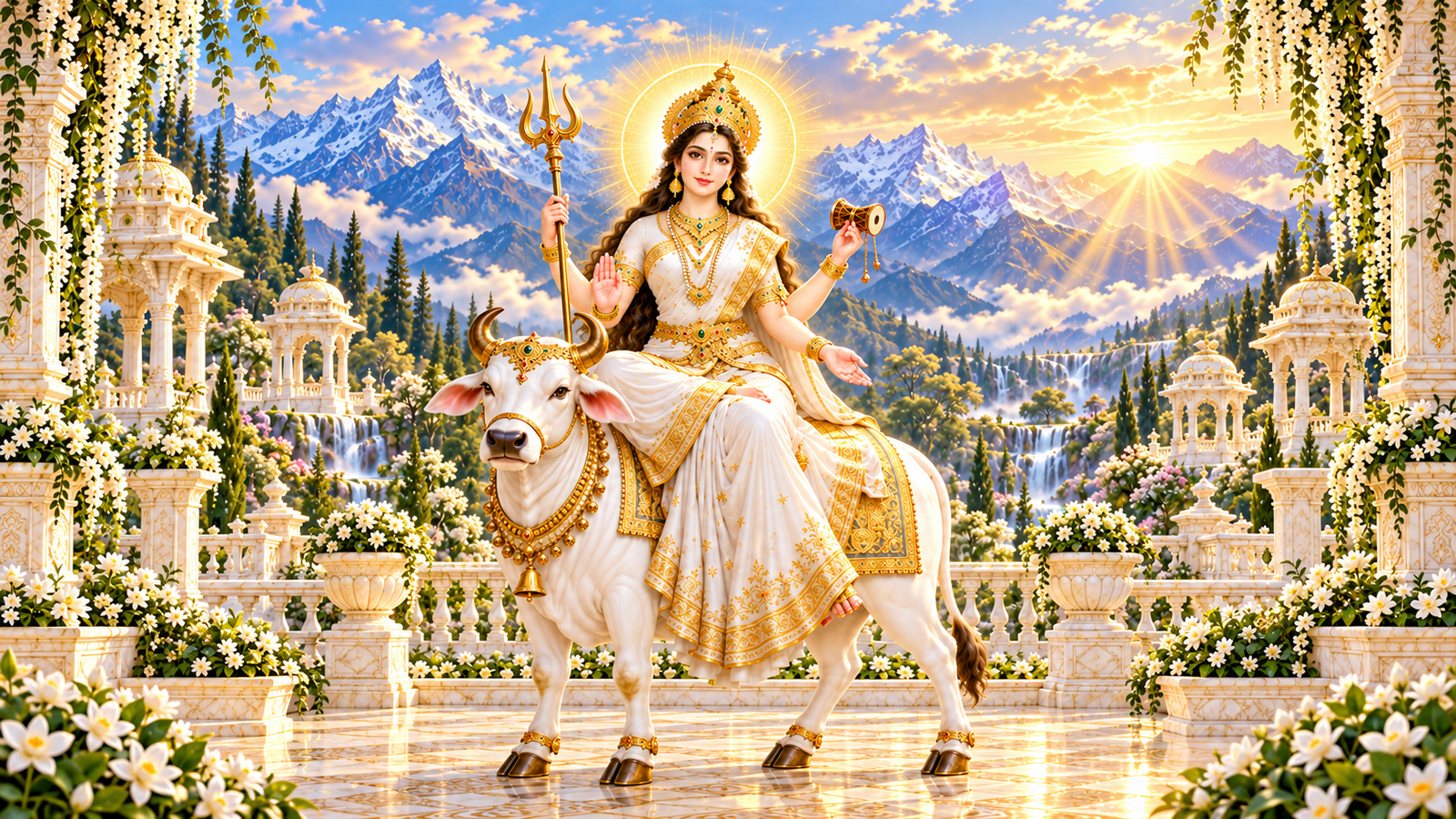
    Maa Mahagauri is traditionally depicted wearing white and riding a white bull. She has four arms.

    Her hands hold a trident and a damaru, a small hourglass-shaped drum. Her other hands offer gestures of protection and blessing.

    Her composed expression and white garments give her imagery a serene quality. She follows Maa Kalaratri in the Navadurga sequence and precedes Maa Siddhidatri.

    An Invitation to Renewal

    For our everyday reflection, renewal can begin with a small adjustment.

    Perhaps you need to reconsider a commitment, clear a little space in your schedule, or return to something that helps you feel settled.

    Ask yourself:

    What would give me a little more room to breathe today?

    Allow the answer to be practical. You might postpone a nonessential task, spend a few minutes outdoors, or ask someone to share a responsibility.

    Choose something that responds to what you actually need.

    Release an Unnecessary Demand

    Some responsibilities deserve your attention. Others may come from expectations you have never paused to question.

    Notice the thoughts that begin with “I should.”

    Do you need to do everything today? Does every task require the same level of effort? Could you accept help or choose a simpler approach?

    Releasing an unnecessary demand can leave more attention for the commitments that matter most.

    Speak to Yourself with Kindness

    Pay attention to the words you use when you are tired or disappointed.

    Instead of “I should have done more,” try:

    “I can recognize what I completed and decide what comes next.”

    Instead of “I cannot get this right,” try:

    “I am learning, and I can adjust my approach.”

    Kindness can remain honest. You can acknowledge a mistake, make a repair, and keep your dignity.

    A Quiet Peace and Renewal Reflection

    Sit comfortably and let your shoulders relax. Take one slow, comfortable breath.

    Ask yourself:

    What can wait?

    What would support my well-being today?

    What kinder thought can I practice?

    Write down one answer. Then choose one gentle action you can complete.

    This is an original reflection inspired by serenity and renewal, rather than a traditional Navratri worship ritual.

    Five Affirmations for Peace and Self-Compassion

    These original affirmations can accompany your reflection:

    I welcome moments of peace.

    I treat myself with compassion.

    I make room for rest and renewal.

    I release expectations that no longer serve my priorities.

    I approach my next step with a clearer intention.

    Choose one affirmation and connect it with an action. Let “I make room for rest” become a few minutes you deliberately set aside.

    Honoring Her Sacred Roots

    Maa Mahagauri belongs to a living Hindu devotional tradition. Her significance extends beyond a general message about relaxation or personal renewal.

    Learning her name, recognizing her traditional imagery, and understanding her place among the nine forms of Durga helps us approach her story respectfully.

    Our personal reflections accompany that learning while remaining distinct from traditional worship.

    Your Day 8 Message

    Give yourself permission to notice what you need.

    A quieter moment, a clearer intention, or a kinder response to yourself can become the beginning of a more thoughtful day.

    Write “I welcome peace” in the comments and share one gentle action you are choosing.

    Watch Maa Mahagauri: Peace & Renewal on Awake and Conquer, and continue our Navratri journey with Maa Siddhidatri, the ninth form of Durga.

    Explore our Hindu Goddesses: Divine Feminine Wisdom & Sacred Stories playlist, and visit awakeandconquer.com for more spiritual inspiration.

  • Maa Kalaratri: Courage Through Fear | Navratri Day 7

    Maa Kalaratri: Courage Through Fear | Navratri Day 7

    What if your next courageous step begins by naming what frightens you?

    On the seventh day of Navratri, devotees honor Maa Kalaratri, the seventh of the nine forms of Goddess Durga. Her fierce appearance expresses her protective power, and devotees revere her as a destroyer of harmful forces.

    At Awake and Conquer, we explore her traditional significance alongside an original reflection on meeting fear with compassion, seeking support, and moving forward thoughtfully.

    Who Is Maa Kalaratri?

    Maa Kalaratri is a powerful, protective form of the Divine Mother in Hindu tradition. Her name is commonly translated as “night of darkness” or “dark night.”

    Although her appearance is formidable, she is also known as Shubhankari, associated with bringing auspiciousness. Her fierce form and benevolent nature belong together: devotees understand her power as protective.

    Her place in the Navadurga sequence follows Maa Katyayani and precedes Maa Mahagauri.

    Her Traditional Appearance

    Maa Kalaratri is traditionally depicted with a dark complexion, flowing loose hair, three eyes, and four arms. A donkey serves as her mount.

    Her hands carry protective weapons, commonly described as a sword and an iron implement, while her other hands offer gestures of protection and blessing.

    These details distinguish her sacred identity. Her dark complexion is part of her divine imagery; it should not be confused with a symbol of moral wrongdoing.

    A Reflection on Facing Fear

    For our everyday reflection, consider something you have been hesitant to face.

    Perhaps it is an unfinished task, a difficult conversation, or uncertainty about a new direction. Naming the concern can help you understand what deserves attention.

    Try completing this sentence:

    “I feel afraid of ______ because ______.”

    Give yourself an honest answer without criticizing it. Then ask what information, preparation, or support might help.

    Fear can offer useful information. You can listen to it while deciding how to respond.

    Choose a Manageable Step

    Courage does not require you to solve everything at once.

    You might begin by:

    • Writing down the question you need answered.
    • Preparing what you want to say.
    • Asking someone trustworthy for support.
    • Completing one small part of an avoided task.
    • Allowing yourself time to make a thoughtful decision.

    Choose a step that fits your circumstances. Progress can include gathering information, pausing to reassess, or recognizing that you need help.

    Welcome Support

    You do not have to carry every challenge alone.

    A supportive conversation can help you see possibilities you missed. Someone you trust may offer perspective, practical help, or simply the comfort of listening.

    Be specific about what would help: “Could you listen while I think this through?” or “Can you help me understand my next step?”

    Receiving care is something you can practice, too.

    A Quiet Courage Reflection

    Sit comfortably and relax your shoulders. Take one slow, comfortable breath.

    Ask yourself:

    What am I afraid to face?

    What is within my control?

    What support could help me move forward?

    Write down one manageable action. Give yourself a clear starting point and room to adjust as you learn.

    This is an original reflection inspired by courage and protection, rather than a traditional Navratri worship ritual.

    Five Affirmations for Courage and Clarity

    These original affirmations can accompany your reflection:

    I acknowledge my fears with compassion.

    I give myself time to understand what I need.

    I welcome support from people I trust.

    I can take one thoughtful step today.

    I move forward with courage and clarity.

    Choose one affirmation and connect it with an action that supports your well-being.

    Honoring Maa Kalaratri’s Sacred Roots

    Maa Kalaratri belongs to a living Hindu devotional tradition. Her significance extends beyond a general message about confidence or personal growth.

    Learning about her traditional imagery and place among the nine forms of Durga allows us to approach her story with respect. Our everyday reflections accompany that learning while remaining distinct from traditional worship.

    Your Day 7 Message

    You can begin while you are still finding your confidence.

    Name what concerns you. Consider what you can influence. Welcome the support available to you, and choose your next step with care.

    Write “I choose courage” in the comments and share what helps you feel supported.

    Watch Maa Kalaratri: Courage Through Fear on Awake and Conquer, and continue our Navratri journey with Maa Mahagauri, the eighth form of Durga.

    Explore our Hindu Goddesses: Divine Feminine Wisdom & Sacred Stories playlist, and visit awakeandconquer.com for more spiritual inspiration.

  • Maa Katyayani: Navratri Day 6 Meaning & Courage

    Maa Katyayani: Navratri Day 6 Meaning & Courage

    There are moments when courage looks like speaking honestly. Sometimes it means setting a boundary, asking for help, or finally beginning something you have been postponing.

    On Day 6 of Navratri, we honor Maa Katyayani, a powerful form of Goddess Durga. Her image invites us to reflect on strength, purposeful action, and the courage to face challenges while keeping our hearts open.

    As our Awake and Conquer Navratri journey continues, consider this question:

    Where am I ready to act with greater courage?

    Who Is Maa Katyayani?

    Maa Katyayani is the sixth of the Navadurga—the nine forms of Goddess Durga honored during Navratri.

    She is traditionally depicted riding a lion, holding a sword and a lotus, with her other hands offering gestures of protection and blessing. This combination creates a striking image of power alongside grace. www.drikpanchang.com

    For devotees, her worship is an expression of faith and reverence. For our reflection today, her sacred imagery also offers an opportunity to consider how we meet difficulties and use our own strength.

    Reflecting on the Lion, Sword, and Lotus

    Looking at Maa Katyayani’s image, we can draw inspiration from the qualities her symbols bring to mind.

    The lion invites a reflection on courage. What would it look like to stand steadily in a difficult moment? You might still feel nervous, yet choose to have an important conversation or take a manageable step forward.

    The sword can inspire discernment. Consider what needs a clear decision. Perhaps a commitment no longer fits your capacity, or a familiar habit keeps taking time away from something meaningful.

    The lotus offers a reminder to remain open to growth. Strength can make room for kindness, patience, and compassion.

    These are personal reflection prompts inspired by her imagery. They offer a way to bring today’s themes into everyday life.

    Where Do You Need Courage Today?

    You may already know the answer.

    Perhaps there is something you need to say, but you have been waiting for the perfect moment. Perhaps you have a creative dream that keeps getting pushed aside. Or perhaps you have been caring for everyone around you while overlooking your own need for rest.

    Start by naming one situation.

    Then ask yourself: What action would honor both my well-being and my responsibilities?

    Speaking honestly might mean expressing a need calmly and clearly. Protecting your peace might mean limiting a draining commitment. Moving toward a dream might mean setting aside twenty minutes to begin.

    Give yourself a step you can realistically complete.

    A Simple Courage Reflection

    Take a quiet moment with a notebook or the notes on your phone. This is a personal reflection exercise inspired by the day’s themes, rather than a formal Navratri worship practice.

    Sit comfortably and allow your breathing to settle naturally.

    Write your answers to these questions:

    • What have I been postponing because I feel afraid or uncertain?
    • What matters enough for me to give it my attention?
    • What information or support would help me move forward?
    • What is one courageous action I can take today?

    Read your answers without criticizing yourself. Hesitation can show you where you need preparation, encouragement, or a smaller first step.

    Choose your action and decide when you will take it. You might send an inquiry, schedule a conversation, outline a project, or ask someone trustworthy for support.

    Let courage become a choice you can put into practice.

    Five Affirmations for Courage and Inner Strength

    Use these original affirmations as part of your reflection. They are modern statements of intention, rather than traditional religious mantras.

    I honor my strength.

    I can face challenges with a steady heart.

    I express my needs with clarity and respect.

    I welcome the support that helps me grow.

    I choose one courageous action today.

    Speak each statement slowly. Consider what it would look like to support it with an everyday action.

    If a statement feels difficult to believe, soften it into a beginning: “I am learning to honor my strength,” or “I am practicing speaking with clarity.”

    Allow your words to meet you where you are.

    Let Your Next Step Matter

    Courage grows through practice. Each time you follow through on a thoughtful decision, you gather experience you can draw on again.

    You may discover that you can handle an uncomfortable conversation. You may learn that asking for help creates room to move forward. You may find that a dream feels more possible once you give it a place in your day.

    As you reflect on Maa Katyayani, consider how strength and grace can guide your next choice.

    Take a gentle breath. Name what matters. Choose your next step.

    What courageous action are you choosing today? Share it in the comments below.

    Watch our Maa Katyayani Day 6 reel on Awake and Conquer, and continue exploring the nine forms of Durga with us throughout this Navratri series.

    Jai Maa Katyayani.

  • Maa Skandamata: Navratri Day 5 and the Strength of a Nurturing Heart

    Maa Skandamata: Navratri Day 5 and the Strength of a Nurturing Heart

    Maa Skandamata: Navratri Day 5 Meaning & Reflection

    There is a kind of strength that holds someone close, listens without rushing, and offers care when life feels heavy. On Day 5 of Navratri, Maa Skandamata invites us to reflect on this nurturing power—and on the courage it takes to love with an open heart.

    As we continue the Awake and Conquer Navratri series, this is a moment to ask: How can I offer compassion without forgetting to care for myself?

    Who Is Maa Skandamata?

    Maa Skandamata is the fifth of the Navadurga, the nine forms of Goddess Durga honored during Navratri. Her name means “Mother of Skanda.” Skanda, also known as Kartikeya, is the son of Shiva and Parvati.

    In Hindu tradition, this form of the Divine Mother brings motherhood and spiritual strength into focus. Devotees honor her with prayer and devotion as part of the fifth day’s observance.

    The Meaning Behind Her Sacred Image

    Maa Skandamata is traditionally depicted with four arms, holding her child Skanda and lotus flowers, with one hand offering a blessing. Her imagery includes a lion and a lotus seat; her lotus association gives her the name Padmasana.

    For personal reflection, these images offer a beautiful meeting of tenderness and strength. The child can invite us to consider what needs our care. The lion can remind us of courage. The lotus can encourage us to remain open to growth during difficult seasons.

    These reflections are invitations to connect with her imagery, rather than a substitute for the teachings of a particular Hindu lineage.

    Nurturing Others Without Forgetting Yourself

    Many of us know how to give encouragement. We check on loved ones, carry responsibilities, and keep going even when we feel tired.

    But receiving care can feel harder.

    Let this day invite a gentler question: What would change if I treated my own needs with the same respect I give to someone I love?

    Perhaps you need rest. Perhaps you need help with a task. Perhaps you need a boundary that protects your time and energy.

    Compassion can include saying, “I care about you, and I need time to rest.” Love can be generous while still making room for your well-being.

    A Quiet Day 5 Reflection

    This simple reflection is inspired by the day’s themes; it is not a formal Navratri puja.

    Find a comfortable place to sit. Let your shoulders soften and take a few easy breaths.

    Bring to mind something you are nurturing: a relationship, a creative project, your home, or your own sense of peace.

    Ask yourself:

    • What needs patient attention in my life?
    • Where am I giving more than I can sustain?
    • What care am I ready to receive?
    • What small act of kindness can I offer myself today?

    Write down one answer. Then choose one practical action you can complete: ask for help, take a break, prepare a nourishing meal, or give your project a few focused minutes.

    Let your reflection become something you can live.

    Five Affirmations for Love and Inner Strength

    These original affirmations accompany our reflection; they are not traditional Sanskrit mantras.

    1. I offer myself the compassion I share with others.
    2. My tenderness and courage can grow together.
    3. I can nurture my dreams with patient, consistent action.
    4. I welcome support and allow myself to receive care.
    5. I honor my energy, my needs, and my capacity to love.

    Speak them slowly, allowing time to consider what each statement means in your life.

    Let Love Become an Action

    A nurturing heart expresses itself through everyday choices: listening carefully, keeping a promise, offering encouragement, or allowing someone to support you.

    You do not have to carry everything alone to be strong.

    As you reflect on Maa Skandamata this Navratri, consider how love and courage can support each other in your own life. Choose one caring action for today—and include yourself among those worthy of your care.

    What are you choosing to nurture: your peace, your family, your dreams, or yourself? Share in the comments.

    Continue the nine-goddess Navratri journey with Awake and Conquer on YouTube, and explore more spiritual reflections at awakeandconquer.com.

    Jai Maa Skandamata.

  • Maa Kushmanda: Creativity & New Beginnings | Navratri Day 4

    Maa Kushmanda: Creativity & New Beginnings | Navratri Day 4

    What beautiful beginning could grow from one small action today?

    On the fourth day of Navratri, devotees honor Maa Kushmanda, the fourth of the nine forms of Goddess Durga. Traditionally associated with creation and solar radiance, her sacred story offers an opportunity to explore devotion while reflecting on creativity, hope, and purposeful beginnings.

    At Awake and Conquer, we approach these teachings with respect for their Hindu roots.

    Who Is Maa Kushmanda?

    In traditional accounts, Maa Kushmanda brings forth the universe through her radiant smile. Her name is commonly interpreted in connection with the cosmic egg, an image of creation.

    She is also associated with dwelling within the sun and sustaining its life-giving radiance. These are sacred descriptions within Hindu tradition, expressing her creative power and divine presence.

    Her place in the Navadurga sequence follows Maa Chandraghanta and precedes Maa Skandamata.

    Her Traditional Appearance

    Maa Kushmanda is traditionally depicted with eight arms, which is why she is also called Ashtabhuja Devi, the eight-armed goddess.

    She rides a lion and holds sacred objects commonly including a water pot, bow, arrow, lotus, nectar vessel, discus, mace, and prayer beads.

    Her radiant appearance reflects her association with creation and the sun. Together, these details distinguish her from the other forms of Durga honored during Navratri.

    A Reflection on Creativity

    For our everyday reflection, Maa Kushmanda’s story invites a question:

    What are you ready to bring into being?

    Perhaps you have an idea for a creative project. Perhaps you want to establish a supportive routine, learn something meaningful, or return to work you once enjoyed.

    Give yourself a moment to name it.

    Then consider what would help that idea take shape. You might need time, information, encouragement, or a simpler starting point.

    Creativity grows when we give it attention and somewhere to begin.

    Let a Small Beginning Count

    A meaningful beginning can be modest.

    Write the first paragraph. Sketch the idea. Organize the materials. Set aside ten minutes to practice.

    Choose an action small enough to complete and useful enough to move you forward.

    You can learn as you go. Your first attempt gives you something to develop, revise, and understand more clearly.

    A Quiet Reflection Practice

    Sit comfortably and take one slow, comfortable breath.

    Ask yourself:

    What idea keeps returning to me?

    What would I enjoy creating or nurturing?

    What is one step I can take with the resources I have?

    Write down your answer. Choose one action and give it a place in your day.

    This is an original reflection inspired by the themes of creation and renewal, rather than a traditional Navratri worship ritual.

    Five Affirmations for Creativity and New Beginnings

    These original affirmations can accompany your reflection:

    I welcome inspiration.

    I give my creativity time and attention.

    I allow myself to learn through practice.

    I nurture meaningful ideas through action.

    I begin with what I have and grow from there.

    Choose the affirmation that supports you today. Connect it with a practical step you are willing to take.

    Honor the Sacred Roots

    Maa Kushmanda’s significance reaches beyond a general message about creative confidence. She is worshipped within a living Hindu devotional tradition.

    Learning her name, recognizing her sacred imagery, and understanding her place among the nine forms of Durga are ways to approach this subject thoughtfully.

    Our personal reflections can accompany that learning while remaining distinct from traditional worship.

    Your Day 4 Message

    A new beginning needs your participation.

    Give a meaningful idea a little attention today. Notice what you learn, and let that guide your next step.

    What are you ready to create?

    Write “I welcome new beginnings” in the comments and share one small action you are choosing.

    Watch Maa Kushmanda: Creativity & New Beginnings on Awake and Conquer. Continue the journey with Maa Skandamata: Nurturing Love & Compassion, and explore our Hindu Goddesses playlist.

    Visit awakeandconquer.com for more spiritual inspiration and reflections.

  • Maa Chandraghanta: Courage & Protection | Navratri Day 3

    Maa Chandraghanta: Courage & Protection | Navratri Day 3

    You can be gentle and still stand strong. You can care deeply for others while honoring your own boundaries.

    On the third day of Navratri, devotees honor Maa Chandraghanta, the third of the nine forms of Goddess Durga. Revered for courage and protection, she brings together a peaceful presence and a powerful readiness to confront harm.

    Her sacred image invites us to learn about this Hindu devotional tradition and reflect on how we practice courage in everyday life.

    Who Is Maa Chandraghanta?

    In Hindu tradition, Maa Chandraghanta is associated with Goddess Parvati after her marriage to Lord Shiva.

    Her name refers to the half-moon adorning her forehead, described as resembling a bell. “Chandra” means moon, while “ghanta” means bell.

    Devotees worship her during Navratri as a protective form of the Divine Mother. Her strength and compassion are central to her sacred identity.

    Her Traditional Appearance

    Maa Chandraghanta is commonly depicted riding a tiger, although some traditions and artworks show a lion.

    She has ten arms bearing sacred objects and weapons, including a trident, sword, mace, bow, and arrow. Other hands hold devotional objects or offer gestures of blessing and reassurance.

    Her appearance conveys readiness and resolve, while her expression remains composed. This combination reflects her protective character: fierce toward harmful forces and compassionate toward her devotees.

    Courage in Everyday Life

    For our reflection at Awake and Conquer, courage can begin with a practical choice.

    It might mean speaking honestly, asking for support, keeping a commitment, or addressing something you have avoided.

    You do not have to wait until every trace of nervousness disappears. Consider what matters, identify the support you need, and choose a thoughtful next step.

    Ask yourself: Where would a little more courage help me today?

    Let your answer be specific enough to act on.

    Protection and Healthy Boundaries

    Maa Chandraghanta’s protection belongs to a sacred devotional context. As an everyday reflection inspired by this theme, we can also consider how we care for our well-being.

    Healthy boundaries may include:

    • Being clear about what you can realistically take on.
    • Giving yourself time before agreeing to a request.
    • Speaking respectfully when something makes you uncomfortable.
    • Seeking help when a situation exceeds what you can manage alone.

    A boundary works best when it is clear and supported by action. You might say, “I can help tomorrow,” or “I need some time to think before I answer.”

    Protecting your peace can include staying connected to people who treat you with care.

    A Quiet Courage Reflection

    Sit comfortably and let your shoulders relax. Take one slow, comfortable breath.

    Ask yourself:

    Where do I need to speak with greater clarity?

    What boundary would support my well-being?

    What courageous action can I take today?

    Write down one answer. Then choose a manageable step: prepare what you want to say, ask a trusted person for support, or make time for a conversation.

    This is an original reflection inspired by courage and protection, rather than a traditional Navratri worship ritual.

    Five Affirmations for Courage and Clarity

    These original affirmations can accompany your reflection:

    I honor my courage.

    My needs deserve thoughtful attention.

    I communicate my boundaries with clarity and respect.

    I welcome support from people I trust.

    I move forward with strength and compassion.

    Choose one affirmation and connect it with a meaningful action.

    Your Day 3 Message

    Maa Chandraghanta’s sacred image reminds us that strength and compassion can exist together.

    As we honor her place in Hindu tradition, we can reflect on our own choices with care. Where do you need to stand firm? Where could you respond with greater compassion? What support would help you move forward?

    Write “I choose courage” in the comments and share one thoughtful step you are taking today.

    Watch Maa Chandraghanta: Courage & Protection on Awake and Conquer, and explore our Hindu Goddesses: Divine Feminine Wisdom & Sacred Stories playlist.

    Visit awakeandconquer.com for more spiritual inspiration and reflections.

  • Navratri Day 2 — Maa Brahmacharini: Devotion, Discipline, and Steady Progress

    Navratri Day 2 — Maa Brahmacharini: Devotion, Discipline, and Steady Progress

    Some of the most meaningful progress happens quietly. It grows through the promises we keep, the patience we practice, and the small steps we repeat.

    On the second day of Navratri, devotees honor Maa Brahmacharini, the second of the nine forms of Goddess Durga. Her sacred story centers on devotion, spiritual discipline, and perseverance.

    At Awake and Conquer, we can reflect on these themes while honoring their roots in Hindu tradition.

    Who Is Maa Brahmacharini?

    Maa Brahmacharini represents Goddess Parvati during her life of spiritual austerity and devotion. In traditional accounts, she undertakes profound penance, known as tapas, in her resolve to unite with Lord Shiva.

    Her name is associated with one who follows a path of sacred knowledge and spiritual discipline. Her story expresses a deep commitment to spiritual purpose.

    Her Traditional Appearance

    Maa Brahmacharini is traditionally depicted walking barefoot, wearing white, and holding two sacred objects:

    • Prayer beads, or a japa mala, in her right hand, used in devotional repetition and meditation.
    • A sacred water pot, or kamandalu, in her left hand, associated with an ascetic’s way of life.

    Her simple appearance distinguishes her from the more elaborately armed forms of Durga. She conveys a strength expressed through devotion and resolve.

    Devotion: What Deserves Your Attention?

    For devotees, Maa Brahmacharini’s significance is rooted in worship and spiritual practice.

    For our personal reflection, her story invites a question: What meaningful commitment deserves my attention today?

    Perhaps you want to return to prayer, continue learning, care for a relationship, or make progress on a creative project.

    Choose something that matters to you. Then give it a clear place in your day.

    Discipline with Compassion

    Consistency becomes more sustainable when it includes care for yourself.

    You can honor a commitment while allowing room for rest. You can begin again after missing a day. You can adjust your approach when circumstances change.

    For this everyday reflection, let discipline mean returning thoughtfully to what matters. A small action you can repeat may serve you better than a demanding plan you cannot sustain.

    A Quiet Reflection Practice

    Sit comfortably and relax your shoulders. Take one slow, comfortable breath.

    Ask yourself:

    What am I committed to nurturing?

    Where do I need more patience?

    What small action can I complete today?

    Write down one answer. Make the next step specific: read a page, spend five minutes in quiet reflection, or complete one part of an unfinished task.

    This is an original reflection inspired by the day’s themes, rather than a traditional Navratri worship ritual.

    Five Affirmations for Patience and Purpose

    These original affirmations can accompany your reflection:

    I honor my journey with patience.

    I give my attention to what matters.

    I nurture consistency through small, meaningful actions.

    I allow myself to rest and begin again.

    I move forward with purpose.

    Choose one affirmation and connect it with an action you will take today.

    Your Day 2 Message

    Maa Brahmacharini’s sacred story offers an opportunity to learn about devotion and perseverance with respect for Hindu tradition.

    As you consider your own commitments, remember that quiet progress still deserves recognition.

    What will you nurture today?

    Write “I choose patience” in the comments and share one meaningful commitment.

    Watch our Maa Brahmacharini Short on Awake and Conquer, and continue our Navratri series with Maa Chandraghanta: Courage and Protection.

  • Maa Shailputri: Navratri’s First Goddess and a Reflection on Inner Strength

    Maa Shailputri: Navratri’s First Goddess and a Reflection on Inner Strength

    Maa Shailputri is the first of the nine forms of Goddess Durga honored during Navratri. Her name means “daughter of the mountain,” referring to her identity as the daughter of the Himalayan king, Himavan.

    For devotees, she marks the beginning of a sacred journey of worship. For our reflection at Awake and Conquer, her mountain connection offers a meaningful place to begin: steadiness, courage, and the strength to take the next step.

    Who Is Maa Shailputri?

    In Hindu tradition, Maa Shailputri is a form of Goddess Parvati. She is honored on the first day of Navratri, opening the sequence of worship devoted to the nine forms of Durga, collectively known as the Navadurga.

    Navratri means “nine nights.” Its observances vary across regions, families, and communities, with prayer, music, dance, and devotional practices expressing reverence for the Divine Feminine.

    Her Sacred Appearance

    Maa Shailputri is traditionally depicted riding a bull, holding a trident in her right hand and a lotus in her left. A crescent moon adorns her head.

    These details distinguish her from the other forms of Durga. When viewing or creating an image of Maa Shailputri, preserving them helps honor her traditional identity.

    A Reflection on the Mountain

    A mountain can remind us of steadiness. Its presence invites us to pause, find our footing, and consider how we respond to change.

    This is an original reflection inspired by Maa Shailputri’s name and imagery. You might ask yourself:

    • Where do I need more steadiness in my life?
    • What deserves my attention today?
    • What brave step am I ready to take?

    Your answer does not have to be dramatic. It may be completing something you have postponed, keeping a promise to yourself, or making time for quiet reflection.

    Courage can begin with a small, deliberate choice.

    Take a Quiet Moment

    Sit comfortably and allow your shoulders to relax. Take one slow, comfortable breath.

    Notice the support beneath you. Let your attention return to the present moment.

    Choose one meaningful action you can complete today. Give yourself a clear starting point, whether that means writing the first sentence, making the call, or setting aside a few minutes for your goal.

    You can honor your progress one step at a time.

    Affirmations for Grounding and Courage

    These original affirmations are offered for personal reflection:

    I am grounded in the present moment.

    I honor the strength I have developed.

    I approach new beginnings with patience and courage.

    I can take one meaningful step today.

    I move forward with purpose.

    Choose the affirmation that speaks to you. Let it support an action you are willing to take.

    Beginning with Respect

    Learning about Maa Shailputri is also an opportunity to appreciate the Hindu traditions in which she is worshipped. Her significance extends beyond a general message about confidence: she belongs to a living devotional tradition with sacred stories and practices.

    As we explore the nine forms of Durga, we can bring curiosity, gratitude, and care to that learning.

    Your Next Step

    What would standing firmly in your strength look like today?

    Write “I choose courage” in the comments, and share one small step you are taking.

    Watch our Maa Shailputri: Awaken Your Inner Strength video on Awake and Conquer, and continue the series with Maa Brahmacharini, the second form of Durga.