pinterest-site-verification=81e6ebea8354f222dd417de7656dad6e

Category: Orisha

Explore the sacred wisdom and traditions of the Orishas, the powerful divine forces honored in the Yoruba spiritual tradition and its related practices. Discover their unique attributes, colors, symbols, offerings, feast days, prayers, affirmations, and spiritual meanings. Learn how these revered guides can inspire protection, healing, prosperity, wisdom, love, courage, and personal transformation while deepening your connection to ancient spiritual traditions.

  • Nanã Buruku: Ancient Wisdom, Healing, Ancestral Power & the Meaning of July 26

    There are spiritual traditions that celebrate power through movement, fire, thunder, and dramatic transformation.
    And then there is Nanã Buruku.
    Her wisdom is quieter.
    She is associated with patience, ancient memory, the earth, still waters, ancestral connection, and the sacred cycles through which life continually changes.
    Nanã Buruku—whose name and identity appear in different forms across West African and Afro-diasporic traditions—is revered as an ancient maternal figure whose symbolism reminds us that some of life’s greatest transformations cannot be rushed.
    As July 26 approaches, a date on which Nanã is honored in a number of Afro-diasporic communities, this is a beautiful opportunity to learn more about her history, symbolism, and enduring spiritual significance.
    Who Is Nanã Buruku?
    Nanã Buruku is an ancient feminine divinity whose history reaches into West African religious traditions and later into the spiritual traditions of the African diaspora.
    Her name may appear as Nanã, Nanã Buruku, Nana Buluku, Nanã Buruquê, and in other variations depending upon language, location, and spiritual lineage.
    Her roots are particularly associated with the Fon and Ewe religious world of present-day Benin and Togo, where Nana Buluku is known as an ancient creator or mother figure.
    Through centuries of cultural interaction and the African diaspora, related traditions surrounding Nanã became established in Brazil and elsewhere.
    Today, she is especially important within traditions including Candomblé and Umbanda, although beliefs about her identity, relationships, ceremonies, and attributes vary considerably between communities.
    That distinction is important.
    There is no single universal version of Nanã Buruku shared by every African and Afro-diasporic tradition.
    Nanã Buruku: The Ancient Mother
    One of the most powerful themes surrounding Nanã is age—not simply physical age, but ancient wisdom.
    She represents knowledge that develops through experience.
    Think about an elder who has lived long enough to understand that difficult seasons eventually change.
    That is a beautiful way to understand the spiritual lesson associated with Nanã.
    She reminds us that wisdom does not always arrive instantly.
    Sometimes we have to live through the lesson before we understand the blessing hidden within it.
    Sacred Clay, Mud and the Earth
    Nanã is famously associated with mud, clay, marshes, earth, and still or slow-moving waters in several traditions.
    These symbols carry profound meaning.
    Clay exists where earth and water meet.
    It can be shaped.
    It can hold impressions.
    It can be transformed.
    And ultimately, it returns to the earth.
    For this reason, Nanã’s symbolism is frequently connected with the great cycles of existence—birth, life, aging, death, ancestry, and renewal.
    Rather than presenting these cycles as something to fear, Nanã’s symbolism invites us to recognize them as part of nature.
    Everything has its season.
    Everything changes.
    And every ending creates space for something else to emerge.
    The Spiritual Lesson of Divine Timing
    We live in a culture obsessed with speed.
    We want immediate answers.
    Immediate success.
    Immediate healing.
    Immediate manifestation.
    Nanã offers another perspective:
    Some things need time.
    A seed cannot be forced into becoming a tree overnight.
    Deep emotional wounds may require patience.
    Wisdom develops through experience.
    Relationships mature through understanding.
    And some dreams require preparation before we are ready to receive them.
    Nanã’s symbolism therefore offers a powerful spiritual lesson:
    Trust the process without abandoning the work.
    Divine timing does not mean doing nothing.
    It means taking your steps while allowing life to unfold in its proper season.
    Sacred Symbols Associated With Nanã
    Associations vary among traditions and lineages, but Nanã is commonly connected with imagery such as:
    Clay and mud — creation, transformation, mortality, and the earth.
    Marshes and wetlands — the meeting place between earth and water.
    Still or calm waters — patience, reflection, depth, and ancient wisdom.
    Earthen vessels — connection with the earth and traditional ways of life.
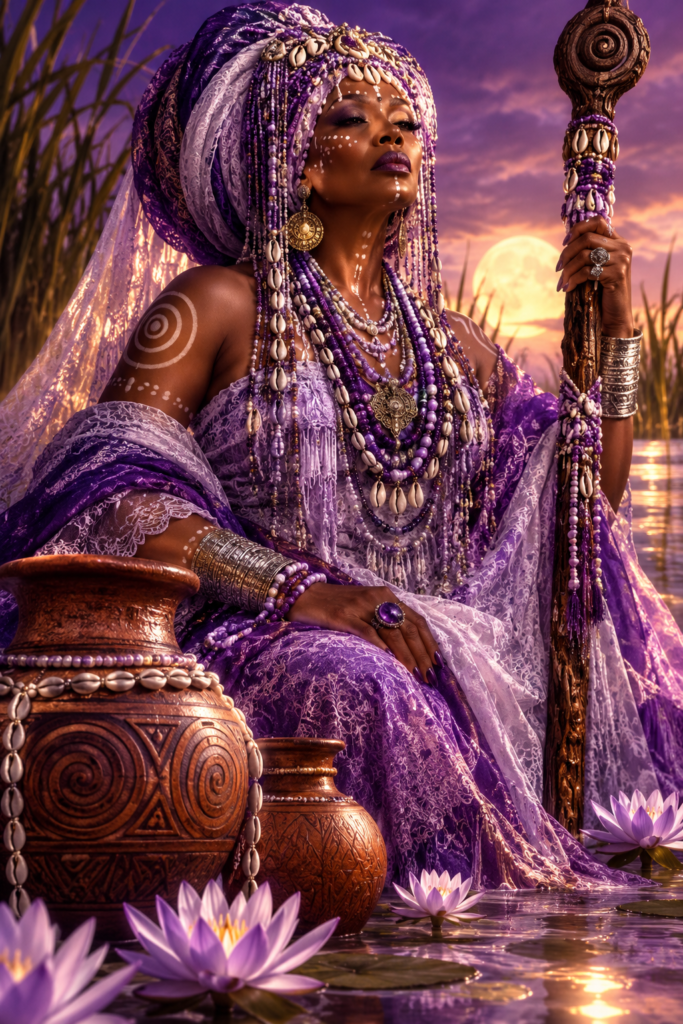
    Purple, lilac, and white — colors frequently associated with Nanã in Brazilian traditions, although exact colors can vary by religious house.
    The ibiri — one of Nanã’s particularly important ritual emblems in Brazilian Candomblé, traditionally constructed from natural materials and associated with her authority and ancestral character.
    When learning about sacred symbols, remember that religious objects used within initiated traditions can have meanings and rules that go far beyond their appearance.
    Nanã Buruku and the Ancestors
    Nanã’s associations with age, death, earth, and ancestral memory naturally connect her with those who came before us.
    But ancestor reverence does not have to mean living in the past.
    It can mean remembering where we came from while becoming something greater.
    We honor our ancestors when we preserve meaningful family stories.
    We honor them when we learn from their victories and their mistakes.
    We honor them when we care for our elders.
    And we honor them when we create healthier patterns for the generations that follow us.
    One beautiful question inspired by Nanã’s symbolism is:
    What wisdom am I leaving behind for the people who come after me?
    Why Is July 26 Associated With Nanã Buruku?
    July 26 is an important devotional date for Nanã in a number of Brazilian Afro-diasporic communities.
    The date also corresponds with the Catholic Feast of Saint Anne, traditionally regarded as the mother of Mary and grandmother of Jesus.
    During the colonial period and afterward, African religious traditions in the Americas developed complex relationships with Catholic saints. In some communities, Nanã became associated or syncretized with Saint Anne because both carried powerful imagery surrounding age, motherhood, ancestry, and grandmotherly wisdom.
    It is important, however, not to treat the two figures as simply interchangeable.
    Nanã Buruku is not Saint Anne.
    They belong to different religious traditions.
    Their association reflects the complicated historical development of Afro-diasporic religions and religious syncretism.
    Likewise, July 26 should not be presented as a universal feast day observed identically by every devotee of Nanã.
    Practices vary according to tradition, country, temple, house, and lineage.

    Honoring the Wisdom Nanã Represents

    If you are not initiated into a tradition that venerates Nanã, you do not need to imitate formal ceremonies.
    Instead, you can respectfully reflect on the universal spiritual lessons her symbolism inspires.
    Spend time in silence.
    Listen to an elder.
    Write down an important lesson life has taught you.
    Research your family history.
    Express gratitude to those who helped you become who you are.
    Practice patience with someone who needs compassion.
    Sit peacefully beside water.
    Or simply ask yourself:
    Where in my life am I trying to force something that needs time?
    Formal offerings, initiatory practices, sacred songs, ritual objects, and ceremonies should be approached according to the teachings of the specific tradition or lineage from which they come.
    Respect is itself a spiritual practice.
    A Reflection for Wisdom, Healing and Peace
    Take a quiet moment.
    Breathe slowly.
    Think about everything you have survived.
    Think about the lessons you once resisted but now understand.
    Think about the people whose wisdom helped shape your life.
    Then say:
    “May I have the wisdom to recognize what I can change, the patience to allow what needs time, and the courage to continue growing through every season of my life. May I honor those who came before me by living with compassion, integrity, and purpose.”
    Nanã-Inspired Affirmations
    I am grounded in ancient wisdom and guided toward what is right for me.
    I trust divine timing and allow my blessings to unfold at the perfect pace.
    I honor my ancestors with gratitude, love, and respect.
    Healing flows gently through my heart, mind, body, and spirit.
    I move through life’s changes with patience, strength, and grace.
    I release what has completed its purpose and peacefully welcome new beginnings.
    My experiences deepen my wisdom, compassion, and understanding.
    I am rooted, peaceful, and spiritually strong.
    I carry forward the wisdom of those who came before me while creating blessings for those who come after me.
    Peace surrounds me, wisdom guides me, and divine timing works in my favor.

    The Enduring Wisdom of Nanã Buruku

    Nanã Buruku reminds us that power does not always have to announce itself.
    Sometimes power looks like patience.
    Sometimes it looks like surviving.
    Sometimes it means knowing when to speak and when to remain silent.
    Sometimes it means caring for an elder.
    Sometimes it means accepting that a chapter has ended.
    And sometimes the greatest spiritual breakthrough comes when we finally stop fighting life’s timing and begin listening to what the journey is trying to teach us.
    Like deep waters, wisdom can be quiet.
    Like clay, life can reshape us.
    And like the earth itself, we can continually transform while remaining connected to where we came from.
    May we walk forward with greater wisdom, compassion, patience, and peace.
    Awake. Transform. Conquer.

  • Orisha Aje: Discover the Ancient African Spirit of Wealth, Prosperity & Abundance

    Discover the Sacred Spirit of Prosperity

    What if wealth was more than numbers in a bank account? What if prosperity was a sacred energy—one that embraces health, opportunity, generosity, peace, and purpose?

    In the rich spiritual traditions of the Yoruba people of West Africa, one revered divine force embodies this expansive understanding of abundance: Orisha Aje. Honored as the spirit of wealth, commerce, and prosperity, Aje reminds us that true riches are built through gratitude, integrity, wise action, and blessings that uplift both ourselves and our communities.

    Whether you’re exploring African spirituality, seeking inspiration for a prosperity practice, or simply curious about ancient wisdom, the teachings surrounding Aje offer timeless insights into living an abundant life.


    Who Is Orisha Aje?

    In many Yoruba traditions, Aje is honored as an Orisha associated with wealth, prosperity, commerce, and abundance. In other traditions, Aje is understood as the sacred spiritual force or divine embodiment of prosperity itself.

    Unlike some Orisha whose stories and family lineages are widely established, Aje is understood differently among various Yoruba traditions, including Ifá, Isese, Lukumí, and Candomblé. This diversity reflects the living nature of these traditions and their rich oral heritage.

    Regardless of the interpretation, Aje represents the divine flow of blessings that allows individuals, families, businesses, and entire communities to flourish.


    Prosperity Means More Than Money

    One of the most beautiful teachings connected with Aje is that prosperity extends far beyond financial wealth.

    True abundance includes:

    • Good health
    • Loving relationships
    • A peaceful home
    • Meaningful work
    • Wisdom
    • Opportunity
    • Food and nourishment
    • Generosity
    • Spiritual fulfillment
    • Lasting happiness

    Money is considered one expression of prosperity—but not the only one.


    Wealth as Sacred Energy

    In Yoruba philosophy, wealth is not something to be worshipped.

    Instead, it is viewed as a sacred resource that should be earned honestly, managed wisely, and shared generously.

    Prosperity becomes a blessing when it allows us to:

    • Support our families
    • Help those in need
    • Build thriving communities
    • Create opportunities
    • Leave a positive legacy

    This perspective encourages a balanced relationship with abundance rather than the endless pursuit of material possessions.


    Aje and Commerce

    Aje has long been associated with:

    • Merchants
    • Entrepreneurs
    • Artists
    • Farmers
    • Craftspeople
    • Traders
    • Business owners
    • Investors

    Traditional marketplaces were often viewed as sacred spaces where prosperity flowed throughout the community. Every honest exchange represented another expression of Aje’s blessings.


    Monday: The Day of Prosperity

    Within Yoruba tradition, Monday (Ojó Ajé) is closely associated with commerce and prosperity.

    Many people choose Monday to:

    • Pray for financial blessings
    • Begin new business ventures
    • Review financial goals
    • Express gratitude
    • Set intentions for the week ahead

    Beginning the week with gratitude and purpose symbolizes opening the door to new opportunities.


    Symbols Associated with Aje

    Many sacred symbols are connected with prosperity and abundance.

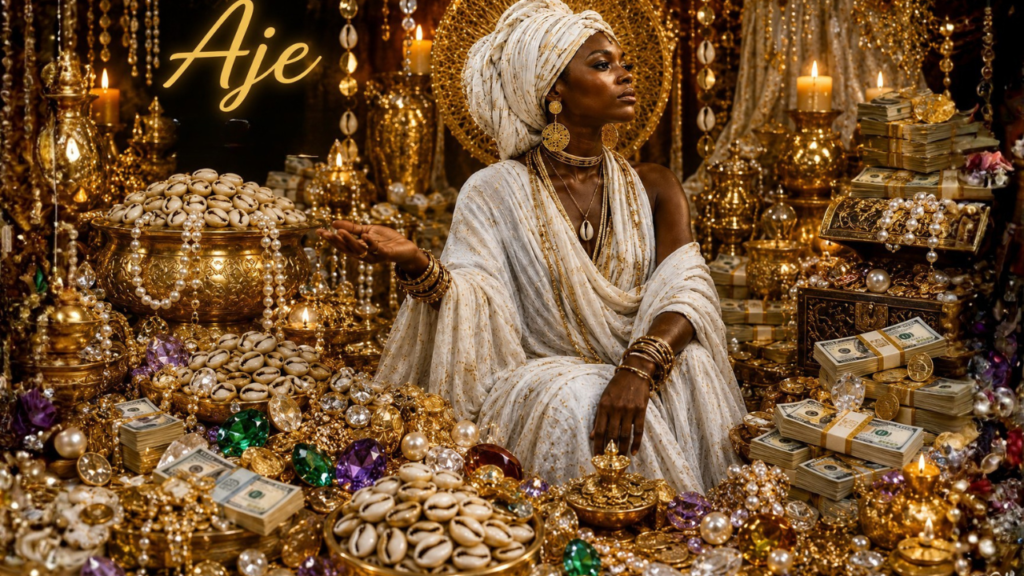
    Cowrie Shells

    Perhaps the best-known symbol of Aje.

    Cowrie shells were once used as currency throughout parts of Africa and remain powerful symbols of prosperity, blessings, and wealth.


    Gold

    Gold represents:

    • Divine favor
    • Enduring prosperity
    • Success
    • Value
    • Royalty

    Honey

    Honey symbolizes:

    • Sweetness
    • Attraction
    • Favor
    • Joy
    • Harmonious relationships

    Just as honey sweetens food, many practitioners view it as a reminder to cultivate kindness and gratitude in daily life.


    Coins

    Coins represent:

    • Circulation
    • Opportunity
    • Growth
    • Financial flow

    Rather than remaining stagnant, prosperity is meant to continue moving and benefiting others.


    Calabashes

    Traditional calabashes are often associated with:

    • Receiving blessings
    • Spiritual abundance
    • Provision
    • Gratitude

    Many prosperity altars include beautifully decorated calabashes filled with symbolic items.


    Creating an Aje-Inspired Prosperity Altar

    You don’t need an elaborate shrine to honor the principles of abundance.

    A simple prosperity altar might include:

    • A gold or yellow cloth
    • A bowl of cowrie shells
    • A few coins
    • A small dish of honey
    • A green or gold candle
    • Fresh flowers
    • A gratitude or prosperity journal

    The purpose is not the objects themselves, but the mindset they help cultivate: gratitude, focus, generosity, and purposeful action.


    A Simple Prosperity Prayer

    Divine Aje,

    May honest prosperity flow into my life.

    Bless my work.

    Bless my home.

    Bless every opportunity before me.

    May I receive abundance with gratitude,

    use it wisely,

    and share my blessings generously.

    May my prosperity become a blessing to others.

    Aṣẹ.


    The Power of Aṣẹ

    No discussion of Yoruba spirituality is complete without mentioning Aṣẹ (pronounced ah-SHAY).

    Aṣẹ is the divine life force that empowers creation, purpose, speech, blessings, and action.

    Many practitioners conclude prayers by saying “Aṣẹ,” affirming that the prayer is empowered and brought into alignment with divine will.


    Living an Abundant Life

    The teachings surrounding Aje encourage us to:

    • Work diligently
    • Practice generosity
    • Remain grateful
    • Act with integrity
    • Continue learning
    • Invest wisely
    • Help others prosper

    When prosperity benefits an entire community, it becomes lasting wealth rather than temporary fortune.


    Daily Prosperity Practice

    Consider beginning each day with these simple habits:

    ✔ Express gratitude for three blessings.

    ✔ Review one financial goal.

    ✔ Learn one new skill.

    ✔ Take one action that moves you toward your dreams.

    ✔ Celebrate every victory, no matter how small.

    Small, consistent actions often create extraordinary long-term results.


    Prosperity Affirmations

    Repeat these affirmations daily:

    ✨ I welcome prosperity into every area of my life.

    ✨ Wealth flows to me with integrity and purpose.

    ✨ I attract opportunities that support my highest good.

    ✨ My work creates lasting abundance.

    ✨ I use my blessings wisely and generously.

    ✨ Every day my prosperity expands.

    ✨ I am grateful for the abundance already present in my life.


    Final Thoughts

    Whether you view Aje as an Orisha, a sacred spiritual force, or a timeless symbol of abundance, the message remains deeply relevant today.

    Prosperity begins with gratitude.

    It grows through wisdom.

    It expands through honest work.

    And it flourishes when shared with others.

    May the timeless teachings associated with Aje inspire you to cultivate a life filled with purpose, generosity, and lasting abundance.

    Aṣẹ.


    Continue Your Journey

    If you enjoyed learning about Aje, you may also enjoy exploring:

    • Olodumare: The Supreme Creator in Yoruba Spirituality
    • Olokun: Keeper of the Deep Ocean and Hidden Treasures
    • Oshun: Orisha of Love, Beauty, and Sweet Waters
    • Yemayá: Mother of the Ocean and Divine Compassion
    • Oya: Orisha of Transformation and Powerful Change

    Stay connected with Awake and Conquer for more articles on African spirituality, Orishas, angels, sacred symbols, prosperity practices, and timeless wisdom for personal and spiritual growth.


  • Oshun’s Feast Day: Honoring the Goddess of Rivers, Beauty & Abundance

    Oshun’s Feast Day: Honoring the Goddess of Rivers, Beauty & Abundance

    Who is Oshun?

    Celebrate Oshun’s Feast Day with rituals, offerings, and prayers to honor the Yoruba goddess of rivers, beauty, and abundance. Learn how to connect with her energy.

    Oshun is one of the most beloved Orishas, often depicted as golden, radiant, and adorned with jewels. She is known for her kindness, compassion, and unmatched beauty, but also for her fierce protection of those who call upon her. Associated with rivers and fresh waters, Oshun embodies fertility, sensuality, creativity, and wealth. She is the patroness of love, charm, and attraction, and many call upon her for blessings in romance, prosperity, and joy.

    When is Oshun’s Feast Day?

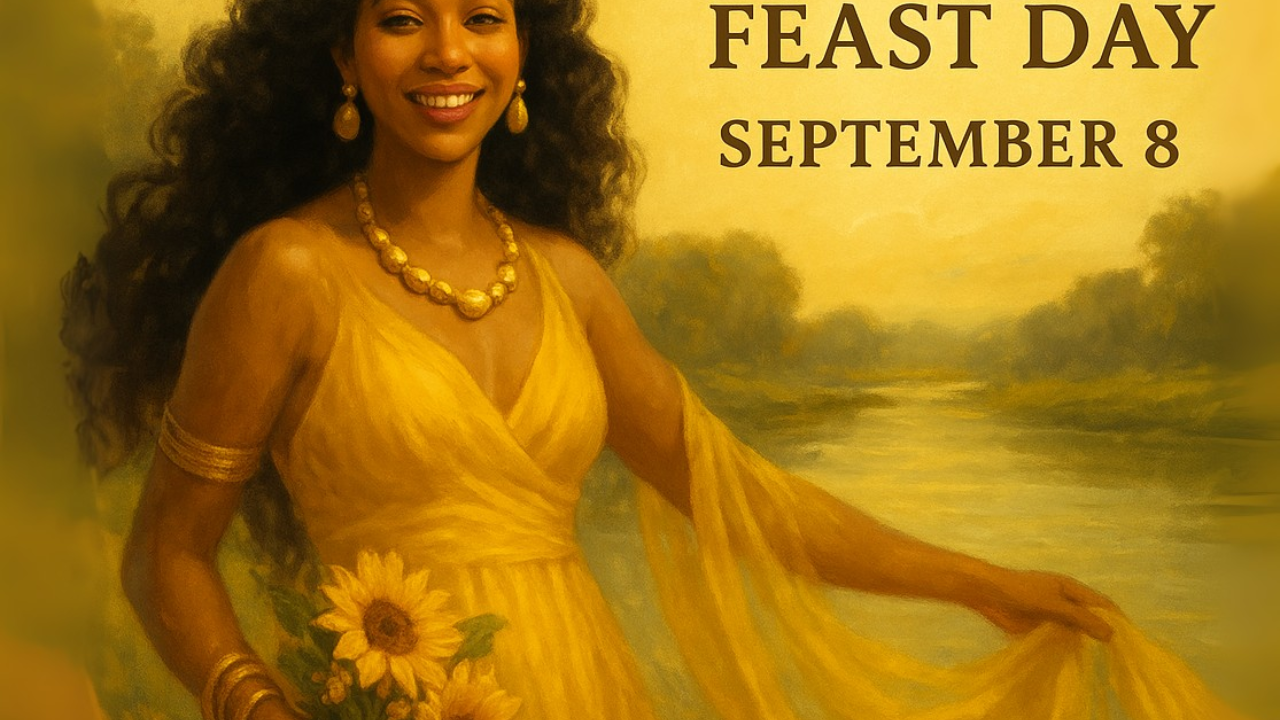
    Oshun’s feast day is celebrated on September 8th, aligning with traditions that honor the Virgin Mary, with whom Oshun is often syncretized in Catholic practice. This blending of African spirituality and Catholicism arose during the diaspora, allowing enslaved people to preserve their traditions under the guise of saint veneration. Today, Oshun’s devotees celebrate her feast with music, offerings, prayers, and community gatherings.

    Every year, devotees around the world gather to celebrate Oshun’s Feast Day, honoring the radiant Orisha of love, beauty, fertility, and flowing abundance. Oshun, revered in the Yoruba tradition and carried across the African diaspora, is the goddess of rivers, fresh waters, sensuality, and prosperity. Her feast day is not just a religious observance—it is a vibrant reminder of the divine feminine, the sweetness of life, and the eternal flow of abundance available to all who honor her.

    How is Oshun’s Feast Day Celebrated?

    Celebrations of Oshun’s feast day often take place by rivers, lakes, and natural bodies of water. Devotees bring offerings such as:

    • Honey and sweets – symbols of sweetness and prosperity
    • Cinnamon, oranges, and pumpkins – foods she adores
    • Sunflowers and yellow flowers – representing her radiant energy
    • Jewelry, mirrors, and perfumes – symbols of beauty and love

    Prayers, chants, and songs are offered, asking Oshun to bless participants with abundance, fertility, love, and joy. Dancers often wear yellow and gold, reflecting Oshun’s golden aura.

    Spiritual Significance of Oshun’s Feast Day

    Oshun teaches that abundance is not only material wealth, but also joy, health, beauty, and the sweetness of love. Her feast day is a reminder to open your heart to receiving, to embrace your sensuality, and to honor the flow of life’s blessings. By aligning with Oshun’s energy, you awaken magnetism, prosperity, and harmony in your own life.

    Ritual for Oshun’s Blessing

    On Oshun’s Feast Day, you can create a simple ritual at home:

    1. Prepare your altar with a bowl of fresh water, yellow flowers, and a candle in gold or yellow.
    2. Offer honey, cinnamon, and fruit, saying:
      “Oshun, goddess of the rivers, bring sweetness, beauty, and abundance into my life.”
    3. Light the candle and meditate on the flow of water, envisioning blessings streaming toward you.
    4. Close with gratitude and leave the offerings by a river or natural water source if possible.

    Affirmations for Oshun’s Feast Day

    • I am aligned with the flowing abundance of Oshun.
    • Sweetness, beauty, and prosperity flow effortlessly into my life.
    • I honor the divine feminine energy within and around me.
    • I attract love, wealth, and joy with ease.
    • I open my heart to Oshun’s blessings.

    Celebrating Oshun’s Feast Day is a powerful way to reconnect with the divine feminine and honor the flow of abundance in all its forms. Whether you visit a river, light a candle, or simply whisper her name, Oshun reminds us that joy, beauty, and prosperity are always within reach.

  • Yemayá: Mother of the Oceans, Nurturer, and Protector

    Yemayá: Mother of the Oceans, Nurturer, and Protector

    Who is Yemayá?

    Yemayá (also spelled Yemoja, Lemanjá, or Yemanjá) is one of the most revered Orishas in the Yoruba tradition, Santería, Candomblé, and other African diasporic spiritual systems. She is the Mother of the Oceans, the divine embodiment of nurturing, creation, fertility, and infinite compassion. Just as the sea covers most of the Earth, Yemayá’s spirit is vast and limitless — she is the universal mother, watching over all her children.

    Her energy is deeply protective and healing. She represents motherhood, intuition, compassion, and emotional strength. For those who seek comfort, guidance, and renewal, Yemayá is a powerful spiritual ally.


    Symbols and Sacred Associations

    • Element: Water (especially oceans and salt water)
    • Colors: Blue, white, silver, and turquoise
    • Symbols: Seashells, fish, the moon, waves, fans
    • Offerings: White flowers, coconuts, watermelon, molasses, sea shells, and perfume
    • Sacred Animals: Fish, peacocks, and ducks

    Spiritual Qualities of Yemayá

    • Nurturing: She is the great mother, providing unconditional love and guidance.
    • Protector: She shields her children from harm and danger, like the ocean tides protecting its creatures.
    • Fertility and Birth: Associated with pregnancy, motherhood, and the creation of life.
    • Emotional Healing: Yemayá helps release grief, pain, and emotional blockages.
    • Wisdom of the Waters: Her energy carries ancient knowledge, intuition, and divine feminine power.

    Rituals and Devotion to Yemayá

    If you wish to honor Yemayá, here are simple ways to connect with her energy:

    1. Visit the Ocean
      Offer her fresh flowers, a white candle, or pour milk, honey, or molasses into the waves (respectfully and safely). As you release your offering, speak your prayers and gratitude.
    2. Create a Yemayá Altar
      • Use blue and white cloth.
      • Place seashells, silver jewelry, candles, and water in a clear glass bowl.
      • Add offerings like fruit, perfume, or white flowers.
    3. Prayers and Chants
      • A simple prayer: “Yemayá, Mother of the Seas, protect me with your waves, cleanse me with your waters, and nurture me with your love.”
      • You may chant “Yemayá Asesu” as a way to invoke her loving presence.
    4. Cleansing Ritual
      • Bathe in sea salt water (or a spiritual bath with salt, coconut water, and white flowers).
      • Imagine Yemayá washing away negativity and restoring your inner peace.

    Affirmations for Yemayá

    • I am nurtured and protected by the divine mother.
    • Yemayá’s waters cleanse and renew me.
    • I honor my emotions as sacred guidance.
    • I am safe, loved, and held by divine feminine energy.
    • Abundance flows to me as endlessly as the ocean tides.

    Yemayá’s Feast Day

    Yemayá is honored on February 2nd in many traditions, especially in Brazil, and on September 7th in the United States and in parts of Cuba and the diaspora. On these days, devotees dress in white and blue, bring offerings to the sea, and celebrate with music, dance, and prayer.


    Why Yemayá Matters Today

    In times of chaos, uncertainty, or emotional overwhelm, Yemayá’s energy reminds us of the power of unconditional love and compassion. She teaches us to flow with life’s tides, to release pain, and to embrace renewal.

    Whether you are seeking protection, healing, or simply a deeper connection with divine feminine energy, Yemayá is a timeless guide whose waters always welcome you home.

    When you call upon Yemayá, you are calling upon the ocean itself — vast, eternal, and nurturing. She reminds us that no matter what storms we face, we are always loved, always protected, and always held by something greater.

    Yemayá’s Sacred Titles & Meanings

    1. Mother of Fishes

    Represents her as the mother of all sea creatures and species, guardian of marine life, and nourisher of abundance.

    1. Queen of the Ocean

    Affirms her rulership over all waters — seas, rivers that flow into the sea, and the mysteries of the deep.

    1. Star of the Sea

    Symbolizes her guiding light, like a celestial mother who helps souls navigate both physical and spiritual journeys.

    1. Mother of Pearls

    Connects her to treasures of the ocean, beauty, wisdom, and the nurturing of inner purity.

    1. Mother of All Living Things

    Extends her dominion beyond fish to all who depend on water — humans, animals, and plants alike.

    1. Our Lady of Regla

    Her syncretized title within Catholicism (especially in Cuba), where she is honored as the Virgin of Regla.

    1. Mother of Waters

    Reflects her as the life force of rivers, lakes, and oceans, and the cycles of birth and rebirth.

    1. Ocean of Compassion

    Emphasizes her nurturing, healing, and protective qualities as a divine mother.

    1. Mother of Shells

    Represents the gifts she provides from the ocean, often used in divination and as offerings on her altars.

    1. Great Womb of the World

    Acknowledges her as the universal mother, the womb from which all life emerges and is sustained.

  • The 7 African Powers: Who They Are and How to Work With Them

    The 7 African Powers: Who They Are and How to Work With Them

    Throughout the African diaspora, especially in Yoruba, Santería, Candomblé, and other Afro-Caribbean traditions, the 7 African Powers are revered as divine spiritual forces—Orishas—who guide, protect, and empower those who call upon them.
    Each power represents a unique aspect of life, nature, and the divine. When invoked together, the 7 African Powers offer complete spiritual support—from love to justice, from healing to strength.
    Who Are the 7 African Powers?
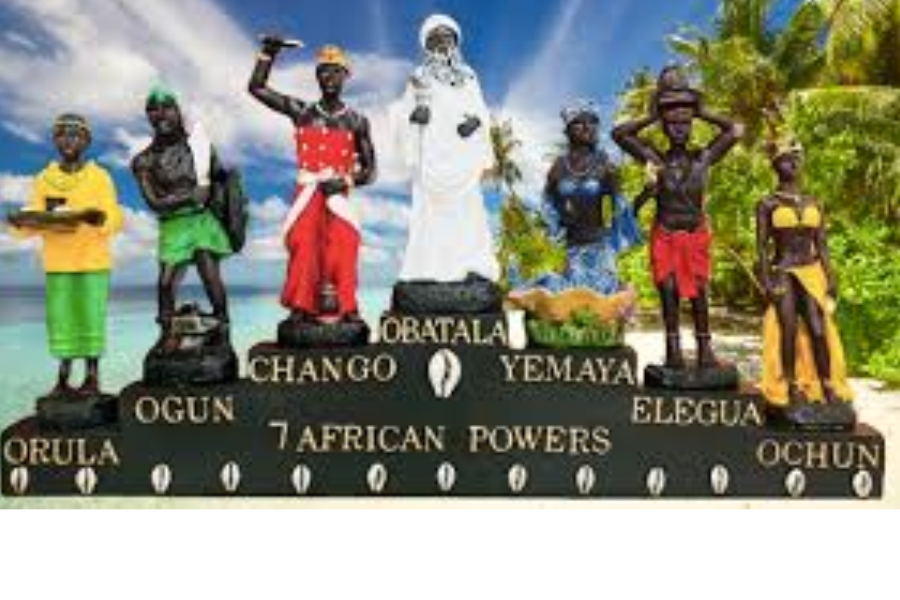
    Here are the 7 most commonly honored Orishas associated with the 7 African Powers:

    1. Elegua (Eleggua) – The Gatekeeper
      Opens and closes doors
      Guardian of crossroads and destiny
      Colors: red and black
      Offerings: candy, toys, coconut, rum
      Work with Elegua when you need direction, decisions, or breakthroughs.
    2. Ogun – The Warrior
      Orisha of iron, strength, and labor
      Protector and enforcer of justice
      Colors: green and black
      Offerings: metal, cigars, rum, red palm oil
      Call on Ogun for protection, courage, and removing obstacles.
    3. Chango (Shango) – The King of Thunder
      God of fire, lightning, masculinity, and leadership
      Associated with power, passion, and charisma
      Colors: red and white
      Offerings: apples, bananas, cinnamon, drums
      Invoke Chango for confidence, success, and righteous action.
    4. Obatala – The Father of Peace
      Orisha of purity, wisdom, and spiritual clarity
      Known for patience, justice, and compassion
      Colors: white
      Offerings: coconut, white flowers, milk, rice
      Work with Obatala to calm your mind, seek justice, and elevate spiritually.
    5. Yemaya – Mother of the Ocean
      Divine mother, protector, nurturer of all life
      Associated with fertility, healing, and emotional balance
      Colors: blue and white
      Offerings: watermelon, molasses, seashells
      Call on Yemaya for healing, motherhood, and emotional strength.
    6. Oshun (Ochun) – Goddess of Love and Prosperity
      Orisha of fresh water, beauty, abundance, and attraction
      Colors: gold and yellow
      Offerings: honey, oranges, cinnamon, sunflowers
      Work with Oshun for love, wealth, creativity, and sweetening situations.
    7. Orunmila (Orula) – The Seer and Diviner
      Orisha of wisdom, fate, and Ifá divination
      Bringer of spiritual insight and clarity
      Colors: green and yellow
      Offerings: palm nuts, kola nuts, candles
      Invoke Orunmila for guidance, prophecy, and wise decision-making.
      How to Work With the 7 African Powers
      Set up an altar: Use candles in their colors, photos or symbols, water, and offerings.
      Pray or speak your intentions: Each Orisha responds to respect and clarity of purpose.
      Light candles: One for each Power or a 7-day candle if you’re calling on all at once.
      Make offerings: Keep them fresh and remove after 1–3 days with gratitude.
      Keep a spiritual journal: Record dreams, signs, and shifts after your work.
      Affirmations to Connect with Their Energy
      “The 7 African Powers walk with me and open every door.”
      “I call upon the wisdom of Orunmila, the strength of Ogun, and the love of Oshun.”
      “Protected by Elegua, guided by Obatala, nurtured by Yemaya, empowered by Shango—I rise.”
      Why the 7 African Powers Matter Today
      In a world that often feels chaotic and uncertain, connecting with these divine energies can bring you grounding, strength, clarity, and purpose. Whether through daily prayer, ritual, or ancestral veneration, the 7 African Powers offer a sacred framework for healing and spiritual evolution.