
When you think about wealth, what comes to mind first?
Perhaps it is enough money to feel secure. Perhaps it is a home filled with laughter, someone you can call when life feels heavy, or the chance to begin again.
Dhanteras offers an opportunity to learn about a Hindu observance connected with prosperity and well-being, then reflect on the things that sustain our own lives.
In 2026, Dhanteras falls on Friday, November 6, with the main Diwali night and Lakshmi Puja observed on Sunday, November 8, Central Daylight Time.
What Is Dhanteras?

Dhanteras, also called Dhantrayodashi, is an observance within the wider Diwali festive period. Its name connects wealth with the thirteenth lunar day.
Although closely connected with Diwali, it has its own significance. Customs vary across regions, families, and religious traditions.
Depending on tradition, worship may honor Lakshmi, associated with prosperity; Kubera, associated with wealth; and Dhanvantari, associated with healing and Ayurveda.
That connection between health and prosperity offers something meaningful to consider: the resources that support a life include more than possessions.
Why Do People Buy Metal Goods?
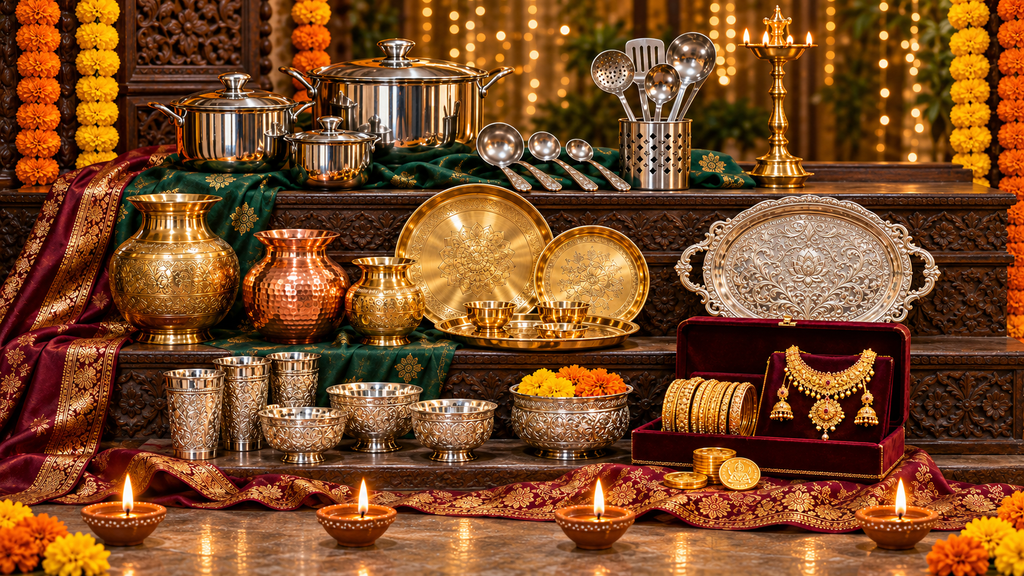
Some families mark Dhanteras by purchasing gold, silver, or useful metal goods, including household utensils. Such purchases are traditionally regarded as auspicious.
You might see beautiful displays of silver bowls, brass vessels, cooking pots, jewelry, and lamps. Alongside their beauty, everyday utensils can remind us of the practical ways a household is sustained.
If buying something is part of your observance, let your needs and budget guide the choice. A purchase does not guarantee financial gain, and you do not need to spend beyond your means to make your reflection meaningful.
What Already Supports Your Life?

Take a moment to think about something you use almost without noticing.
The pot in which you prepare a meal. The blanket that keeps you warm. A skill that helps you earn a living. The person who remembers to ask how you are doing.
Appreciating these things can help us recognize where care is already present.
And gratitude does not require pretending everything is easy. You can be thankful for the support you have and still need more security, rest, or opportunity.
Try asking yourself:
“What helps me get through an ordinary day, and how can I care for it?”
Your answer might lead you to thank someone, repair something useful, or make a thoughtful decision about your resources.
Your Sacred Reset: Notice, Appreciate, Care

This is an original Awake and Conquer reflection inspired by gratitude and thoughtful care. It is not a traditional Dhanteras puja. If you observe the festival, follow the customs of your family or temple for worship.
1. Notice one source of support.
Choose a person, possession, ability, or opportunity that helps sustain your life.
Be specific. Instead of simply writing “my home,” you might write, “the quiet corner where I can rest.”
2. Name why it matters.
Write one sentence explaining what this support makes possible.
Perhaps a friend’s kindness helps you feel less alone. Perhaps a useful tool helps you do your work.
3. Choose one act of care.
Thank the person. Clean or repair the item. Practice the skill. Take one practical step toward an opportunity you value.
Keep it manageable enough to follow through.
4. Make room for what you need.
Finish this sentence:
“One part of my life that needs more care is…”
Then choose a small next step. Appreciation and honest attention to your needs can work together.
Five Affirmations

- “I appreciate the blessings that sustain my life.”
- “I care for my well-being and my resources with love.”
- “I welcome prosperity and take thoughtful steps toward my goals.”
- “I give and receive with an open, grateful heart.”
- “I treasure the love, wisdom, and opportunities present in my life.”
Choose the affirmation that feels most useful today. Pair it with a concrete action, such as reviewing an expense, asking for support, or thanking someone you value.
Carry Gratitude Into the Diwali Season

Dhanteras and the main night of Diwali belong to a connected festive season, but each deserves its own explanation.
As we approach Diwali, we can continue learning about these living traditions while giving thoughtful attention to our own choices.
What do you truly treasure?
Your answer does not have to sound impressive. It might be as simple as a peaceful meal, a familiar voice, or a fresh chance to try.
Share one thing you treasure in the comments. I would love to hear what is meaningful to you.
Watch “Dhanteras 2026: What Do You Truly Treasure?” on Awake and Conquer, and look for our companion video, “Lakshmi & Diwali: Sacred Light, Gratitude and Prosperity.”