There are moments when courage looks like speaking honestly. Sometimes it means setting a boundary, asking for help, or finally beginning something you have been postponing.
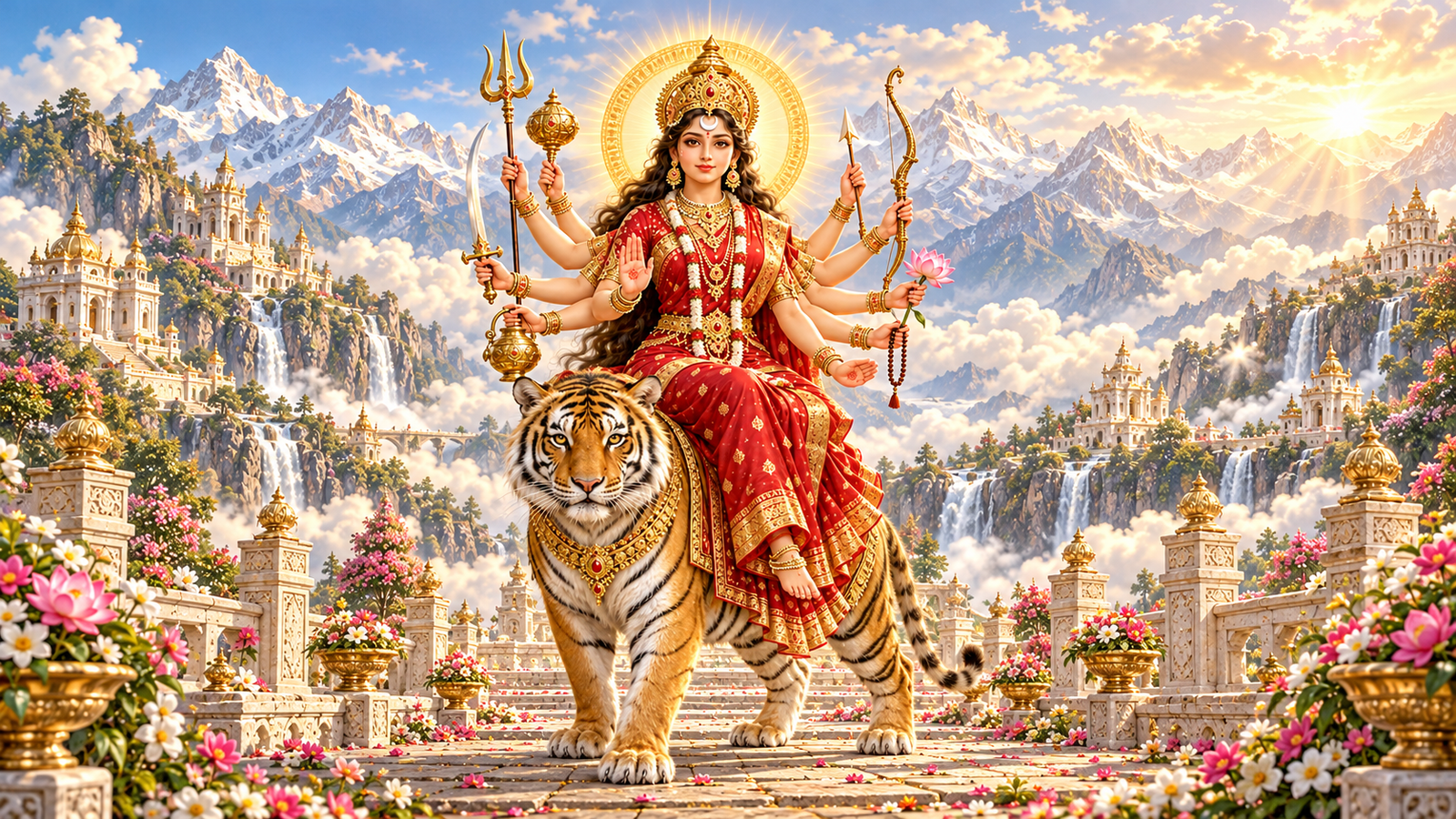
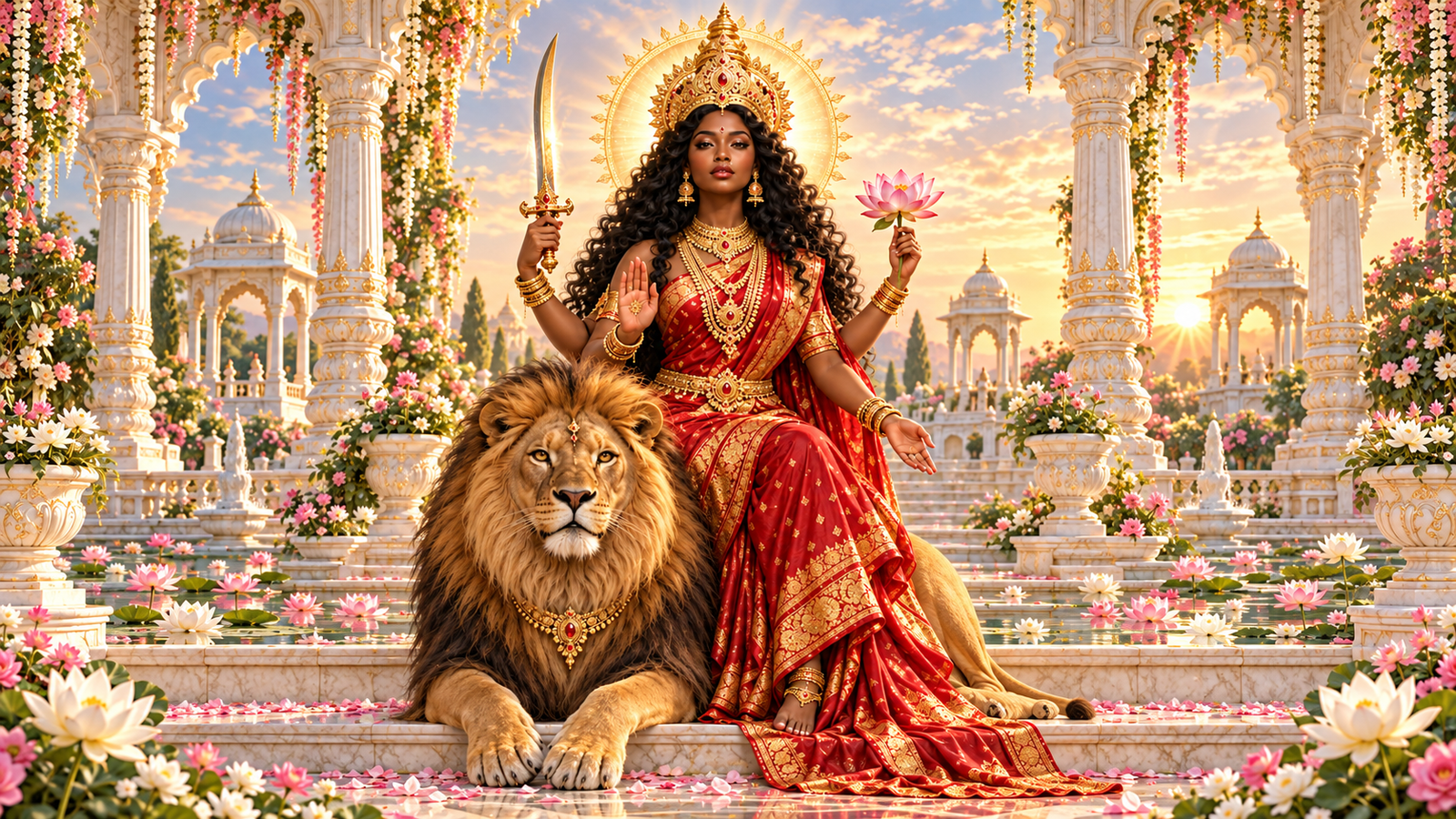
On Day 6 of Navratri, we honor Maa Katyayani, a powerful form of Goddess Durga. Her image invites us to reflect on strength, purposeful action, and the courage to face challenges while keeping our hearts open.
As our Awake and Conquer Navratri journey continues, consider this question:
Where am I ready to act with greater courage?
Who Is Maa Katyayani?
Maa Katyayani is the sixth of the Navadurga—the nine forms of Goddess Durga honored during Navratri.
She is traditionally depicted riding a lion, holding a sword and a lotus, with her other hands offering gestures of protection and blessing. This combination creates a striking image of power alongside grace. www.drikpanchang.com
For devotees, her worship is an expression of faith and reverence. For our reflection today, her sacred imagery also offers an opportunity to consider how we meet difficulties and use our own strength.
Reflecting on the Lion, Sword, and Lotus
Looking at Maa Katyayani’s image, we can draw inspiration from the qualities her symbols bring to mind.
The lion invites a reflection on courage. What would it look like to stand steadily in a difficult moment? You might still feel nervous, yet choose to have an important conversation or take a manageable step forward.
The sword can inspire discernment. Consider what needs a clear decision. Perhaps a commitment no longer fits your capacity, or a familiar habit keeps taking time away from something meaningful.
The lotus offers a reminder to remain open to growth. Strength can make room for kindness, patience, and compassion.
These are personal reflection prompts inspired by her imagery. They offer a way to bring today’s themes into everyday life.
Where Do You Need Courage Today?
You may already know the answer.
Perhaps there is something you need to say, but you have been waiting for the perfect moment. Perhaps you have a creative dream that keeps getting pushed aside. Or perhaps you have been caring for everyone around you while overlooking your own need for rest.
Start by naming one situation.
Then ask yourself: What action would honor both my well-being and my responsibilities?
Speaking honestly might mean expressing a need calmly and clearly. Protecting your peace might mean limiting a draining commitment. Moving toward a dream might mean setting aside twenty minutes to begin.
Give yourself a step you can realistically complete.
A Simple Courage Reflection
Take a quiet moment with a notebook or the notes on your phone. This is a personal reflection exercise inspired by the day’s themes, rather than a formal Navratri worship practice.
Sit comfortably and allow your breathing to settle naturally.
Write your answers to these questions:
- What have I been postponing because I feel afraid or uncertain?
- What matters enough for me to give it my attention?
- What information or support would help me move forward?
- What is one courageous action I can take today?
Read your answers without criticizing yourself. Hesitation can show you where you need preparation, encouragement, or a smaller first step.
Choose your action and decide when you will take it. You might send an inquiry, schedule a conversation, outline a project, or ask someone trustworthy for support.
Let courage become a choice you can put into practice.
Five Affirmations for Courage and Inner Strength
Use these original affirmations as part of your reflection. They are modern statements of intention, rather than traditional religious mantras.
I honor my strength.
I can face challenges with a steady heart.
I express my needs with clarity and respect.
I welcome the support that helps me grow.
I choose one courageous action today.
Speak each statement slowly. Consider what it would look like to support it with an everyday action.
If a statement feels difficult to believe, soften it into a beginning: “I am learning to honor my strength,” or “I am practicing speaking with clarity.”
Allow your words to meet you where you are.
Let Your Next Step Matter
Courage grows through practice. Each time you follow through on a thoughtful decision, you gather experience you can draw on again.
You may discover that you can handle an uncomfortable conversation. You may learn that asking for help creates room to move forward. You may find that a dream feels more possible once you give it a place in your day.
As you reflect on Maa Katyayani, consider how strength and grace can guide your next choice.
Take a gentle breath. Name what matters. Choose your next step.
What courageous action are you choosing today? Share it in the comments below.
Watch our Maa Katyayani Day 6 reel on Awake and Conquer, and continue exploring the nine forms of Durga with us throughout this Navratri series.
Jai Maa Katyayani.