What if your next courageous step begins by naming what frightens you?
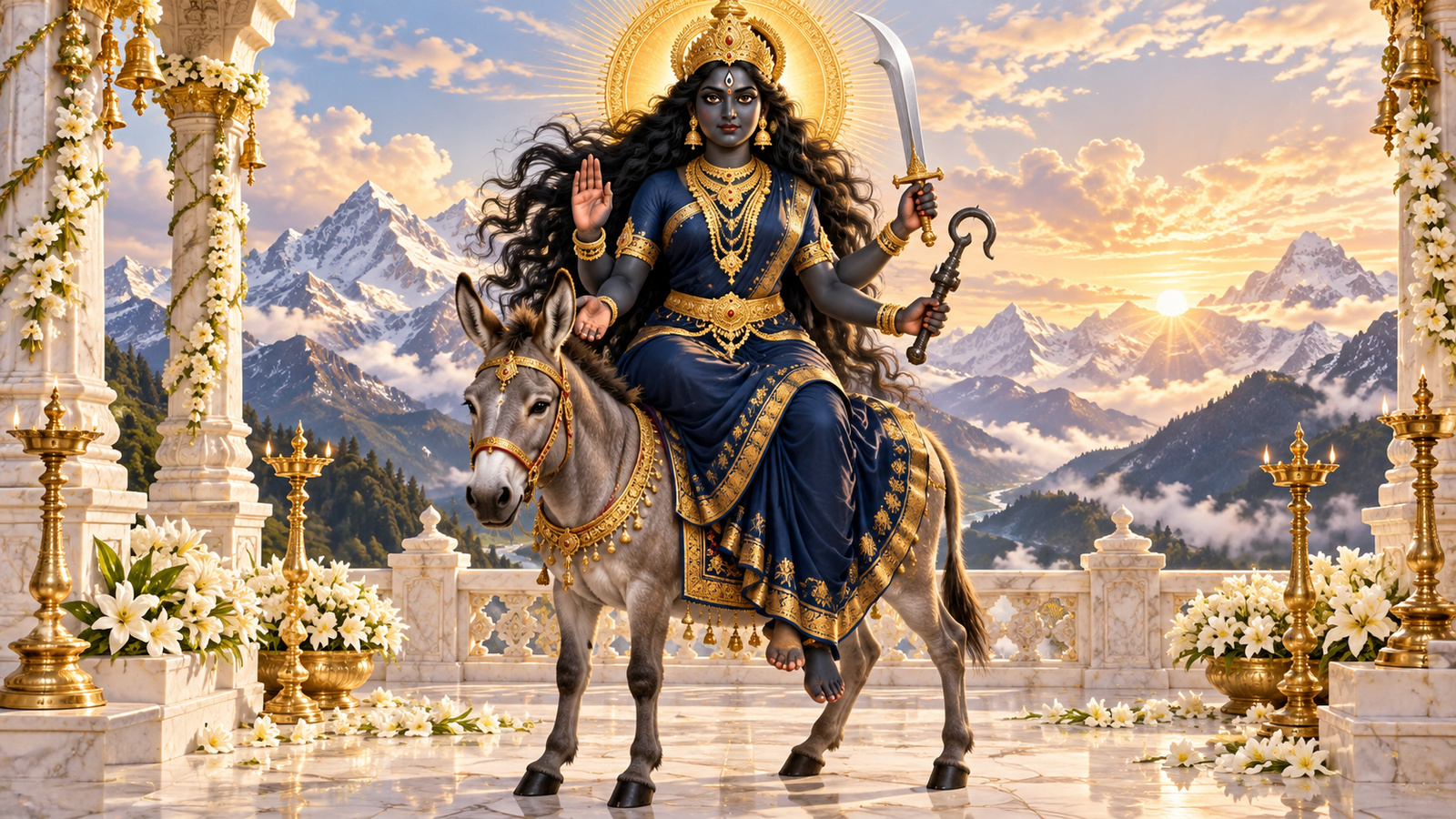
On the seventh day of Navratri, devotees honor Maa Kalaratri, the seventh of the nine forms of Goddess Durga. Her fierce appearance expresses her protective power, and devotees revere her as a destroyer of harmful forces.
At Awake and Conquer, we explore her traditional significance alongside an original reflection on meeting fear with compassion, seeking support, and moving forward thoughtfully.
Who Is Maa Kalaratri?
Maa Kalaratri is a powerful, protective form of the Divine Mother in Hindu tradition. Her name is commonly translated as “night of darkness” or “dark night.”
Although her appearance is formidable, she is also known as Shubhankari, associated with bringing auspiciousness. Her fierce form and benevolent nature belong together: devotees understand her power as protective.
Her place in the Navadurga sequence follows Maa Katyayani and precedes Maa Mahagauri.
Her Traditional Appearance
Maa Kalaratri is traditionally depicted with a dark complexion, flowing loose hair, three eyes, and four arms. A donkey serves as her mount.
Her hands carry protective weapons, commonly described as a sword and an iron implement, while her other hands offer gestures of protection and blessing.
These details distinguish her sacred identity. Her dark complexion is part of her divine imagery; it should not be confused with a symbol of moral wrongdoing.
A Reflection on Facing Fear
For our everyday reflection, consider something you have been hesitant to face.
Perhaps it is an unfinished task, a difficult conversation, or uncertainty about a new direction. Naming the concern can help you understand what deserves attention.
Try completing this sentence:
“I feel afraid of ______ because ______.”
Give yourself an honest answer without criticizing it. Then ask what information, preparation, or support might help.
Fear can offer useful information. You can listen to it while deciding how to respond.
Choose a Manageable Step
Courage does not require you to solve everything at once.
You might begin by:
Writing down the question you need answered.
Preparing what you want to say.
Asking someone trustworthy for support.
Completing one small part of an avoided task.
Allowing yourself time to make a thoughtful decision.
Choose a step that fits your circumstances. Progress can include gathering information, pausing to reassess, or recognizing that you need help.
Welcome Support
You do not have to carry every challenge alone.
A supportive conversation can help you see possibilities you missed. Someone you trust may offer perspective, practical help, or simply the comfort of listening.
Be specific about what would help: “Could you listen while I think this through?” or “Can you help me understand my next step?”
Receiving care is something you can practice, too.
A Quiet Courage Reflection
Sit comfortably and relax your shoulders. Take one slow, comfortable breath.
Ask yourself:
What am I afraid to face?
What is within my control?
What support could help me move forward?
Write down one manageable action. Give yourself a clear starting point and room to adjust as you learn.
This is an original reflection inspired by courage and protection, rather than a traditional Navratri worship ritual.
Five Affirmations for Courage and Clarity
These original affirmations can accompany your reflection:
I acknowledge my fears with compassion.
I give myself time to understand what I need.
I welcome support from people I trust.
I can take one thoughtful step today.
I move forward with courage and clarity.
Choose one affirmation and connect it with an action that supports your well-being.
Honoring Maa Kalaratri’s Sacred Roots
Maa Kalaratri belongs to a living Hindu devotional tradition. Her significance extends beyond a general message about confidence or personal growth.
Learning about her traditional imagery and place among the nine forms of Durga allows us to approach her story with respect. Our everyday reflections accompany that learning while remaining distinct from traditional worship.
Your Day 7 Message
You can begin while you are still finding your confidence.
Name what concerns you. Consider what you can influence. Welcome the support available to you, and choose your next step with care.
Write “I choose courage” in the comments and share what helps you feel supported.
Watch Maa Kalaratri: Courage Through Fear on Awake and Conquer, and continue our Navratri journey with Maa Mahagauri, the eighth form of Durga.
Explore our Hindu Goddesses: Divine Feminine Wisdom & Sacred Stories playlist, and visit awakeandconquer.com for more spiritual inspiration.
There are moments when courage looks like speaking honestly. Sometimes it means setting a boundary, asking for help, or finally beginning something you have been postponing.
On Day 6 of Navratri, we honor Maa Katyayani, a powerful form of Goddess Durga. Her image invites us to reflect on strength, purposeful action, and the courage to face challenges while keeping our hearts open.
As our Awake and Conquer Navratri journey continues, consider this question:
Where am I ready to act with greater courage?
Who Is Maa Katyayani?
Maa Katyayani is the sixth of the Navadurga—the nine forms of Goddess Durga honored during Navratri.
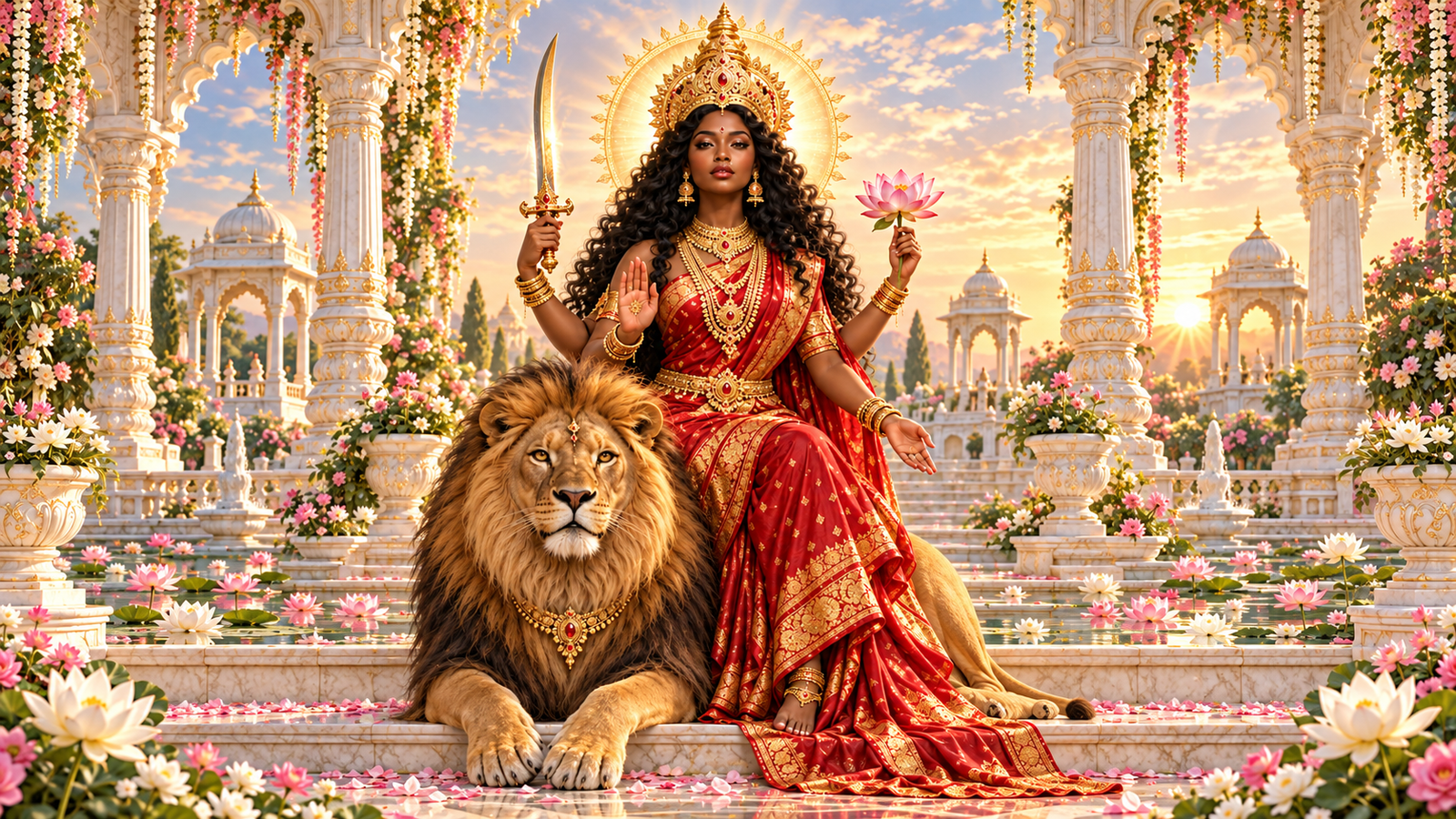
She is traditionally depicted riding a lion, holding a sword and a lotus, with her other hands offering gestures of protection and blessing. This combination creates a striking image of power alongside grace. www.drikpanchang.com
For devotees, her worship is an expression of faith and reverence. For our reflection today, her sacred imagery also offers an opportunity to consider how we meet difficulties and use our own strength.
Reflecting on the Lion, Sword, and Lotus
Looking at Maa Katyayani’s image, we can draw inspiration from the qualities her symbols bring to mind.
The lion invites a reflection on courage. What would it look like to stand steadily in a difficult moment? You might still feel nervous, yet choose to have an important conversation or take a manageable step forward.
The sword can inspire discernment. Consider what needs a clear decision. Perhaps a commitment no longer fits your capacity, or a familiar habit keeps taking time away from something meaningful.
The lotus offers a reminder to remain open to growth. Strength can make room for kindness, patience, and compassion.
These are personal reflection prompts inspired by her imagery. They offer a way to bring today’s themes into everyday life.
Where Do You Need Courage Today?
You may already know the answer.
Perhaps there is something you need to say, but you have been waiting for the perfect moment. Perhaps you have a creative dream that keeps getting pushed aside. Or perhaps you have been caring for everyone around you while overlooking your own need for rest.
Start by naming one situation.
Then ask yourself: What action would honor both my well-being and my responsibilities?
Speaking honestly might mean expressing a need calmly and clearly. Protecting your peace might mean limiting a draining commitment. Moving toward a dream might mean setting aside twenty minutes to begin.
Give yourself a step you can realistically complete.
A Simple Courage Reflection
Take a quiet moment with a notebook or the notes on your phone. This is a personal reflection exercise inspired by the day’s themes, rather than a formal Navratri worship practice.
Sit comfortably and allow your breathing to settle naturally.
Write your answers to these questions:
What have I been postponing because I feel afraid or uncertain?
What matters enough for me to give it my attention?
What information or support would help me move forward?
What is one courageous action I can take today?
Read your answers without criticizing yourself. Hesitation can show you where you need preparation, encouragement, or a smaller first step.
Choose your action and decide when you will take it. You might send an inquiry, schedule a conversation, outline a project, or ask someone trustworthy for support.
Let courage become a choice you can put into practice.
Five Affirmations for Courage and Inner Strength
Use these original affirmations as part of your reflection. They are modern statements of intention, rather than traditional religious mantras.
I honor my strength.
I can face challenges with a steady heart.
I express my needs with clarity and respect.
I welcome the support that helps me grow.
I choose one courageous action today.
Speak each statement slowly. Consider what it would look like to support it with an everyday action.
If a statement feels difficult to believe, soften it into a beginning: “I am learning to honor my strength,” or “I am practicing speaking with clarity.”
Allow your words to meet you where you are.
Let Your Next Step Matter
Courage grows through practice. Each time you follow through on a thoughtful decision, you gather experience you can draw on again.
You may discover that you can handle an uncomfortable conversation. You may learn that asking for help creates room to move forward. You may find that a dream feels more possible once you give it a place in your day.
As you reflect on Maa Katyayani, consider how strength and grace can guide your next choice.
Take a gentle breath. Name what matters. Choose your next step.
What courageous action are you choosing today? Share it in the comments below.
Watch our Maa Katyayani Day 6 reel on Awake and Conquer, and continue exploring the nine forms of Durga with us throughout this Navratri series.
Every year on September 8, many devotees honor Oshun, one of the most beloved Orishas associated with fresh water, love, beauty, fertility, sensuality, joy, creativity, prosperity, and abundance. Golden, radiant, and intimately connected with rivers, Oshun represents far more than physical beauty. Her symbolism speaks to self-worth, sweetness, attraction, diplomacy, creativity, pleasure, generosity, and the ability to receive the goodness life has to offer. Her flowing waters also offer a powerful spiritual lesson: a river does not stop being a river when it encounters an obstacle. It finds another path. For anyone exploring African and African diasporic spiritual traditions, September 8 offers an opportunity to learn more about Oshun, appreciate the traditions surrounding her, and reflect on the qualities she represents.
Who Is Oshun?
Oshun is an Orisha originating within Yoruba religious tradition and honored in several African diasporic traditions. She is strongly associated with fresh water, particularly rivers. Oshun is commonly connected with:
Love and attraction
Beauty and sensuality
Fresh water and rivers
Fertility and motherhood
Prosperity and abundance
Joy and pleasure
Creativity and the arts
Diplomacy and sweetness
Self-worth and confidence Her imagery is frequently filled with brilliant yellow and gold, beautiful jewelry, mirrors, fans, flowers, flowing water, and honey. But reducing Oshun simply to beauty or romance misses much of her depth. Oshun also represents intelligence, determination, dignity, influence, and power. Her sweetness should never be mistaken for weakness.
Why Is Oshun Honored on September 8?
The September 8 observance is particularly associated with Afro-Cuban and Lukumí traditions, where Oshun became syncretically associated with Our Lady of Charity of El Cobre — La Virgen de la Caridad del Cobre, the Patroness of Cuba. The Catholic feast of Our Lady of Charity is celebrated on September 8. The relationship between Catholic saints and Orishas developed within a complicated history of colonialism, slavery, cultural survival, adaptation, and resistance. Enslaved Africans and their descendants preserved important elements of African spirituality despite tremendous pressure and restrictions on their religious practices. Over generations, associations developed between certain Catholic figures and particular Orishas. This is why September 8 became an important date for Oshun within some African diasporic communities. It is important, however, to understand that Oshun and Our Lady of Charity are not simply interchangeable figures. They originate in distinct religious traditions, even though historical syncretism created an important relationship between them.
Oshun and the Spiritual Meaning of the River
One of the most beautiful ways to understand Oshun is through her connection with flowing freshwater. A healthy river moves. It nourishes. It changes direction. It gives life. And when something blocks its path, water often finds another way forward. This makes the river a powerful symbol for examining our own lives. Where have you become stagnant? What are you desperately trying to force? What are you afraid to release? Where are you refusing to receive? And what might happen if you allowed yourself to move differently? Oshun’s association with flowing water can remind us that sometimes transformation doesn’t require pushing harder. Sometimes we need to change direction and begin flowing again.
Oshun, Self-Worth and Magnetism
Another powerful lesson associated with Oshun is recognizing your value. True magnetism isn’t simply about physical appearance. It begins internally. When you know your worth, you become more selective about what you accept. You stop begging for situations that continually reject you. You become more conscious of how you speak to yourself. You begin choosing relationships that offer respect rather than simply attention. You create boundaries around your time and energy. And you become more comfortable receiving. This creates a beautiful Feast Day reflection: Where am I accepting less than what I know I deserve? Write down whatever comes to mind. Then ask: What would I choose differently if I truly recognized my value? That answer may reveal something important.
Oshun and the Sweetness of Life
Honey is one of the substances famously associated with Oshun. Symbolically, honey represents sweetness. But sweetness is more profound than simply experiencing pleasure. Many people become so focused on responsibilities, survival, problems, and future goals that they forget to experience the life happening around them. There must also be room for: Beauty. Music. Rest. Laughter. Friendship. Love. Creativity. Pleasure. Celebration. Gratitude. The sweetness of life reminds us that abundance isn’t only measured by money. A prosperous life can also contain meaningful relationships, peaceful mornings, good health, opportunities, creativity, security, freedom, beautiful surroundings, and moments of genuine joy.
Oshun and Prosperity
Oshun is also widely associated with prosperity and abundance. This makes her symbolism especially meaningful for people seeking to develop a healthier relationship with receiving. Sometimes we unconsciously associate receiving with selfishness. We may feel comfortable giving but uncomfortable accepting help, compliments, opportunities, money, affection, or recognition. Yet healthy exchange requires both. Giving. And receiving. On September 8, consider asking yourself: Am I genuinely open to receiving what I say I desire? Then consider the opportunities already surrounding you. Abundance does not always arrive in the form we expect. Sometimes it arrives as an introduction. An idea. A new skill. A conversation. An unexpected opportunity. A closed door that redirects you toward something better. Or the courage to finally take action.
A Simple and Respectful Oshun Feast Day Reflection
If you are not initiated into a Yoruba or African diasporic religious tradition, you can keep your observance simple and respectful rather than attempting ceremonies that traditionally require specific religious knowledge or initiation. Create a peaceful space for reflection. You may choose beautiful yellow or gold flowers and place a bowl of clean fresh water nearby as a symbolic reminder of Oshun’s connection with rivers. Sit quietly. Take several slow breaths. Look into the water and think about what you are ready to stop carrying. Ask yourself: What needs to begin flowing again in my life? Then consider love, finances, creativity, relationships, confidence, career, spirituality, and your relationship with yourself. Choose one area where you are ready for movement. Write: “I allow positive movement to begin here.” Keep the paper somewhere meaningful as a reminder of your intention.
A Mirror Practice for Self-Worth
Because mirrors are commonly associated with Oshun’s imagery, you can also use the day for a simple self-worth reflection.
Stand comfortably in front of a mirror.
Look directly into your own eyes.
Instead of examining your appearance, concentrate on the person looking back at you.
Then slowly say:
“I recognize my worth.”
“I honor the person I am becoming.”
“I receive love that respects and values me.”
“I allow prosperity to enter my life.”
“I am worthy of joy, beauty, dignity and abundance.”
Repeat the affirmations slowly rather than rushing through them.
Allow yourself to actually hear what you’re saying.
5 Powerful Oshun-Inspired Affirmations
Use these affirmations on September 8 or whenever you want to reconnect with the qualities of confidence, flow, beauty and abundance: 1. I am radiant, worthy, confident and magnetic. 2. Love that honors and respects me flows naturally into my life. 3. Prosperity and beautiful opportunities flow freely toward me. 4. I welcome joy, creativity, pleasure and abundance into my life. 5. Like the river, I continually flow toward everything aligned with my highest good.
A Prayer of Honor for Oshun
Radiant Oshun, Lady of the flowing waters, I honor the beauty, wisdom, sweetness, love and abundance you represent. May the rivers of my life continue to flow. May stagnant pathways begin moving. May I recognize my worth without depending upon the approval of others. May healthy love surround me. May prosperity find fertile ground in my life. May creativity awaken within me. May joy return to places where heaviness has remained too long. Give me wisdom to recognize when I should stand firmly and when I should flow around the obstacle. May my heart remain open while my discernment remains strong. May I remember that I am worthy of dignity, respect, beauty, joy, love and abundance. And may I remain grateful for the sweetness already present within my life. May the river continue to flow.
Honoring Oshun Through Your Everyday Life
Perhaps one of the most meaningful ways to reflect on Oshun isn’t limited to September 8. Carry the lesson forward. Bring flowers into your home. Take care of your body. Protect freshwater and the natural environment. Create something beautiful. Dance. Listen to music. Practice gratitude. Treat yourself with dignity. Stop chasing relationships that don’t honor you. Allow yourself to receive compliments. Celebrate other people’s successes without believing they diminish your own. Make your surroundings more beautiful. Create financial goals that support the life you want. And remember to enjoy some of what you work so hard to create. Spirituality shouldn’t only teach us how to endure life. It can also remind us how to experience it.
The Lesson of Oshun: Let Your Life Flow
Oshun’s river carries a timeless message. You do not have to force every door. You do not have to chase everything. You do not have to diminish yourself to receive love. And you do not have to prove your worth before allowing yourself to experience joy. Sometimes the next chapter begins when you stop fighting the current. Release what has become stagnant. Recognize your worth. Welcome sweetness. Remain open to opportunity. And allow yourself to receive. This September 8, may love fill your heart, joy fill your home, prosperity fill your path, and abundance flow through your life like a beautiful, never-ending river.
Happy Feast Day to Oshun.
Continue Your Spiritual Journey
If you enjoyed this celebration of Oshun, explore more spiritual wisdom, sacred traditions, manifestation practices, affirmations, Orisha teachings, angelic guidance, and abundance practices with Awake and Conquer. Subscribe to the Awake and Conquer YouTube channel and continue your journey toward greater spiritual awareness, empowerment, prosperity, and intentional living.