pinterest-site-verification=81e6ebea8354f222dd417de7656dad6e

Tag: #goalsetting

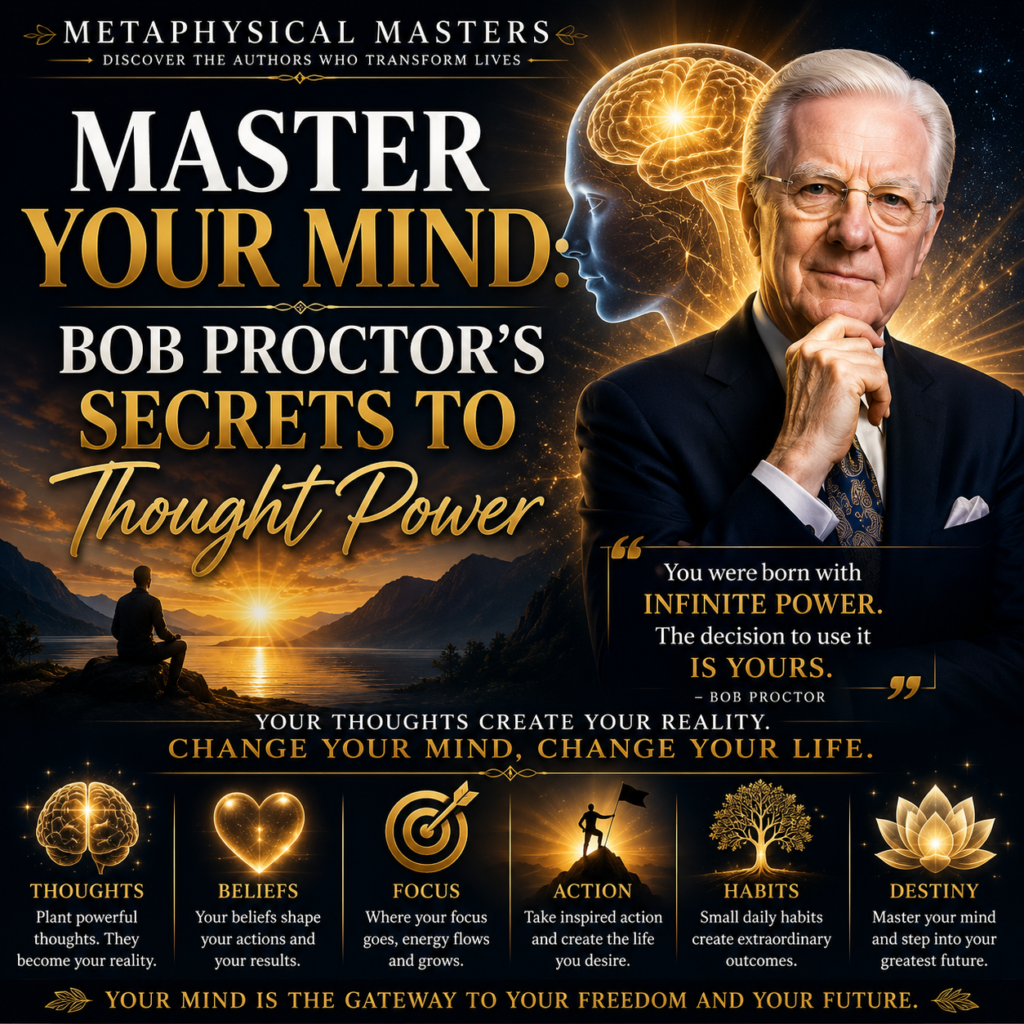
  • Master Your Mind: Bob Proctor’s Secrets to Thought Power

    How Your Thoughts Shape Your Habits, Decisions, and Future
    Have you ever wondered why some people consistently achieve extraordinary success while others remain stuck in the same patterns year after year?
    According to legendary personal development teacher Bob Proctor, the answer begins in one place: the mind.
    For decades, Proctor taught that our thoughts influence our beliefs, our beliefs shape our actions, and our actions ultimately determine the results we experience in life. His teachings inspired millions to become more intentional about how they think, what they believe, and the goals they pursue.
    If you’ve ever wanted to create lasting change, mastering your mind may be the first—and most important—step.
    Who Was Bob Proctor?
    Bob Proctor (1934–2022) was a Canadian author, speaker, and personal development coach. He became internationally known for teaching the principles of mindset, prosperity, and human potential. His work gained worldwide attention through the bestselling film The Secret, where he discussed the power of thought, belief, and focused intention.
    Throughout his career, Proctor emphasized that personal growth begins with changing the way we think. Rather than seeing ourselves as limited by circumstances, he encouraged people to develop empowering beliefs and align their daily actions with the future they wanted to create.
    Your Mind Is Like a Garden
    One of the easiest ways to understand thought power is to imagine your mind as a garden.
    Every thought is a seed.
    Positive thoughts, constructive habits, and meaningful goals can grow into confidence, opportunity, and progress.
    Negative thoughts, fear, and self-doubt can also take root if left unchecked.
    Just as a gardener chooses what to plant and removes weeds regularly, you can become more intentional about the ideas you allow to influence your life.
    Beliefs Shape Behavior
    Many of the beliefs we carry were formed early in life through our experiences, education, and environment.
    Some beliefs empower us.
    Others quietly limit us.
    For example:

    • “I’m capable of learning new skills.”
    • “I can improve with practice.”
    • “I deserve success.”
      These beliefs encourage growth.
      On the other hand:
    • “I’m not good enough.”
    • “I’ll never succeed.”
    • “People like me don’t achieve big goals.”
      These thoughts often become barriers long before we even take action.
      Recognizing limiting beliefs is the first step toward replacing them with healthier, more empowering perspectives.
      The Power of Repetition
      Bob Proctor often taught that repeated thoughts gradually become beliefs.
      This is why our daily mental habits matter.
      The words you speak to yourself, the information you consume, and the conversations you engage in all influence your mindset over time.
      Replacing negative self-talk with encouraging, realistic, and growth-oriented thoughts can gradually change the way you approach challenges and opportunities.
      Visualization with Purpose
      Visualization has long been used by athletes, performers, and successful professionals.
      When practiced intentionally, it helps you become familiar with your desired outcome and strengthens motivation.
      Try this simple exercise:
      Close your eyes for a few minutes each day.
      Imagine yourself successfully reaching one meaningful goal.
      Notice the details.
      Imagine how you would feel.
      Then ask yourself:
      “What action can I take today that moves me one step closer to that vision?”
      Visualization becomes most effective when paired with consistent effort.
      Action Creates Results
      Positive thinking alone is rarely enough.
      Bob Proctor encouraged people to align their mindset with purposeful action.
      Every meaningful goal requires:
    • Learning
    • Practice
    • Persistence
    • Flexibility
    • Consistency
      Your thoughts influence your actions—but your actions create measurable results.
      Daily Habits That Strengthen Thought Power
      Simple habits practiced consistently can help reinforce a positive mindset:
    • Read something inspiring each day.
    • Write down your goals.
    • Practice gratitude.
    • Limit negative self-talk.
    • Spend time with encouraging people.
    • Review your progress regularly.
    • Celebrate small wins.
      These habits help create an environment where growth becomes more natural.
      Five Daily Affirmations
      Repeat these each morning:
    • My thoughts support the life I am creating.
    • I choose empowering beliefs every day.
    • I grow stronger, wiser, and more confident with every challenge.
    • I take consistent action toward my goals.
    • My mindset helps me create a meaningful and successful life.
      Bob Proctor reminded millions that lasting change often begins long before external success becomes visible.
      It starts with your thoughts.
      By becoming more aware of your beliefs, choosing empowering perspectives, and taking consistent action toward meaningful goals, you can create momentum that carries into every area of your life.
      Master your thoughts.
      Strengthen your habits.
      Take purposeful action.
      Your future is shaped by what you choose to think—and what you choose to do—today.
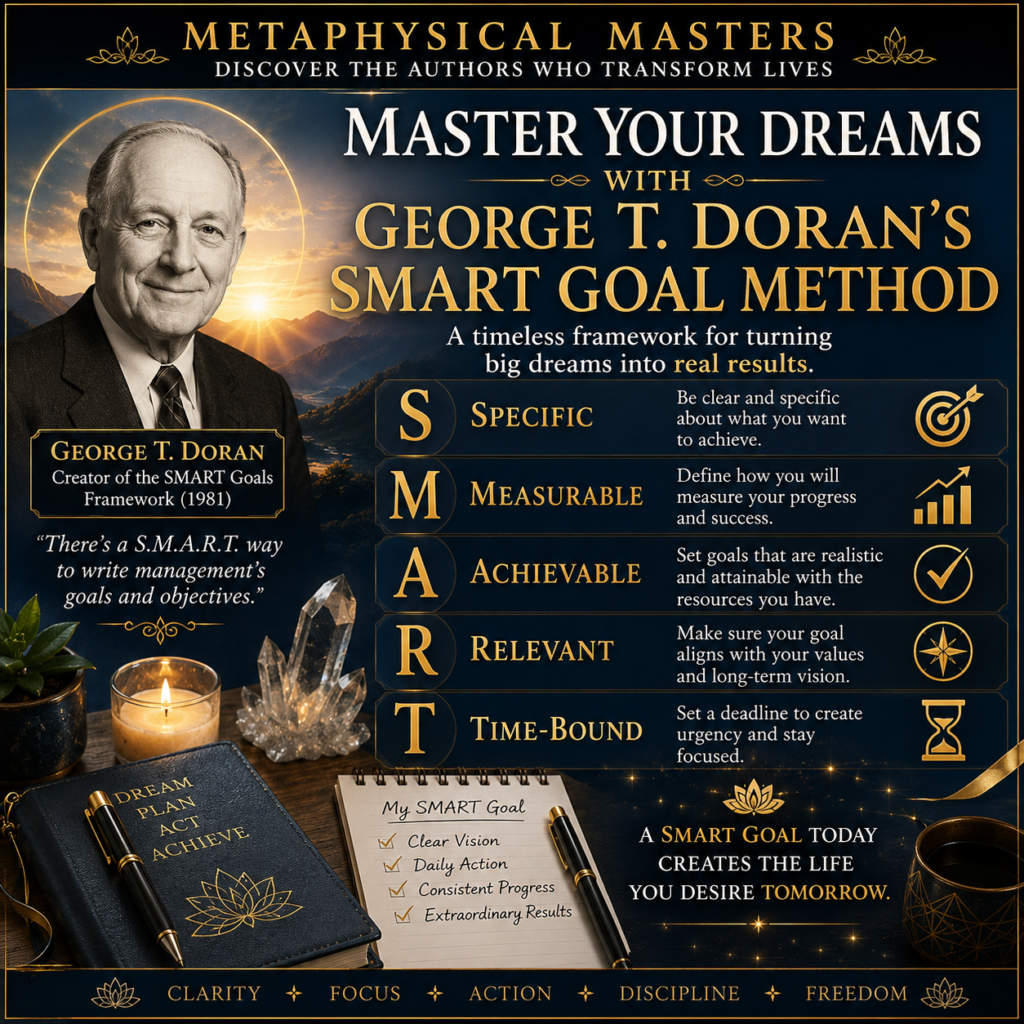
  • Master Your Dreams with George T. Doran’s SMART Goal Method

    Turn Big Dreams into Real Achievements with a Timeless Goal-Setting Framework
    Every great accomplishment begins with a dream—but dreams alone don’t create results. The bridge between vision and achievement is a clear, actionable plan.
    In 1981, management consultant George T. Doran introduced a simple yet powerful framework in his article, “There’s a S.M.A.R.T. Way to Write Management’s Goals and Objectives.” More than four decades later, the SMART Goal Method remains one of the world’s most respected systems for setting meaningful, achievable goals.
    Whether you’re pursuing financial freedom, improved health, a thriving business, a successful YouTube channel, or greater personal fulfillment, the SMART framework can help you move from wishing to doing.
    Who Was George T. Doran?
    George T. Doran was a management consultant who recognized that many organizations—and individuals—set goals that were too vague to achieve.
    People often said things like:

    • “I want to be successful.”
    • “I want to lose weight.”
    • “I want to make more money.”
    • “I want to be happier.”
      While these are admirable aspirations, they lack the clarity needed to guide consistent action.
      To solve this problem, Doran introduced the SMART framework, encouraging people to create goals that are well-defined, measurable, and realistic.
      His idea has since become one of the most widely used goal-setting systems in business, education, coaching, athletics, and personal development.

    What Does SMART Mean?

    S — Specific
    A goal should clearly define exactly what you want to accomplish.
    Instead of saying:
    “I want to grow my business.”
    Try:
    “I want to increase my monthly revenue by offering two new digital products.”
    The clearer your destination, the easier it becomes to create the path.
    M — Measurable
    If you can’t measure your progress, it’s difficult to know whether you’re moving forward.
    Ask yourself:

    • How will I know I’ve succeeded?
    • What numbers will I track?
    • How often will I measure progress?
      Tracking your progress helps maintain motivation and highlights areas for improvement.
      A — Achievable
      Great goals should challenge you—but they should also remain realistic.
      Ask yourself:
    • Do I have the necessary skills?
    • If not, what do I need to learn?
    • What resources can help me?
      An achievable goal stretches your abilities without becoming discouraging.
      R — Relevant
      Every goal should align with your larger vision.
      Ask:
    • Does this support the life I want to create?
    • Is this worth my time and energy?
    • Does it move me closer to my long-term purpose?
      When your goals match your values, staying committed becomes much easier.
      T — Time-Bound
      Without a deadline, goals often remain unfinished.
      Setting a completion date creates urgency and encourages consistent action.
      For example:
      “I will complete my online course within 90 days.”
      A timeline transforms intentions into commitments.
      Putting SMART into Practice
      Imagine your dream is to write a book.
      A vague goal might be:
      “I want to write a book someday.”
      A SMART goal could become:
      “I will write a 200-page personal development book by December 31 by writing 500 words every weekday.”
      Notice how much easier it is to create a daily plan when the goal is clearly defined.
      Why SMART Goals Work
      The SMART framework reduces overwhelm by breaking large dreams into manageable steps.
      Instead of focusing only on the finish line, you focus on today’s next action.
      Small, consistent progress builds momentum.
      Momentum builds confidence.
      Confidence builds success.
      Combining SMART Goals with Mindset
      Many people use visualization, affirmations, gratitude, and meditation to cultivate a positive mindset.
      These practices can strengthen your focus and motivation, but they become even more effective when paired with a clear plan.
      Think of it this way:
    • Your vision inspires you.
    • SMART goals organize your path.
    • Daily action moves you forward.
    • Consistency produces results.
      Mindset and action work best together.
      Common Goal-Setting Mistakes
      Avoid these common pitfalls:
    • Setting goals that are too vague.
    • Trying to accomplish too many goals at once.
    • Never reviewing your progress.
    • Quitting after temporary setbacks.
    • Focusing only on outcomes instead of daily habits.
      Success is rarely about perfection. It’s about persistence.
      Create Your First SMART Goal
      Take a few minutes today and answer these questions:
    • What is one goal I truly want to accomplish?
    • Why does it matter to me?
    • How will I measure success?
    • Is it realistic?
    • Does it align with my bigger vision?
    • When will I complete it?
      Write your answers down.
      A written goal is far more likely to become a completed goal.
      Five SMART Goal Affirmations
      Repeat these daily:
    • I create clear goals that lead me toward success.
    • Every day I take meaningful action toward my dreams.
    • I remain focused, disciplined, and committed.
    • I celebrate every step of my progress.
    • My consistent actions create extraordinary results.
      George T. Doran’s SMART Goal Method has stood the test of time because it transforms uncertainty into clarity.
      Instead of hoping success will happen, you create a roadmap that guides your actions one step at a time.
      Dream boldly.
      Plan wisely.
      Act consistently.
      And remember: every extraordinary achievement begins with one clearly defined goal.
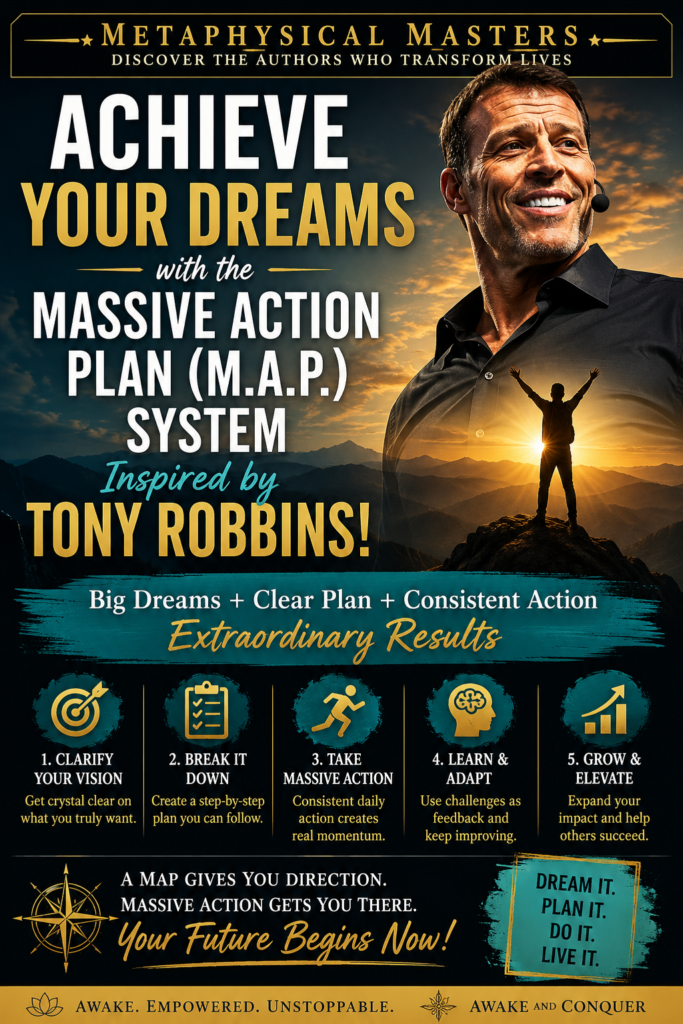
  • Achieve Your Dreams with the Massive Action Plan (M.A.P.) System Inspired by Tony Robbins

    Have you ever noticed that many people have incredible dreams but never seem to make meaningful progress toward them? The difference often isn’t talent, intelligence, or luck. More often than not, it’s consistent, focused action.
    One of the most influential ideas popularized by Tony Robbins is the concept of taking massive action. While goals and positive thinking are important, lasting success comes from combining a compelling vision with disciplined execution.
    Whether your dream is building a successful business, improving your health, strengthening relationships, or creating greater financial freedom, the Massive Action Plan (M.A.P.) offers a practical framework for turning ideas into reality.
    Why Massive Action Matters
    Many people wait until they feel completely ready before taking the first step. Unfortunately, that perfect moment rarely arrives.
    Progress is created by movement.
    Every action produces feedback. Every lesson creates improvement. Every improvement builds momentum.
    Success is rarely the result of one giant leap. Instead, it grows from hundreds of intentional decisions made consistently over time.
    Step 1: Create a Crystal-Clear Vision
    Every meaningful achievement begins with clarity.
    Ask yourself:

    • What do I truly want?
    • Why is this goal important?
    • How will my life improve when I achieve it?
    • Who will benefit from my success?
      The more vivid your vision becomes, the easier it is to stay motivated when challenges appear.
      Visualization can be a powerful tool. Spend a few minutes each day imagining yourself already living the life you’re working toward. Picture the details. Experience the emotions. Let your vision become familiar.
      Step 2: Break the Dream into Small Actions
      Large goals can feel overwhelming.
      Instead of focusing only on the destination, identify the next small step.
      For example:
    • Write one page.
    • Record one video.
    • Read one chapter.
    • Make one phone call.
    • Learn one new skill.
    • Save one dollar more than yesterday.
      Small actions performed consistently create extraordinary results.
      Step 3: Take Massive Action
      Massive action doesn’t necessarily mean working around the clock.
      It means becoming consistently engaged in activities that move you closer to your goal.
      Successful people continually ask:
    • What can I do today?
    • What can I improve?
    • What can I learn?
    • What can I test?
    • Who can I serve?
      The more meaningful action you take, the more opportunities begin to appear.
      Step 4: Learn from Every Outcome
      Not every strategy works the first time.
      That isn’t failure.
      It’s information.
      Successful people view obstacles as feedback rather than defeat. Every challenge teaches something valuable about what to improve next.
      When one approach doesn’t work, adjust your strategy instead of abandoning your goal.
      Flexibility often becomes one of the greatest predictors of long-term success.
      Step 5: Build Daily Momentum
      Momentum is created through consistency.
      Simple daily habits often outperform occasional bursts of motivation.
      Consider creating a morning success routine that includes:
    • Reviewing your goals
    • Reading something inspiring
    • Visualizing success
    • Practicing gratitude
    • Exercising your body
    • Completing your highest-priority task first
      These habits help keep your focus aligned with your long-term vision.
      Combining Action with Manifestation
      Many people are drawn to visualization, affirmations, and the Law of Attraction.
      These practices can strengthen your mindset by helping you maintain focus, confidence, and optimism. However, meaningful results generally come from pairing that mindset with practical action.
      Think of it this way:
      Vision gives you direction. Action moves you forward. Persistence keeps you going.
      When your thoughts, emotions, and daily actions support the same goal, you create a powerful foundation for personal growth.
      Questions to Ask Yourself Today
      Take a few quiet moments and reflect:
    • What dream have I been postponing?
    • What’s one action I can take today?
    • What habit is holding me back?
    • What skill would help me move forward faster?
    • Who could mentor or encourage me on this journey?
      Honest answers often reveal the next step.
      Five Daily Affirmations
      Repeat these each morning:
    • I take meaningful action toward my goals every day.
    • I create opportunities through consistent effort.
    • I learn, adapt, and grow from every experience.
    • My discipline creates the future I desire.
    • Every small action moves me closer to my dreams.
      Dreams become reality when inspiration is followed by action.
      The Massive Action Plan reminds us that success isn’t built on motivation alone. It’s built through clarity, commitment, learning, and consistent progress.
      No matter where you begin, today’s actions shape tomorrow’s possibilities.
      Start with one step.
      Then take another.
      Over time, those small actions become extraordinary achievements.