pinterest-site-verification=81e6ebea8354f222dd417de7656dad6e

Tag: #innerpeace

  • For Soulful Poetry | Words That Heal & Inspire

    A Great Wagon by Rumi: Beyond Right and Wrong Into Spiritual Unity

    Rumi’s A Great Wagon invites us to move beyond the divisions that so often shape human experience—right and wrong, judgment and blame, separation and belonging—and enter a deeper state of spiritual awareness. Its most famous passage begins, “Out beyond ideas of wrongdoing and rightdoing…” and points toward a symbolic meeting place beyond ordinary labels and conflict. The “field” Rumi describes can be understood not necessarily as a physical place, but as a state of consciousness where the ego’s need to judge, defend, compare, and separate begins to dissolve.

    At the heart of the poem are themes of transcendence, unity, divine love, and awakening. Rumi encourages us to consider what becomes possible when we stop viewing ourselves and others entirely through opposing categories. Beyond those divisions lies an experience of connection—a recognition that beneath our differences, we participate in something greater than ourselves.

    From a spiritual perspective, the poem can also be read as an invitation to awakening. The field represents the inner stillness we encounter when mental noise quiets and we become more receptive to presence, compassion, love, and the Divine. Rumi is not necessarily asking us to abandon discernment or pretend that actions have no consequences. Instead, his imagery points toward a level of consciousness deeper than the arguments and judgments that normally dominate our minds.

    This is one reason A Great Wagon continues to resonate centuries after Rumi’s lifetime. Its message speaks to anyone who has felt exhausted by conflict, division, regret, or the constant pressure to decide who is right and who is wrong. Rumi offers another possibility: step beyond the argument for a moment, enter the field of awareness, and discover what remains when separation falls away.

    Perhaps that is where true awakening begins—not by winning every argument, but by discovering the place within us where love, presence, and unity are greater than the divisions we have created.

  • Letting Go: How David R. Hawkins’ Pathway of Surrender Can Transform Your Life

    What if the breakthrough you’ve been searching for doesn’t come from trying harder, controlling more, or forcing life to change?
    What if it begins when you finally let go?
    In Letting Go: The Pathway of Surrender, David R. Hawkins, M.D., Ph.D., presents a method centered on releasing emotional resistance rather than continually suppressing, avoiding, or fighting uncomfortable feelings.
    It’s a deceptively simple idea.mm
    Instead of allowing fear, anger, disappointment, guilt, resentment, or attachment to quietly control our lives, we learn to acknowledge what we’re feeling, allow the feeling to exist, and loosen our grip on it.
    For anyone interested in spiritual growth, manifestation, consciousness, emotional freedom, or personal transformation, the concept raises a powerful question:
    What could change in your life if you stopped carrying what you no longer needed?

    What Does “Letting Go” Really Mean?

    Letting go does not mean giving up.
    It doesn’t mean pretending something didn’t hurt.
    It doesn’t mean tolerating poor treatment, abandoning your goals, or refusing to take action.
    Instead, Hawkins’ approach focuses on surrendering our internal resistance to the emotions we experience.
    Think about something that upset you recently.
    Perhaps someone disappointed you.
    Maybe you’re worried about money.
    Perhaps an opportunity didn’t work out.
    Maybe you’re trying to manifest something you deeply desire, but underneath that desire is a constant fear that it won’t happen.
    We often respond to uncomfortable feelings by suppressing them, distracting ourselves, overthinking them, blaming someone else, or desperately trying to replace them with positive thoughts.
    But sometimes fighting an emotion gives it even more attention. The letting-go approach asks us to do something different:
    Allow the feeling to be present without continually feeding the story surrounding it.

    What Does “Letting Go” Really Mean?

    Letting go does not mean giving up.
    It doesn’t mean pretending something didn’t hurt.
    It doesn’t mean tolerating poor treatment, abandoning your goals, or refusing to take action.
    Instead, Hawkins’ approach focuses on surrendering our internal resistance to the emotions we experience.
    Think about something that upset you recently.
    Perhaps someone disappointed you.
    Maybe you’re worried about money.
    Perhaps an opportunity didn’t work out.
    Maybe you’re trying to manifest something you deeply desire, but underneath that desire is a constant fear that it won’t happen.
    We often respond to uncomfortable feelings by suppressing them, distracting ourselves, overthinking them, blaming someone else, or desperately trying to replace them with positive thoughts. But sometimes fighting an emotion gives it even more attention.
    The letting-go approach asks us to do something different:
    Allow the feeling to be present without continually feeding the story surrounding it.
    Feel the Emotion Without Becoming the Emotion
    Imagine that you’re angry because someone said something hurtful.
    The emotion is anger.
    But then the mind begins creating a story:
    “They don’t respect me.”
    “People always treat me this way.”
    “I should have said something different.”
    “I’ll never forgive them.”
    Hours—or even days—later, the original conversation is over, but you’re still experiencing it internally.
    This is where letting go becomes powerful.
    Instead of repeatedly replaying the story, you turn your attention toward the emotion itself.

    Ask:
    What am I actually feeling right now?
    Fear?
    Anger?
    Disappointment?
    Jealousy?
    Frustration?
    Sadness?
    Whatever appears, allow yourself to acknowledge it.
    Take a slow breath.
    And quietly tell yourself:
    “I allow myself to feel this without becoming this.”
    You are experiencing an emotion.
    You are not the emotion.

    That distinction can create space between what you feel and how you choose to respond.

    David R. Hawkins and the Levels of Consciousness
    Hawkins is also widely known for his spiritual framework often called the Map of Consciousness.
    Within his framework, emotional states such as shame, guilt, apathy, grief, fear, desire, anger, and pride are positioned below more expansive states such as courage, acceptance, reason, love, joy, peace, and enlightenment.
    An important distinction should be made here.
    Hawkins’ Map of Consciousness is best understood as his spiritual and philosophical framework, not as a scientifically established measurement system.
    You don’t have to accept every aspect of the framework to use it as a tool for personal reflection.
    Ask yourself:
    What emotional state am I living from most often?
    Am I making decisions from fear?
    Am I reacting from anger?

    Am I constantly seeking approval?
    Am I desperately trying to control outcomes?
    Or am I increasingly operating from courage, acceptance, compassion, gratitude, and peace?
    That can be an illuminating question.

    Letting Go and Manifestation

    This is where letting go becomes especially interesting for anyone practicing manifestation.
    Sometimes we assume manifestation means wanting something harder.
    We visualize.
    We affirm.
    We journal.
    We create vision boards.
    We repeat our intentions.
    But underneath all those practices there can sometimes be another message:
    “I desperately need this to happen”
    That desperation may be connected to fear.
    “I need more money because I’m afraid there won’t be enough.”
    “I need this relationship because I’m afraid of being alone.”
    “I need this opportunity because I’m afraid I’ll never succeed.”
    “I need this manifestation because I can’t be happy until I have it.”
    Letting go offers another perspective.
    You don’t necessarily abandon the desire.
    You release the fear surrounding the desire.
    Instead of:
    “I need this or I won’t be happy.”
    Try:
    “I welcome this desire into my life while releasing the belief that my happiness depends upon it.”
    Instead of:
    “What if it never happens?”
    Try:
    “I take aligned action while releasing my need to control every detail of the outcome.”
    There is an important practical benefit here.
    When we aren’t consumed by desperation, we may be able to see opportunities more clearly, make calmer decisions, and recognize possibilities we previously overlooked.
    Manifestation then becomes less about forcing life and more about combining intention with action, openness, and emotional flexibility.

    A Simple Letting-Go Practice

    You can experiment with the concept without beginning with the most painful experience of your life.
    In fact, start small.
    Choose something manageable.
    Maybe someone irritated you today.
    Perhaps you’re disappointed about something.
    Maybe you’re worried about an upcoming situation.
    Now ask:
    “What am I feeling?
    Don’t immediately answer with what happened.
    Name the emotion.
    Fear.
    Anger.
    Disappointment.
    Frustration.
    Sadness
    Whatever appears, acknowledge it.
    Take a slow breath.
    Notice where you feel the emotion in your body.
    Don’t judge yourself for feeling it.
    Don’t immediately try to change it.
    Allow it to exist for a moment.
    Then quietly say:
    “I allow myself to feel this without becoming this.”
    Breathe again.
    Then say:
    “I am willing to release what I no longer need to carry.”
    There is no need to force an emotional breakthrough.
    Simply practice observing, allowing, and releasing.

    What Are You Ready to Put Down?

    One of the most empowering realizations is that every emotion doesn’t require an immediate reaction.
    Every thought doesn’t require your belief.
    Every disagreement doesn’t require another argument.
    Every disappointment doesn’t deserve permanent residence in your mind.
    And every chapter of your past doesn’t deserve a seat at the table of your future.
    Sometimes transformation isn’t about adding another technique.
    Sometimes it’s about asking:
    What am I finally ready to release?
    Maybe it’s resentment.
    Maybe it’s guilt.
    Maybe it’s fear.
    Maybe it’s the need for someone’s approval.
    Maybe it’s an old relationship.
    Maybe it’s disappointment about something that didn’t happen.
    Maybe it’s the belief that you’re running out of time.
    Or perhaps it’s simply an outdated version of yourself that no longer belongs in the life you’re creating.

    10 Affirmations for Letting Go

    Use these affirmations during meditation, journaling, or whenever you notice yourself becoming emotionally attached to an unwanted thought or situation.

    • “I release what no longer serves my highest good.”
    • “I allow my emotions to move through me without controlling me.”
    • “I am free from the need to control every outcome.”
    • “I choose peace over emotional resistance.”
    • “I release fear and move forward with courage.”
    • “I trust myself to handle what comes next.”
    • “I release the need to control, and I trust life to unfold in my favor.”
    • “I am free from the emotional weight of my past, and I move forward with confidence.”
    • “I release attachment to outcomes and remain open to opportunities greater than I imagined.”
    • “I let go with trust, receive with gratitude, and allow abundance to flow into my life.”

    Let Go and Make Room for Something New

    There is something powerful about realizing that letting go isn’t always about losing something.
    Sometimes letting go is how we make room.
    Room for peace.
    Room for clarity.
    Room for healthier relationships.
    Room for better decisions.
    Room for opportunities.
    Room for abundance.
    Room for the person we’re becoming.
    You don’t have to know exactly what comes next before releasing what has already ended.
    So today, ask yourself:
    What am I carrying that I no longer want to carry into tomorrow?
    Start with one thing.
    One fear.
    One resentment.
    One attachment.
    One limiting belief.
    One emotional burden.
    Take a breath.
    Acknowledge it.
    And give yourself permission to begin releasing it.
    Let go of what weighs you down. Keep what strengthens you. And make room for what comes next.

    Continue Your Journey With Awake and Conquer
    If you’re interested in manifestation, spiritual growth, consciousness, affirmations, abundance, metaphysics, and personal transformation, continue exploring these topics with Awake and Conquer.
    And remember:
    Sometimes the next level of your life doesn’t begin when you finally get something. It begins when you finally let something go.
    This article discusses spiritual and personal-development concepts for educational purposes. Hawkins’ consciousness framework should not be treated as a scientifically validated diagnostic or measurement system, and emotional self-help practices are not substitutes for professional mental-health care when it is needed.

  • Laughing Buddha: The Alchemy of Euphoric Living

    Finding Lasting Happiness Through Joy, Gratitude, and Inner Transformation

    What if true wealth isn’t measured by the size of your bank account, but by the peace in your heart?

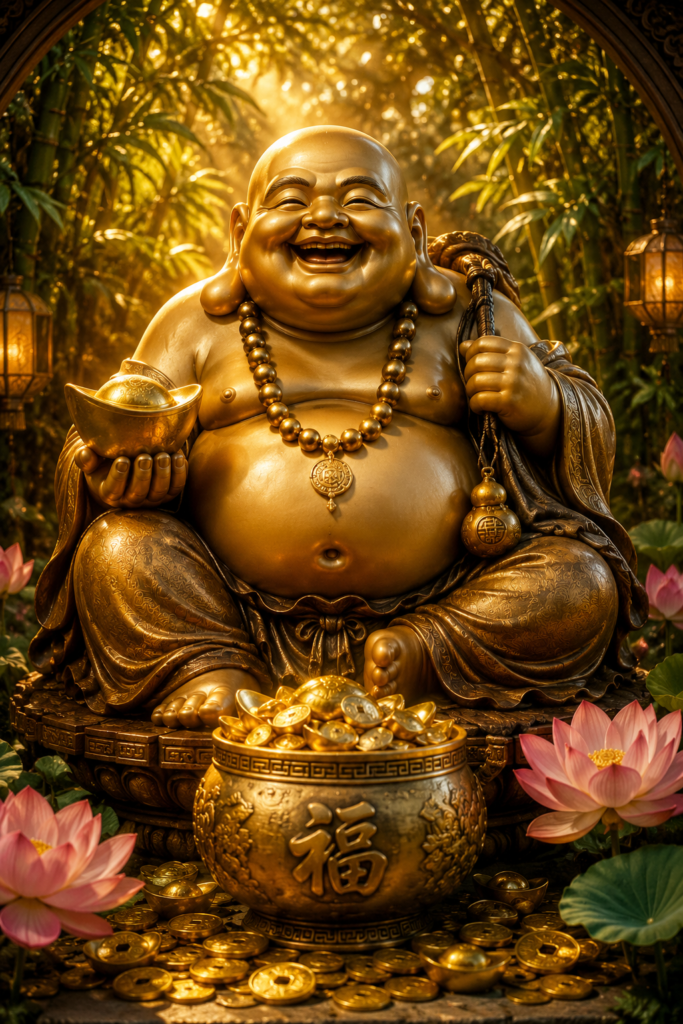
    For centuries, the image of the Laughing Buddha has inspired millions around the world. His joyful smile, carefree spirit, and generous heart remind us that happiness is not something we chase—it is something we cultivate.

    In Laughing Buddha: The Alchemy of Euphoric Living, Sakshi Chetana explores the transformative power of joy, mindfulness, and conscious living. The book encourages readers to shift their perspective from fear and scarcity toward gratitude, compassion, and inner abundance.

    Whether you’re beginning a spiritual journey or deepening an existing practice, its message is timeless: true prosperity begins within.


    Who Is the Laughing Buddha?

    The Laughing Buddha is commonly associated with Budai, a wandering monk who lived in China during the 10th century.

    Known for his infectious laughter, generous nature, and cloth sack filled with gifts, Budai became a beloved symbol of:

    • Joy
    • Generosity
    • Contentment
    • Prosperity
    • Compassion
    • Good Fortune
    • Optimism

    It’s important to note that Budai is not the historical Gautama Buddha. Instead, he represents a folk tradition that celebrates happiness, kindness, and abundance.


    What Does “Alchemy of Euphoric Living” Mean?

    Alchemy traditionally referred to transforming ordinary metals into gold.

    Spiritually, alchemy represents transforming the inner self.

    The “alchemy of euphoric living” is about turning:

    • Fear into confidence
    • Scarcity into gratitude
    • Stress into peace
    • Negativity into compassion
    • Limitation into possibility

    Rather than changing the outside world first, this philosophy begins with transforming your mindset, attitudes, and daily habits.


    Five Principles of Euphoric Living

    1. Choose Gratitude Every Day

    Gratitude helps shift attention from what is missing to what is already present.

    Consider ending each day by writing down three things you appreciate, no matter how small.

    2. Laugh More Often

    Laughter reduces stress, strengthens relationships, and reminds us not to carry every burden alone.

    The Laughing Buddha symbolizes finding light even during difficult seasons.


    3. Give Generously

    Generosity is about more than money.

    You can give:

    • Time
    • Encouragement
    • Kindness
    • Knowledge
    • Compassion
    • A listening ear

    Acts of generosity often enrich both the giver and the receiver.


    4. Release What You Cannot Control

    Holding onto worry rarely changes outcomes.

    Instead, focus your energy on actions you can take today while accepting that some circumstances remain beyond your control.


    5. Find Joy in Ordinary Moments

    Euphoric living doesn’t require extraordinary events.

    Joy can be found in:

    • A sunrise
    • A meaningful conversation
    • Quiet meditation
    • Time with loved ones
    • Helping another person
    • Appreciating nature

    Learning to notice these moments can make everyday life feel richer.


    A Daily Joy Practice

    Try this five-minute routine:

    1. Take three slow, mindful breaths.
    2. Smile intentionally.
    3. Repeat an uplifting affirmation.
    4. Reflect on one recent blessing.
    5. Choose one act of kindness for the day.

    Simple habits, practiced consistently, can shape how you experience life.

    The enduring appeal of the Laughing Buddha lies in his reminder that happiness is an inner practice rather than a destination.

    Books like Laughing Buddha: The Alchemy of Euphoric Living invite readers to cultivate gratitude, generosity, mindfulness, and resilience. While these practices cannot guarantee specific outcomes, they can help build a healthier mindset and a deeper appreciation for life’s everyday blessings.

    When you nurture joy from within, you often become better equipped to face challenges, recognize opportunities, and share encouragement with others.


    Key Takeaways

    • The Laughing Buddha symbolizes joy, generosity, and contentment.
    • Spiritual “alchemy” refers to inner transformation rather than material change.
    • Gratitude, kindness, and mindfulness are practical ways to cultivate a more joyful life.
    • Lasting abundance includes peace, purpose, relationships, and personal growth—not only financial success.

  • Etheric Cord Cutting: A Guide to Freedom

    Have you ever walked away from a conversation feeling completely drained? Or found yourself constantly thinking about someone long after they’ve left your life? Many spiritual traditions teach that our relationships create energetic connections known as etheric cords. While loving, healthy relationships can nourish us, unhealthy attachments may leave us feeling emotionally exhausted, stuck, or unable to move forward.
    Etheric cord cutting is a spiritual practice intended to help release unhealthy energetic attachments while preserving the lessons, love, and personal growth that came from those experiences. It is not about erasing memories or ending compassion. Instead, it is about reclaiming your own energy and creating healthier energetic boundaries.

    What Are Etheric Cords?

    Etheric cords are believed to be energetic connections that develop between people through emotional relationships, family bonds, friendships, romantic partnerships, and even repeated interactions. Many energy-healing traditions describe these cords as channels through which emotions, thoughts, and energetic influence may flow.
    Positive cords can foster love, encouragement, and mutual support. However, when a relationship becomes unhealthy, manipulative, or emotionally overwhelming, many practitioners believe those energetic connections can contribute to feelings of heaviness, anxiety, resentment, or emotional fatigue.

    Signs You May Benefit from Cord Cutting

    While everyone’s experience is unique, many people choose to perform a cord-cutting meditation when they notice patterns such as:

    • Constantly thinking about someone who is no longer part of their life.
    • Feeling emotionally drained after interacting with a particular person.
    • Difficulty moving on after a breakup or conflict.
    • Repeating unhealthy relationship patterns.
    • Feeling weighed down by unresolved emotional baggage.
    • Wanting a symbolic fresh start.
      These experiences can also have psychological and emotional causes. Spiritual practices like visualization and meditation may complement—but are not a substitute for—appropriate mental health care when needed.
      A Simple Etheric Cord Cutting Meditation
      Find a quiet place where you won’t be disturbed.
      Close your eyes and take several slow, deep breaths.
      Imagine yourself surrounded by brilliant white or golden light.
      Visualize the person, situation, or emotional attachment you are ready to release.
      Notice any energetic cords connecting you. There is no need to force the image—simply allow your imagination to guide you.
      Imagine these cords being gently released with divine light, allowing only love, wisdom, and healing to remain.
      See your own energy returning to you, filling your body with peace, confidence, and strength.
      Finally, imagine your aura becoming brighter, stronger, and completely whole.
      Spend a few moments breathing deeply before opening your eyes.
      Helpful Spiritual Practices
      Many people combine cord cutting with additional spiritual practices, including:
    • Journaling emotions they are ready to release.
    • Prayer or quiet contemplation.
    • Gratitude for lessons learned.
    • Meditation.
    • Spending time in nature.
    • Cleansing rituals using sound, incense, or other meaningful symbolic practices.
    • Visualization of protective white or golden light surrounding the body.
      Affirmations for Releasing Unhealthy Attachments
    • I lovingly release what no longer serves my highest good.
    • My energy belongs to me.
    • I choose peace, freedom, and emotional balance.
    • Healthy relationships flow easily into my life.
    • I welcome healing, joy, and new beginnings.
      Remember
      Cord cutting is not about rejecting people or denying the past. It is about choosing healing over attachment and moving forward with greater clarity and emotional freedom.
      Whether you view this practice as spiritual symbolism, guided meditation, or energy work, its greatest value often comes from setting a conscious intention to release what no longer supports your well-being.
      As you continue your spiritual journey, remember that every release creates space for new opportunities, healthier relationships, deeper inner peace, and a stronger connection with your authentic self.
      Coming Soon on Awake and Conquer
      This article introduces the basics of etheric cord cutting. In an upcoming, in-depth video and companion guide, we’ll explore:
    • The origins of etheric cord cutting across different spiritual traditions.
    • Which chakras are most commonly involved in energetic attachments.
    • Archangel Michael meditations for spiritual protection.
    • Visualization techniques for different types of relationships.
    • Common myths and misconceptions.
    • Daily energy protection practices.
    • Crystal, prayer, and meditation suggestions that many practitioners incorporate into their spiritual routines.
    • Frequently asked questions about cord cutting and energetic boundaries.
      Stay connected with Awake and Conquer for more spiritual teachings, meditation practices, manifestation techniques, angelic wisdom, and energy-healing content designed to help you grow with confidence and purpose.
  • 44 Angels of Light & Love: How to Access Divine Guidance & Protection

    A sudden feeling tells you to avoid a situation. A repeated number appears everywhere. A comforting sense of peace surrounds you during difficult times. Many spiritual traditions believe these experiences may be signs of angelic guidance.

    The concept of the 44 Angels of Light and Love has become increasingly popular among spiritual seekers, energy workers, meditation practitioners, and those exploring intuition and divine connection. These angels are believed to assist humanity through protection, healing, wisdom, peace, abundance, emotional support, and spiritual awakening.

    The Spiritual Meaning of 44

    The number 44 is considered highly significant in numerology and spiritual symbolism.

    The number 4 represents:

    • Stability
    • Protection
    • Divine structure
    • Grounding
    • Strong foundations

    When repeated as 44, this energy becomes amplified. Many people believe 44 is connected to angelic support, spiritual protection, and divine alignment.

    This is why seeing:

    • 44
    • 4:44
    • repeating fours

    often happens during periods of transformation, awakening, or emotional healing.

    How Angels Communicate

    Angelic communication is rarely loud or dramatic. Most people experience it subtly through synchronicities and intuition.

    Common signs include:

    • Repeating angel numbers
    • Sudden inner knowing
    • Feathers appearing unexpectedly
    • Powerful dreams
    • Songs with meaningful lyrics
    • Chills or peaceful sensations
    • Sudden clarity during stressful moments
    • Feeling guided away from danger

    Many people notice these signs more frequently when they begin meditation, prayer, journaling, gratitude practices, or spiritual reflection.

    How to Connect with the Angels of Light and Love

    You do not need to be psychic to connect with angelic energy.

    Connection begins with openness, stillness, and intention.

    Simple Angel Connection Ritual

    • Light a white candle
    • Sit quietly without distractions
    • Take several slow breaths
    • Place your hand over your heart
    1. Say:

    “I welcome divine guidance, protection, wisdom, healing, and peace into my life.”

    Then remain still for several minutes.

    Do not force an experience. Angelic guidance often appears naturally over time.

    Raising Your Vibration

    Many spiritual teachers believe angels operate through higher frequencies connected to love, peace, gratitude, compassion, and hope.

    Practices that may help strengthen spiritual awareness include:

    • Meditation
    • Gratitude journaling
    • Prayer Breathwork
    • Nature walks
    • Healing music
    • Visualization
    • Positive affirmations

    Fear contracts energy.

    Love expands it.

    This is why gratitude and inner peace are often described as gateways to stronger intuition.

    Crystals Associated with Angelic Energy

    Many spiritual practitioners use crystals during meditation and prayer.

    Popular crystals linked to angelic connection include:

    • Selenite
    • Angelite
    • Celestite
    • Amethyst
    • Moonstone
    • Clear Quartz

    These are often placed near meditation spaces, altars, beds, or carried throughout the day.

    The Meaning of Angel Numbers

    Angel numbers are believed to be symbolic messages that appear repeatedly during important moments in life.

    Common interpretations include:

    • 111 — manifestation and alignment
    • 222 — balance and trust
    • 333 — spiritual support
    • 444 — protection and divine presence
    • 555 — major change
    • 777 — spiritual wisdom
    • 888 — abundance and flow

    When you notice repeating numbers, pay attention to your thoughts and emotions in that moment.

    Angelic Protection Prayer

    Many people use short prayers for energetic protection and peace.

    Example:

    “I ask the angels of divine light to surround me with protection, wisdom, healing, clarity, and peace. Remove negativity from my path and guide me toward my highest good.”

    Visualization may strengthen the experience. Imagine white or golden light surrounding your body like a protective shield.

    The 44 Angels of Light and Love remind us that spiritual support may be closer than we realize.

    Whether through synchronicities, intuition, dreams, protection, or moments of peace, many believe angelic guidance quietly works behind the scenes to help us move toward healing, growth, and alignment.

    The key is learning to slow down, become present, and recognize the signs.

    Sometimes the universe whispers before it shouts.

    And sometimes the guidance you seek has already been trying to reach you all along.

  • How Billionaires Stay Zen and Attract Wealth

    How Billionaires Stay Zen and Attract Wealth

    Discover the mindset and spiritual practices the world’s wealthiest people use to stay calm, focused, and magnetize success. Apply these secrets to your own life.

    We often picture billionaires as relentless powerhouses — constantly hustling, always “on,” forever chasing the next win.
    But behind closed doors, many of the world’s wealthiest minds practice something very different: Zen — the art of stillness, presence, and effortless focus.

    They know a secret that most people overlook:
    Wealth doesn’t come from chaos. It flows from calm.

    The Calm Behind Every Empire

    When you observe the greatest creators and entrepreneurs — from tech moguls to investors — you’ll notice they share one powerful trait: an unshakable inner state.

    While the world reacts, they respond.
    While others panic, they breathe.
    While most chase, they attract.

    This is Zen in action — a quiet, magnetic power that turns intention into effortless creation.

    In the world of manifestation and energy work, we call this resonance.

    The billionaire mind isn’t fixated on lack or fear; it’s tuned into clarity, gratitude, and purpose.
    They are calm enough to listen when opportunity whispers.

    The Zen Formula for Effortless Wealth

    Here’s the spiritual-meets-scientific truth:
    Your vibration — your thoughts, emotions, and energy — is your true currency.

    When you operate from peace, you create more with less effort.
    When you’re anxious or scattered, you repel the very opportunities you want.

    So what makes billionaires different?
    They’ve mastered three core Zen habits that keep their energy — and money — in flow:

    1. Stillness as a Superpower

    They start the day in silence. Meditation, breathwork, or mindful solitude clears their mental field.
    No phone. No noise. Just presence.

    This emptiness resets the nervous system and activates clarity.

    2. Emotion Over Logic

    They know how to shift state quickly. Instead of reacting to losses or delays, they regulate emotion through breathing, grounding, or simple movement.
    This calm emotional baseline keeps them magnetically aligned with abundance — even in chaos.

    3. Energetic Precision

    Every action is intentional. Every meeting, every investment, every move is done from alignment — not fear or pressure.
    They don’t chase; they command.

    They let their vibration go first, and the universe follows.


    The Spiritual Physics of Attraction

    Zen isn’t passive — it’s precise.
    It’s the science of surrender with direction.

    When your energy is still, your intuitive guidance grows stronger.
    You sense timing, opportunity, and alignment faster.
    This is how billionaires make decisions that seem effortless: they act from intuition calibrated by inner peace.

    The Law of Attraction responds not to desperation but to energetic congruence.
    If your mind and emotions are harmonious, you signal “I already have it” — and reality adjusts to match that frequency.

    Rituals to Stay Centered and Prosperous

    Here are daily Zen-wealth practices inspired by both ancient wisdom and modern billionaires:

    • Morning Stillness (10 minutes): Sit in silence. Focus on the breath. Feel wealth energy as already yours.
    • Mindful Breaks: Pause every few hours. Observe your surroundings without judgment.
    • Gratitude Review: Each night, list three things you’re grateful for — big or small. Gratitude expands receiving energy.
    • Money Calm Visualization: Picture your bank account expanding easily, your energy grounded and open.
    • Declutter Ritual: A clear space creates a clear channel for new opportunities.

    Remember: Calm Attracts, Chaos Repels

    Abundance doesn’t chase noise — it follows clarity.
    When you master your inner peace, wealth naturally flows toward you.

    True power is quiet, intentional, and magnetic.
    That’s the real Billionaire Zen Secret — success born from stillness, not stress.

    10 Zen Wealth Affirmations

    Repeat these daily to align your energy with calm prosperity:

    1. “I am calm, confident, and infinitely abundant.”
    2. “Wealth flows to me with ease and grace.”
    3. “My peace is the foundation of my success.”
    4. “Every breath connects me to infinite prosperity.”
    5. “I attract opportunities effortlessly through inner stillness.”
    6. “My calm mind is my greatest asset.”
    7. “Abundance expands wherever I place my focused intention.”
    8. “I move through life with ease, clarity, and purpose.”
    9. “Money is energy — and I am in harmony with it.”
    10. “I embody the serenity of wealth and the wisdom of peace.”

    The secret to attracting massive wealth isn’t doing more — it’s being more present.
    Stillness amplifies your creativity, clarity sharpens your strategy, and peace becomes your magnet for prosperity.

    So take a breath, center yourself, and step into the Zen frequency of abundance.
    Your empire begins within.

  • Guardian Angels: Divine Protectors

    Guardian Angels: Divine Protectors

    What are guardian angels and how do they work? Explore the spiritual truth about your personal celestial guides, how to connect with them, and signs they’re near.

    Throughout history, countless cultures and spiritual traditions have shared a powerful belief: we are never truly alone. Guardian angels are viewed as divine messengers, protectors, and guides—celestial beings assigned to watch over us from the moment we enter this world.

    What Are Guardian Angels?

    Guardian angels are believed to be spiritual beings sent by the Divine to protect, guide, and support individuals throughout their lives. They act as invisible companions who offer comfort in difficult times, nudge us toward better choices, and shield us from unseen dangers. While unseen to most, many people report feeling their presence through intuition, dreams, signs, or moments of miraculous intervention.

    Across Christianity, Judaism, and Islam—as well as various mystical traditions—guardian angels are described as benevolent, radiant beings who embody love, wisdom, and divine will.

    Feast of the Holy Guardian Angels – October 2nd

    • Date: October 2
    • Liturgical Color: White (symbolizing purity and light)
    • Type of Feast: Memorial Feast in the Catholic Church
    • Established by: Pope Clement X in 1670

    Roles and Powers of Guardian Angels

    1. Protection: Guardian angels are said to intervene in moments of crisis, offering spiritual or even physical protection.
    2. Guidance: They often communicate through subtle signs—repeating numbers, feathers, coincidences, or inner knowing—to help us make wise decisions.
    3. Comfort and Healing: In times of sorrow, many feel their guardian angel’s presence as a calming, warm energy that brings peace.
    4. Connection to the Divine: Angels act as bridges between the human and spiritual realms, reminding us of our higher purpose.

    How to Connect With Your Guardian Angel

    Connecting with your guardian angel doesn’t require any elaborate ritual. The key is openness and intention. Here are a few ways to begin:

    Lighting white or gold candles in honor of one’s angel.

    Offering flowers, especially white roses or lilies.

    Meditation or journaling to receive intuitive guidance from your guardian angel.

    Creating a small angel altar with crystals (like selenite or clear quartz), feathers, or statues.

    • Quiet Meditation: Sit in silence, breathe deeply, and mentally invite your guardian angel to make their presence known.
    • Prayer or Invocation: Speak to them aloud or in your heart, asking for guidance or protection.
    • Signs and Synchronicities: Stay aware of recurring symbols—like 11:11, white feathers, or a sudden sense of peace—that may signal their response.
    • Dream Messages: Before sleep, ask your guardian angel to communicate through dreams. Keep a journal nearby to record insights.

    Guardian Angel Prayers

    “Guardian Angel, shining bright,
    Thank you for your love and light.
    Guide my steps both night and day,
    Protect me always on my way.”

    Saying the Guardian Angel Prayer

    “Angel of God, my guardian dear,
    To whom God’s love commits me here,
    Ever this day, be at my side,
    To light and guard, to rule and guide. Amen.”

    Biblical Basis

    The feast has roots in several key passages:

    • Matthew 18:10 – “See that you do not despise one of these little ones. For I tell you that their angels in heaven always see the face of my Father in heaven.”
    • Psalm 91:11 – “For he will command his angels concerning you to guard you in all your ways.”
    • Exodus 23:20 – “See, I am sending an angel ahead of you to guard you along the way and to bring you to the place I have prepared.”

    Fun Spiritual Fact

    October 2 follows Michaelmas (September 29) — the Feast of the Archangels (Michael, Gabriel, Raphael). Together, these feast days mark a powerful angelic window in the spiritual calendar, making early October an excellent time for angelic prayers, petitions, and rituals.

    Whether you see them as celestial beings, spiritual archetypes, or symbols of divine love, guardian angels remind us that we are supported, guided, and deeply loved. Opening your heart to their presence can bring peace, courage, and a renewed sense of purpose.

  • Exploring the Essence of Spirituality

    Exploring the Essence of Spirituality

    What is Spirituality?
    Spirituality is a deeply personal and transformative journey—one that transcends religious structures and rigid doctrines. It is the pursuit of a connection with something greater than oneself, whether that be the universe, divine consciousness, or the higher self. Unlike organized religion, spirituality is fluid and individualized, allowing each person to explore their own beliefs, practices, and experiences. At its core, it is about seeking meaning, inner peace, and a profound understanding of existence.

    The Importance of Spirituality
    In today’s fast-paced and often chaotic world, spirituality serves as an anchor—a refuge from stress, uncertainty, and external pressures. It offers a path to inner harmony, emotional resilience, and a deeper awareness of life’s interconnectedness. Spiritual practices such as meditation, mindfulness, breathwork, and energy healing can cultivate a heightened sense of presence, intuition, and inner strength.

    Beyond personal growth, spirituality also nurtures compassion, gratitude, and a sense of unity with all living beings. It opens the heart to divine wisdom, fosters self-discovery, and empowers individuals to live authentically, guided by their highest truth.

    Ways to Cultivate Spirituality
    There is no single path to spiritual awakening—each journey is unique. Here are some powerful ways to deepen your spiritual connection:

    Meditation & Mindfulness – Quiet the mind, expand awareness, and tune into the present moment.
    Sacred Rituals & Prayer – Engage in spiritual practices that align with your beliefs, such as chanting, affirmations, or lighting candles.
    Energy Healing & Reiki – Balance and cleanse your energetic field to promote spiritual and emotional well-being.
    Journaling & Self-Reflection – Explore your inner world by writing down thoughts, intentions, and experiences.
    Nature Connection – Spend time outdoors to absorb the healing energy of the Earth and align with its rhythms.
    Sacred Texts & Wisdom Teachings – Learn from ancient spiritual traditions, esoteric knowledge, and mystical philosophies.
    Manifestation & Visualization – Harness the power of intention and the law of attraction to create your highest reality.


    True spirituality is about embracing the journey—being open to transformation, seeking higher wisdom, and living in alignment with your soul’s purpose. Whether through silent contemplation or cosmic exploration, the path is yours to walk, and the universe is waiting to guide you.