Strength can take many forms. Sometimes it is the courage to speak. Sometimes it is patience. And sometimes it is the compassion that helps us begin again.
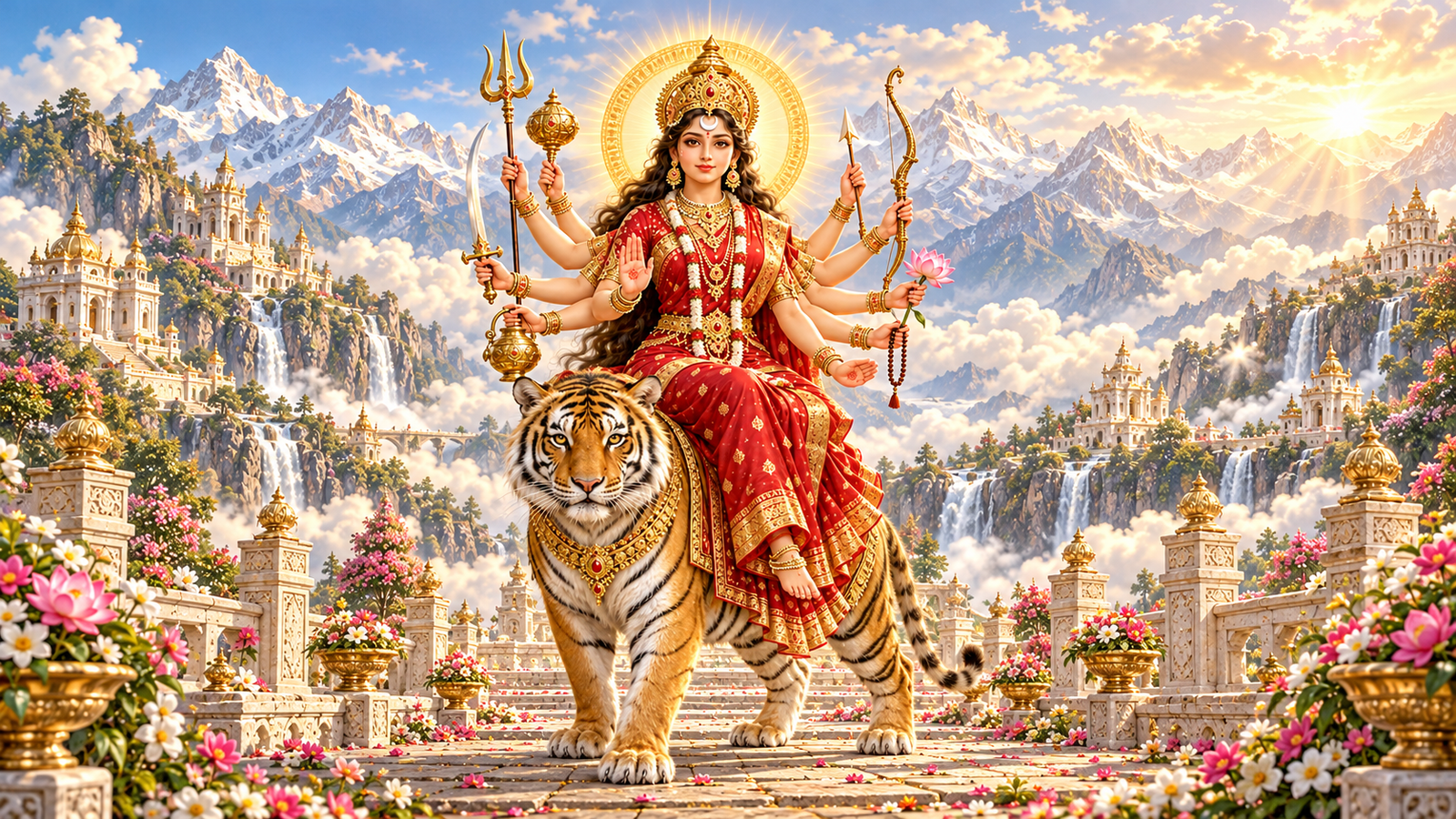
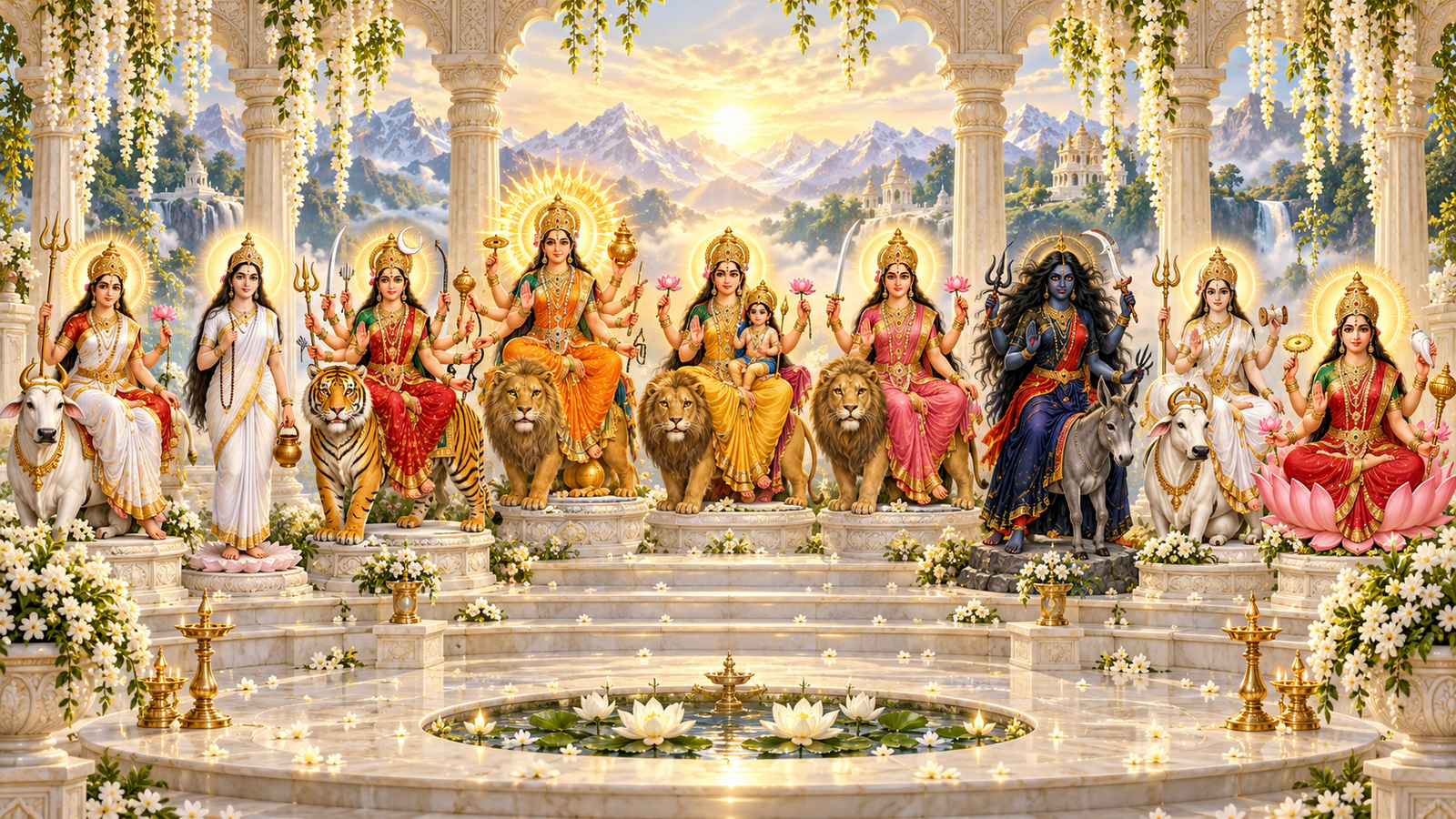
Navratri offers a sacred occasion to encounter these qualities through the worship of Goddess Durga. In the Navadurga tradition, devotees honor nine distinct forms of the Goddess, each with her own name, sacred stories, and imagery.
In our Awake and Conquer video, “The 9 Forms of Durga Explained | Navratri’s Divine Feminine Wisdom,” we introduce these nine goddesses and pause with a reflection inspired by each.
These reflections are invitations for everyday life, offered with respect for their Hindu roots.
What Is Navratri?
Navratri means “nine nights.” Across Hindu communities, its observances include worship, prayer, fasting, music, dance, and gatherings. Practices vary by region, family, and tradition.
The Navadurga are nine forms of Goddess Durga honored in a traditional sequence during the festival. Learning about them offers an introduction to the richness of Hindu devotion and an opportunity to reflect on how we live.
1. Maa Shailputri: Steadiness and a Grounded Beginning
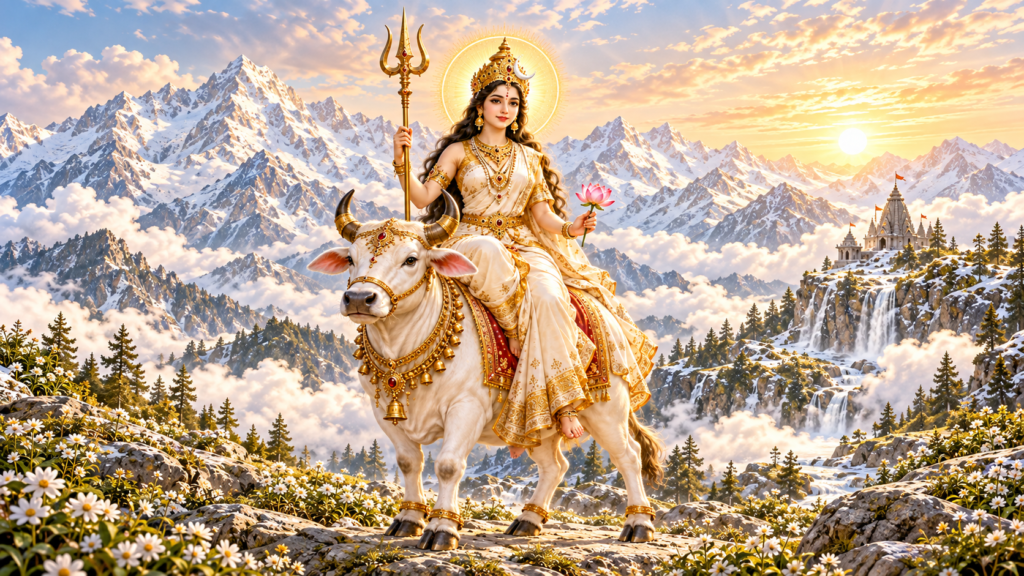
Maa Shailputri opens the Navadurga journey. Her name means “daughter of the mountain.” She is depicted riding a bull and holding a trident and lotus.
For our reflection, let the mountain remind you of steadiness.
Feel the support beneath you. Notice what helps you remain grounded: a dependable routine, a trusted relationship, a quiet moment, or a clear sense of purpose.
Ask yourself: What would help me become more grounded today?
Choose one step you can take with courage.
Maa Brahmacharini: Devotion and Patient Practice
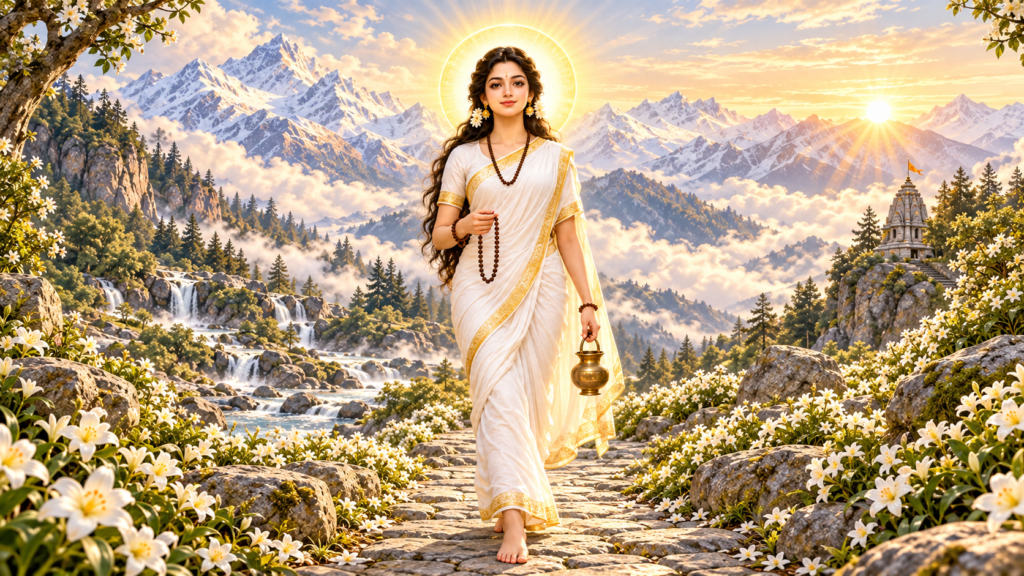
Maa Brahmacharini is associated with spiritual discipline and austerity. She is depicted walking barefoot, holding prayer beads and a sacred water pot.
Her example invites a reflection on sustained attention.
Consider something meaningful that deserves your care. It might be prayer, study, a creative project, or a commitment you want to honor.
Ask yourself: What deserves my patient attention?
Return to it for a few manageable minutes. Let consistency develop through a practice you can sustain.
Maa Chandraghanta: Courage and Protection
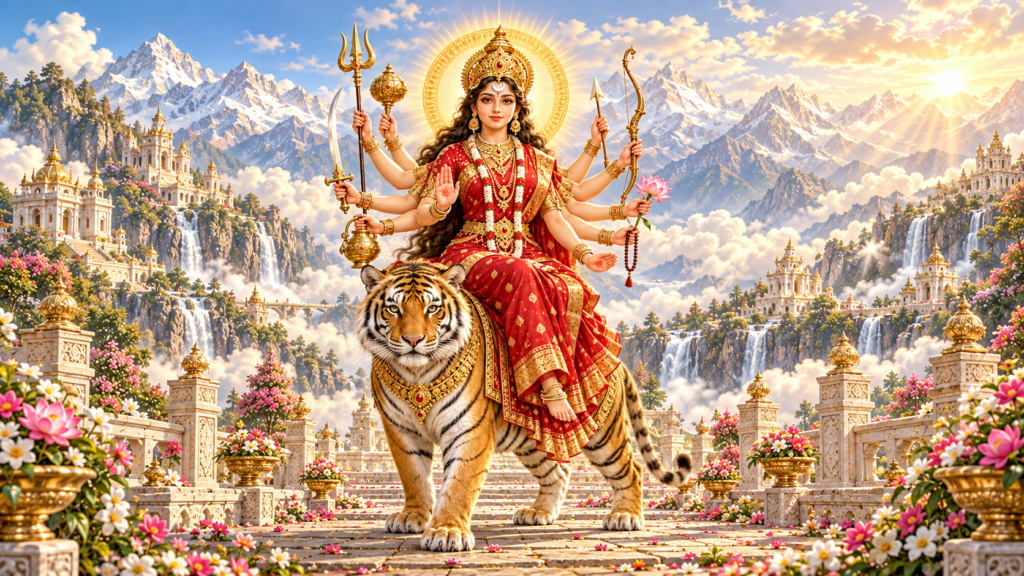
Maa Chandraghanta is traditionally depicted with ten arms, riding a tiger and wearing a bell-shaped crescent moon on her forehead.
For our everyday reflection, consider where you need to stand firm.
A clear boundary, an honest conversation, or asking for support can be an act of courage. Strength and kindness can exist together.
Ask yourself: Where would a courageous, thoughtful response help me today?
Choose an action that respects your needs and the people involved.
Maa Kushmanda: Creativity and Possibility
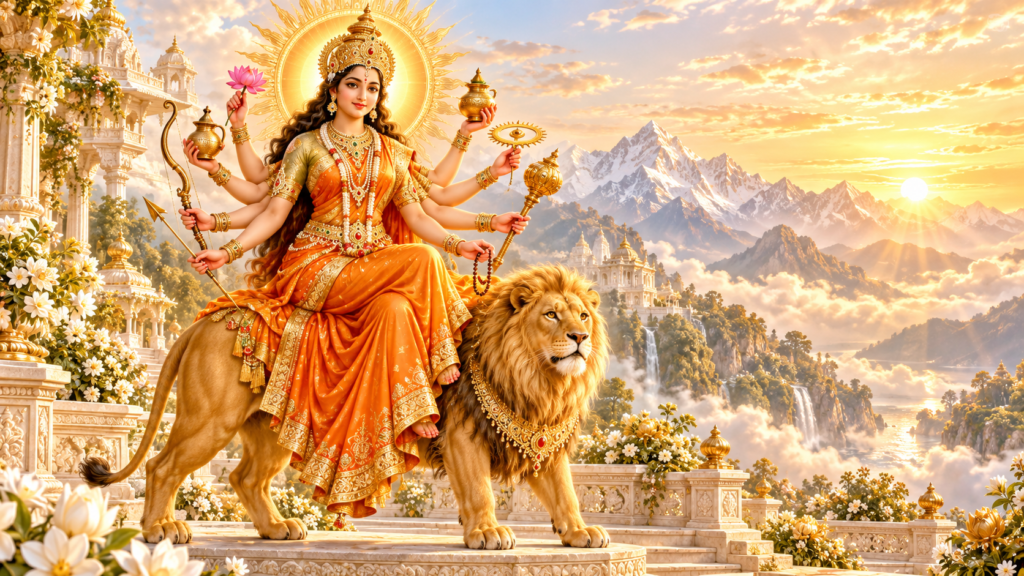
Maa Kushmanda is associated in devotional tradition with the creation of the universe through her radiant smile. She is commonly depicted with eight arms, riding a lion.
Her imagery offers a starting point for reflecting on creativity.
A new beginning may be a small idea waiting for your attention: a page to write, a space to refresh, a skill to explore, or a solution you have not tried.
Ask yourself: What am I ready to create or begin?
Give that possibility one practical opening today.
Maa Skandamata: Nurturing and Compassion
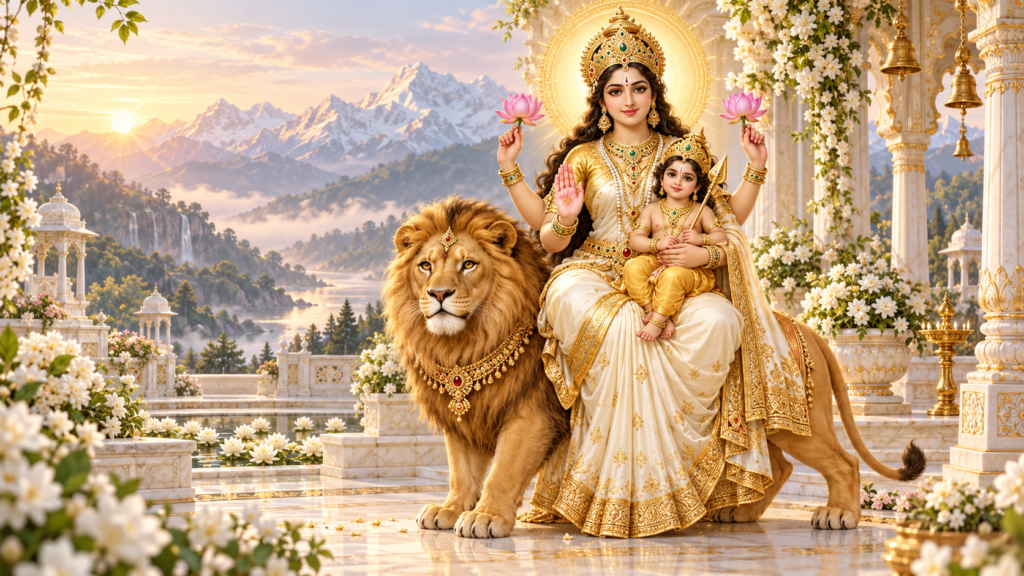
Maa Skandamata is the mother of Skanda, also known as Kartikeya. She is depicted holding her child, with four arms, lotus flowers, and a lion as her mount.
Pause to consider how you nurture life around you.
Offer someone your attention. Care for something entrusted to you. Include yourself in that circle of compassion.
Ask yourself: Where is my care needed, and what care do I need to receive?
Let your answer include both generosity and realistic limits.
Maa Katyayani: Purposeful Action
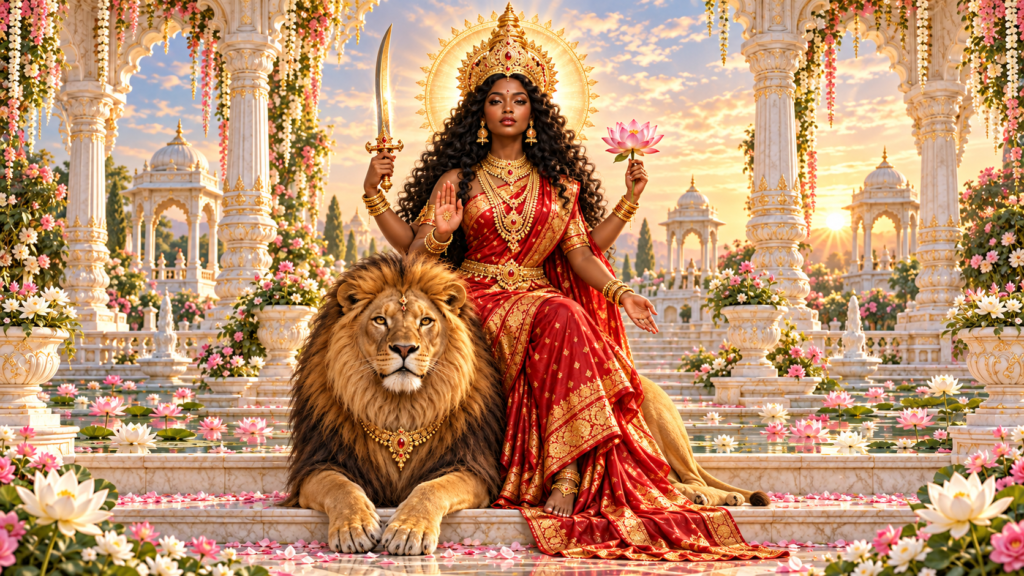
Maa Katyayani is a powerful form of Durga, commonly depicted riding a lion, with a sword, lotus, and gestures of protection and blessing.
For our reflection, consider courage directed by purpose.
What problem needs your attention? Approach it thoughtfully. Gather information, seek support, and take a step that reflects your values.
Ask yourself: What action would honor what matters to me?
Give yourself a clear, achievable place to begin.
Maa Kalaratri: Meeting Fear With Support
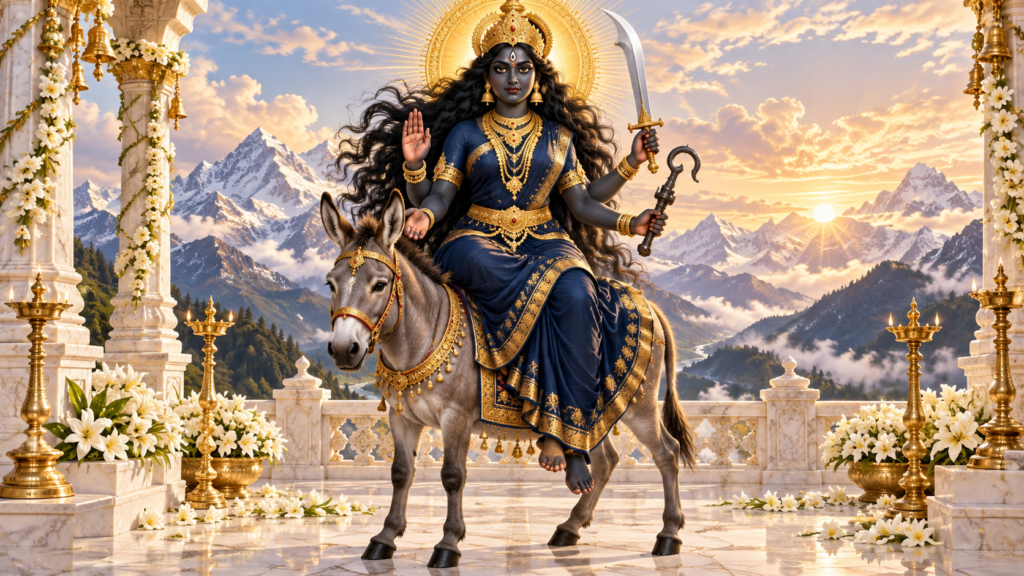
Maa Kalaratri is a fierce form of the Goddess, associated with overcoming darkness and protecting devotees. Her traditional imagery includes a dark complexion, loose hair, four arms, and a donkey as her mount.
Her presence invites us to reflect on how we respond to fear.
Begin by naming what concerns you. Consider what information, preparation, or support would help you respond.
Ask yourself: What would help me face this situation with greater steadiness?
Courage can include reaching out to someone you trust.
Maa Mahagauri: Serenity and Renewal
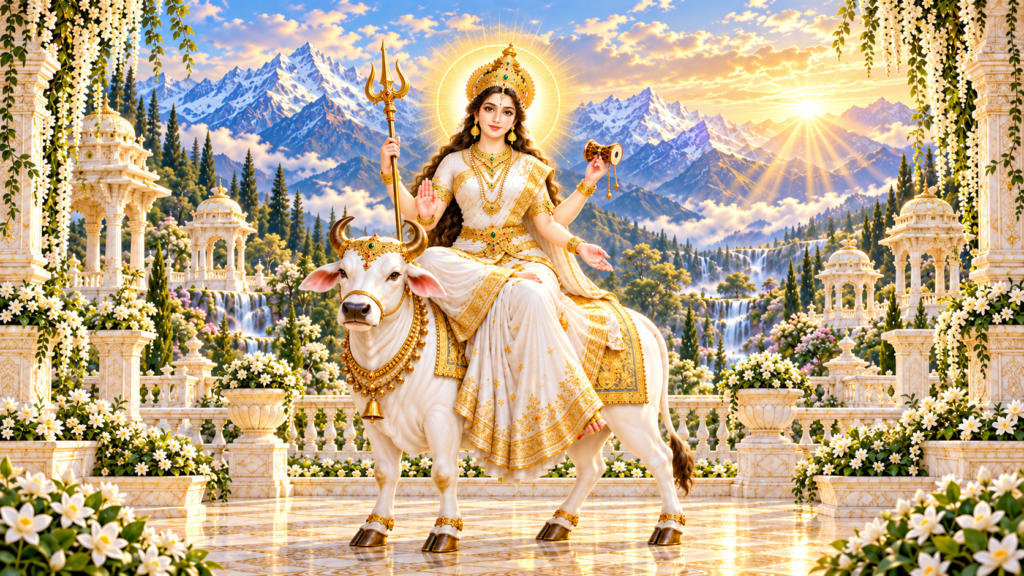
Maa Mahagauri is associated with purity and a serene form of Parvati. Traditionally depicted in white, she rides a white bull and has four arms, holding a trident and a small damaru drum, with her other hands offering protection and blessings.
Let this moment invite renewal.
Release an unnecessary demand on yourself. Make room for rest, a clearer intention, or a kinder way of speaking to yourself.
Ask yourself: What can I simplify so that I have more room to breathe?
Choose one gentle adjustment that supports your day.
Maa Siddhidatri: Wisdom and Gratitude
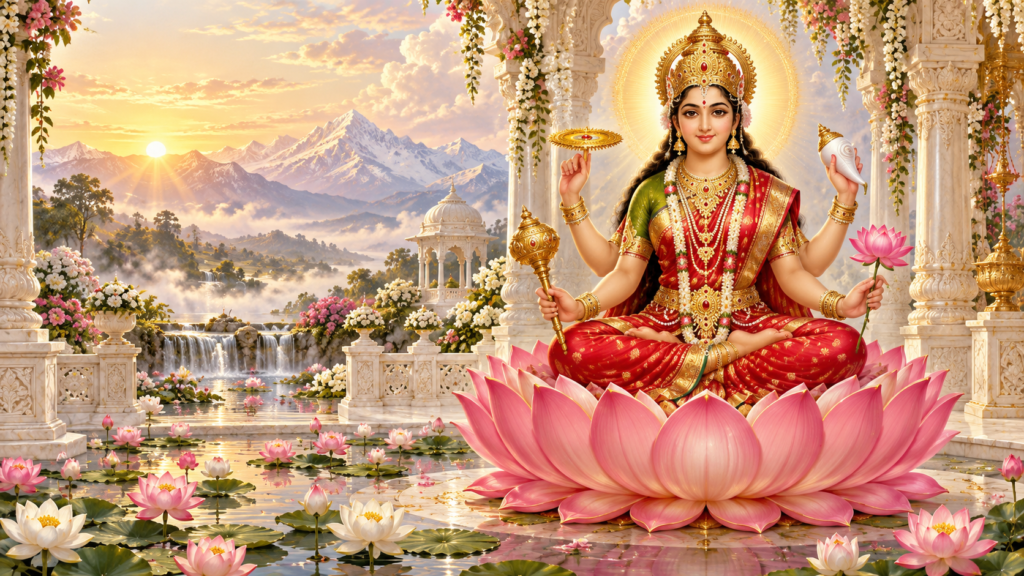
Maa Siddhidatri is the ninth form of Durga, revered as the bestower of spiritual attainments. She is often depicted seated on a lotus, holding a discus, conch, mace, and lotus in her four hands.
For our closing reflection, recognize what you have learned.
What strength have you developed? What wisdom can you put into practice? Let your learning shape one meaningful choice.
Ask yourself: Which lesson am I ready to live more fully?
Take a moment to appreciate the people, experiences, and effort that have supported your growth.
A Simple Reflection to Carry Forward
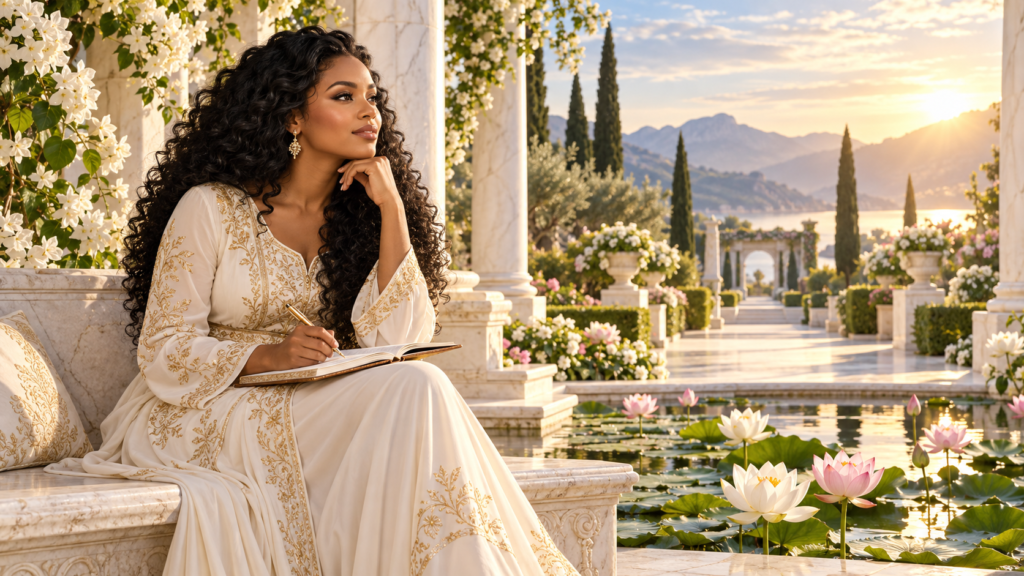
After watching the video, choose one reflection that speaks to your current circumstances.
Write down:
- The quality I want to practice.
- Why it matters to me.
- One action I can take today.
You might choose steadiness before a difficult conversation, patience with a project, compassion toward yourself, or gratitude for someone who has helped you.
This optional journaling exercise is an everyday reflection, separate from traditional Hindu rituals and worship.
Affirmations for the Journey

These original affirmations bring together the themes explored in our video:
I can remain grounded while taking a brave step forward.
I give patient attention to what matters to me.
I practice strength with kindness.
I make room for creativity, care, and renewal.
I honor my growth and put what I learn into practice.
Watch the Full Video
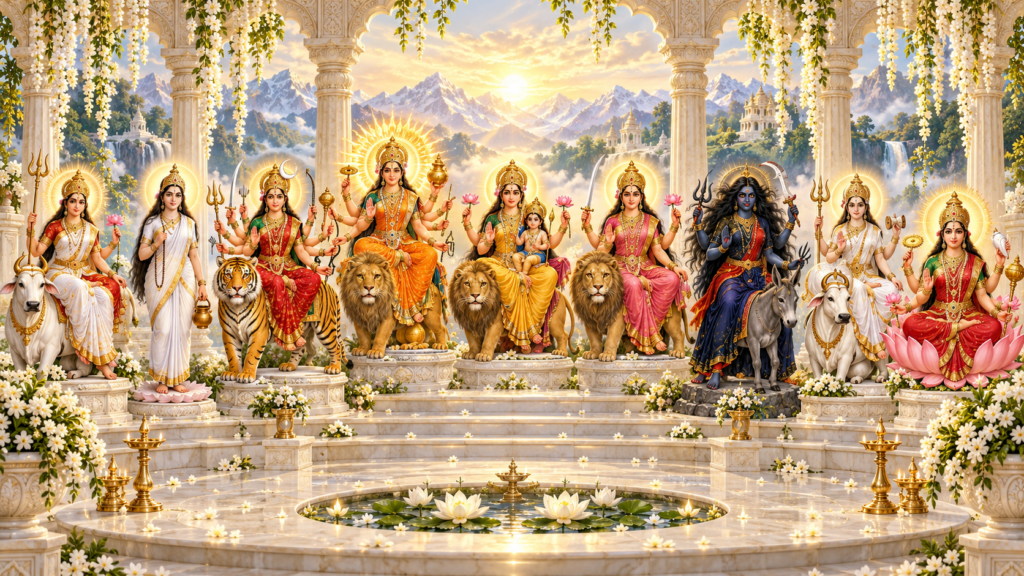
Watch “The 9 Forms of Durga Explained | Navratri’s Divine Feminine Wisdom” on Awake and Conquer for an introduction to all nine goddesses and a brief reflection inspired by each.
For a closer look at each form, explore our Hindu Goddesses: Divine Feminine Wisdom & Sacred Stories playlist and the individual Navratri Day 1–9 posts.
Which reflection speaks to you most right now: steadiness, devotion, courage, creativity, compassion, purposeful action, facing fear, renewal, or wisdom?
Share your answer in the comments. Visit awakeandconquer.com for more sacred stories, affirmations, and reflections for intentional living.