pinterest-site-verification=81e6ebea8354f222dd417de7656dad6e

Tag: #personaldevelopment

  • Catherine Ponder’s 7 Prosperity Principles: Transform Your Wealth Mindset and Open Your Life to Abundance

    What if prosperity begins before the money arrives?

    Long before “abundance mindset” became a popular phrase, Catherine Ponder was teaching that prosperity begins with consciousness—our beliefs, expectations, words, attitudes, and willingness to receive.

    Her 1962 book The Dynamic Laws of Prosperity became one of the classics of New Thought prosperity literature. Ponder went on to write numerous books exploring prosperity, healing, love, forgiveness, and the spiritual principles she believed could help people create richer, more fulfilling lives.

    But there is an important distinction in her teachings:

    Prosperity isn’t only about becoming wealthy.

    It represents a fuller experience of life—greater peace, well-being, meaningful relationships, opportunity, purpose, and sufficient material resources. Unity’s discussion of Ponder’s work similarly describes prosperity as encompassing “peace, health, and plenty,” rather than money alone.

    So what can Catherine Ponder’s teachings offer us today?

    Let’s explore seven powerful principles inspired by her prosperity philosophy.

    Who Is Catherine Ponder?

    Catherine Ponder is an American Unity minister and influential New Thought author whose writings helped popularize the concept of prosperity consciousness.

    Her best-known books include The Dynamic Laws of Prosperity, Open Your Mind to Prosperity, The Prosperity Secrets of the Ages, The Millionaires of Genesis, The Millionaires of the Bible, and The Healing Secrets of the Ages.

    Her work combines spirituality with practical ideas involving thought, imagination, affirmation, forgiveness, expectation, giving, receiving, and developing a consciousness capable of recognizing greater possibilities.

    This makes Ponder particularly fascinating because her prosperity teachings aren’t merely about acquiring money.

    They’re about changing your relationship with abundance.

    1. Develop a Prosperity Consciousness

    The foundation of Ponder’s philosophy is prosperity consciousness.

    Consider how differently two people might respond to the same opportunity.

    One thinks:

    “People like me never get opportunities like this.”

    The other thinks:

    “This could be worth exploring. What would I need to learn to make it work?”

    The opportunity is identical.

    The internal response isn’t.

    Prosperity consciousness means developing a mindset that can recognize possibility rather than automatically assuming limitation.

    This doesn’t mean pretending financial difficulties don’t exist.

    It means refusing to make temporary circumstances your permanent identity.

    Instead of continually asking:

    “Why don’t I have enough?”

    Begin asking:

    “How can I create more value, opportunity, income and financial stability?”

    That question invites action.

    2. Open Your Mind to Receiving

    Ponder devoted an entire book to this idea: Open Your Mind to Prosperity.

    Sometimes people desire abundance while simultaneously feeling uncomfortable receiving it.

    They may believe wanting money is selfish.

    They may undervalue their work.

    They may feel guilty charging appropriately.

    They may reject opportunities because they don’t feel deserving.

    Or they may believe spirituality and financial prosperity cannot coexist.

    Ponder challenged that kind of thinking.

    Prosperity doesn’t require worshipping money.

    Money is a resource.

    It can provide security, housing, education, experiences, generosity, charitable giving, business opportunities and freedom to make choices.

    The deeper question becomes:

    Can you receive prosperity without guilt while using it wisely?

    3. Use Your Words Intentionally

    Here Ponder’s work intersects beautifully with our previous Metaphysical Master, Florence Scovel Shinn.

    Both emphasized the importance of language.

    Consider how often people unconsciously affirm scarcity:

    “Everything is too expensive.”

    “I’ll never have enough.”

    “Money doesn’t stay with me.”

    “I’ll always struggle.”

    Instead, experiment with language that encourages possibility without denying reality:

    “I am learning to manage and grow my money wisely.”

    “I am becoming more aware of profitable opportunities.”

    “I create increasing value through my skills and abilities.”

    “My financial decisions are becoming wiser and more intentional.”

    The purpose isn’t magical thinking.

    It’s changing the mental script that accompanies your financial behavior.

    4. Visualization Gives Prosperity a Direction

    Ponder also emphasized imagination and visualization.

    Before you can intentionally move toward something, it helps to know what that “something” looks like.

    What does prosperity actually mean to you?

    A debt-free life?

    A comfortable retirement?

    Owning your home?

    Building a successful business?

    Travel?

    Helping your family?

    Having multiple income streams?

    Giving generously?

    Financial independence?

    Instead of visualizing money simply falling from the sky, visualize the life the money supports.

    See yourself managing it responsibly.

    See the business operating.

    See the savings account growing.

    See yourself making thoughtful investment decisions.

    See the completed project.

    See yourself confidently negotiating.

    See the freedom your financial progress provides.

    Then ask:

    What behavior would the person in that vision practice today?

    Now visualization becomes a bridge to action.

    5. Release What Keeps You Attached to Scarcity

    Another recurring theme throughout Ponder’s writings is release.

    Sometimes creating something new requires letting go of something old.

    That might include resentment.

    Fear.

    Guilt.

    Old financial mistakes.

    Negative beliefs inherited from childhood.

    The belief that wealthy people are automatically bad.

    The belief that money is inherently unspiritual.

    Or the belief that because something hasn’t happened yet, it never will.

    Ponder’s spiritual approach often incorporates forgiveness and release as ways of making room for something better.

    A simple affirmation might be:

    “I release beliefs and habits that no longer support my prosperity.”

    Then identify an actual behavior to release with them.

    Maybe it’s impulse spending.

    Avoiding your finances.

    Underpricing your services.

    Procrastinating.

    Or refusing to learn about money because it feels intimidating.

    Release becomes far more powerful when accompanied by change.

    6. Practice the Flow of Giving and Receiving

    Giving (Tithing) is another important part of traditional New Thought prosperity teachings. The word tithe means a tenth part.

    But this principle deserves careful interpretation.

    Giving should not mean donating money you cannot afford because you expect the universe to return a larger amount.

    There is no guaranteed spiritual investment formula.

    Instead, think about prosperity as circulation.

    You receive value.

    You create value.

    You exchange value.

    You share value.

    You help others.

    Others help you.

    You spend intentionally.

    You save.

    You invest.

    You contribute.

    Money moves.

    Knowledge moves.

    Opportunities move.

    Generosity moves.

    Ponder’s broader prosperity philosophy encourages openness to both sides of that circulation:

    giving and receiving.

    Some people are comfortable giving but uncomfortable receiving.

    Learning to receive graciously can be part of abundance consciousness too.

    7. Combine Prosperity Thinking With Prosperity Action

    This is where I would take Catherine Ponder’s philosophy one step further for today’s reader.

    A prosperity mindset is valuable.

    But mindset needs a practical partner:

    action.

    If you desire greater prosperity, your actions might include developing a valuable skill, starting a business, applying for a better position, negotiating compensation, reducing high-interest debt, building an emergency fund, learning about investing, creating another income stream, or finally launching the idea you’ve been postponing.

    Spiritual prosperity and practical financial literacy don’t have to oppose one another.

    They can work together.

    Affirmation gives your mind direction.

    Visualization gives your goal an image.

    Faith gives you perseverance.

    Action gives your intention a pathway into the physical world.

    A Simple Catherine Ponder-Inspired Prosperity Practice

    Try this for seven days.

    Each morning, sit quietly for several minutes.

    Choose one area of prosperity you want to improve.

    Then visualize yourself already behaving like someone capable of creating and managing that prosperity.

    Speak one affirmation aloud:

    “I am open, receptive and responsive to prosperous opportunities.”

    Next, write down three things already abundant in your life.

    They don’t have to be financial.

    Knowledge.

    Friends.

    Food.

    Ideas.

    Healthful habits.

    Creativity.

    A safe place to sleep.

    A new opportunity.

    Gratitude helps shift attention from exclusively noticing absence toward recognizing existing resources.

    Then finish with the most important question:

    “What prosperity-producing action will I take today?”

    Write it down.

    And do it.

    7 Present-Tense Prosperity Affirmations

    Use these during meditation, journaling, visualization, or your morning routine:

    “I am open and receptive to prosperous opportunities.”

    “I create increasing value and welcome increasing abundance into my life.”

    “My relationship with money is healthy, confident and intentional.”

    “I recognize opportunities that support my prosperity and highest good.”

    “I manage the resources I receive with wisdom and gratitude.”

    “I release limiting beliefs and make room for greater possibilities.”

    “I am building a prosperous life through faith, wisdom and purposeful action.”

    Prosperity Is Bigger Than Money

    Perhaps one of the most useful aspects of Catherine Ponder’s philosophy is remembering that prosperity cannot be measured entirely by a bank balance.

    Imagine having enormous wealth but no peace.

    Or tremendous professional success but no meaningful relationships.

    True prosperity can include financial security, certainly.

    But also:

    Peace.

    Purpose.

    Love.

    Health.

    Freedom.

    Time.

    Creativity.

    Generosity.

    Opportunity.

    Spiritual fulfillment.

    That’s a much richer definition of abundance.

    Catherine Ponder’s Legacy

    Decades after The Dynamic Laws of Prosperity was first published, Ponder’s work continues to circulate among readers interested in New Thought, manifestation, prosperity consciousness and metaphysics.

    Her teachings also help us trace the history of ideas that are now everywhere online.

    Long before phrases such as money mindset, abundance consciousness, and manifesting prosperity became social-media vocabulary, teachers such as Ponder were writing entire books about changing one’s inner relationship with prosperity.

    And her central message remains worth considering:

    Before expanding what you have, expand what you believe is possible—and then become willing to act upon those possibilities.

    That is where prosperity consciousness becomes prosperity practice.

    Continue Your Metaphysical Masters Journey

    Watch my Awake and Conquer video:

    Transform Your Wealth with Catherine Ponder’s Limitless Proven Prosperity Formula

    If Catherine Ponder’s teachings resonate with you, continue exploring Metaphysical Masters on Awake and Conquer, where we uncover influential authors and spiritual teachers whose ideas shaped modern manifestation, prosperity consciousness, metaphysics and personal transformation.

    What does prosperity mean to you—more money, greater freedom, peace of mind, or all three?

    Share your answer in the comments, and choose one prosperity-producing action you can take today.

  • The Manifestation Blueprint: Easy Energy for Success — Rev. Mignon Grayson’s Approach to Abundant Living

    What if manifestation doesn’t have to feel complicated?

    You don’t necessarily need an elaborate ritual, dozens of tools, or years of spiritual study before you begin working toward the life you desire.

    That accessibility is one of the most interesting aspects of the work of Rev. Mignon Grayson, author of The Art of Manifestation: Simple Energy Techniques to Create the Abundant Life You Deserve.

    Her approach brings together manifestation, personal energy, emotions, intention, spiritual practice, and practical techniques designed to help people become more conscious participants in creating change.

    For our Metaphysical Masters series, let’s explore what Rev. Mignon Grayson’s manifestation philosophy can teach us about abundance—and how you can turn some of those ideas into a simple daily practice.

    Who Is Rev. Mignon Grayson?

    Rev. Mignon Grayson is an author, spiritual teacher, sound healer, and founder of Sacred Mysteries World Wide. Her biography describes her as an ordained Indigenous Interspiritual Minister whose work draws upon ancient spiritual traditions and emphasizes spiritual development, the Divine Feminine, healing, and helping people connect with their spiritual calling.

    She is also the author of a three-book manifestation series:

    The Art of ManifestationSimple Energy Techniques to Create the Abundant Life You Deserve

    The Work of ManifestationRituals, Crystals, Herbs, Oils & Baths to Create the Life You Deserve

    The Words of ManifestationPrayers, Psalms, Affirmations, Mantras & Incantations to Create a Life of Abundance

    Her own site describes the series as moving through different aspects of manifestation and spiritual practice

    And that progression is particularly interesting for Awake and Conquer readers.

    It essentially moves from:

    Energy → Spiritual Work → Words

    In other words, manifestation isn’t presented as one isolated technique. It becomes a multidimensional spiritual practice.

    Manifestation Begins With Your Energy

    One of the central ideas in Grayson’s work is that human beings have inner resources that can be deliberately directed.

    Her writing discusses the meeting point of mind, spirit, energy, emotion, and physical experience.

    This gives us a useful way to think about manifestation.

    Suppose you want greater prosperity.

    You can write:

    “I am prosperous.”

    But what happens immediately afterward?

    Do you feel possibility—or defeat?

    Do your daily decisions support financial improvement?

    Do you recognize opportunities?

    Do you act on them?

    Do you believe change is possible enough to continue trying?

    Manifestation becomes more meaningful when the intention isn’t separated from the person pursuing it.

    Your Emotions Can Become Fuel

    Grayson specifically writes about emotions as catalysts for action and discusses directing emotional energy into manifestation work.

    This gives us an important distinction.

    You don’t need to pretend to be happy every second.

    Instead, learn to recognize emotional states and deliberately cultivate states that support your goals.

    Consider the difference between approaching an opportunity while thinking:

    “Nothing ever works for me.”

    and approaching it with:

    “This could lead somewhere. I’m going to give it my best effort.”

    The opportunity hasn’t changed.

    Your relationship with the opportunity has.

    And that can change your behavior.

    The Four-Part Manifestation Blueprint

    We can translate these teachings into a simple framework:

    1. Intention

    Get specific about what you actually desire.

    Instead of:

    “I want more money.”

    Try:

    “I am creating greater financial stability and multiple sources of income.”

    Your intention gives your attention somewhere to go.

    2. Energy

    Ask yourself:

    What emotional state am I repeatedly bringing to this goal?

    Fear?

    Desperation?

    Confidence?

    Gratitude?

    Excitement?

    Determination?

    You don’t need to suppress difficult emotions. Recognize them, work through them, and intentionally cultivate emotional states that help you move.

    3. Spiritual Practice

    This is where Grayson’s work becomes particularly relevant to metaphysical practitioners.

    Her second manifestation book moves into rituals, meditation, crystals, herbs, oils, spiritual baths and other spiritual tools. It also discusses working with Archangels in manifestation practice.

    For someone following a spiritual path, these practices can become symbolic ways of focusing intention and creating meaningful ritual around a goal.

    4. Action

    This part should never be overlooked.

    If you’re manifesting a better career, submit the application.

    If you’re manifesting a business, build the offer.

    If you’re manifesting financial stability, create the budget.

    If you’re manifesting better relationships, communicate differently.

    If you’re manifesting knowledge, study.

    Your spiritual practice can focus your intention.

    Your actions give that intention somewhere to land.

    Scripting as a Manifestation Technique

    Grayson has also written about scripting as a manifestation practice.

    Interestingly, she discusses both present-tense and past-tense scripting. Present-tense scripting describes the desired reality as happening now, while past-tense scripting approaches it as though the desired experience has already happened.

    You could experiment with both.

    Present Tense

    “I am grateful that my life is becoming increasingly prosperous. I recognize excellent opportunities, make wise decisions, and confidently take action toward my goals.”

    Past Tense

    “I am so grateful for how much changed this year. Looking back, I can see all the opportunities that appeared and how confidently I acted upon them.”

    Notice something important.

    Neither statement needs to make impossible guarantees.

    The purpose is to create a vivid mental orientation toward the future you’re working to create.

    A Simple 5-Minute Manifestation Practice

    You can create your own daily practice inspired by these principles.

    Sit somewhere quiet and take several slow breaths.

    Choose one intention.

    Visualize yourself experiencing that outcome for about one minute.

    Then focus on the emotion associated with it.

    How would greater financial freedom feel?

    How would accomplishing your goal feel?

    How would peace feel?

    Allow yourself to experience that emotion.

    Then speak a present-tense affirmation:

    “I am aligned with opportunities that support my prosperity, purpose, and highest good.”

    Finally, ask:

    “What is one thing I can do today to move toward this reality?”

    Write down the answer.

    Then do it.

    That final step transforms manifestation from passive wishing into intentional living.

    Add a Simple Manifestation Altar

    If you enjoy ritual, create a small manifestation space.

    You might include a candle representing illumination and intention, a journal for scripting, a meaningful crystal, fresh flowers representing growth, and a written statement describing your goal.

    The objects themselves don’t need to be viewed as guarantees of an outcome.

    Their value can also be symbolic: every time you see your manifestation space, you’re reminded of what you’ve committed yourself to creating.

    That repeated attention can be powerful.

    7 Present-Tense Manifestation Affirmations

    “I am aligned with opportunities that support my highest good.”

    “My thoughts, emotions, words, and actions support the life I am creating.”

    “I recognize prosperous opportunities and confidently act upon them.”

    “I am open to abundance arriving through expected and unexpected channels.”

    “My energy is focused on growth, possibility, and purposeful action.”

    “I trust my intuition while making wise and grounded decisions.”

    “I am becoming an active participant in creating the life I desire.”

    Manifestation Isn’t About Controlling Everything

    There’s another important lesson worth adding to any manifestation practice.

    Manifestation should not become the belief that every event in life is caused by someone’s thoughts or spiritual energy.

    Life includes circumstances beyond individual control.

    Manifestation can instead be approached as a framework for becoming more deliberate about what you focus on, what you believe is possible, what you practice, and what actions you take.

    That’s a much more empowering application.

    You’re not trying to control the entire universe.

    You’re changing how intentionally you participate in your own life.

    From Energy to Ritual to Words

    One reason Rev. Mignon Grayson belongs in our Metaphysical Masters series is the breadth of her manifestation framework.

    Her books move beyond simply “think about what you want.”

    They explore energy techniques, spiritual ritual, meditation, crystals, herbs, oils, baths, prayers, Psalms, affirmations, mantras and other practices.

    That makes her work especially interesting for people who already incorporate spirituality into their personal-development journey.

    But perhaps the most useful takeaway is also the simplest:

    Decide what you desire.

    Direct your attention toward it.

    Bring your emotions and spiritual practice into alignment with it.

    Speak about it intentionally.

    And take meaningful action.

    That’s a manifestation blueprint you can begin practicing today.

    Continue Your Metaphysical Masters Journey

    Watch my Awake and Conquer video:

    The Manifestation Blueprint: Easy Energy for Success

    You can also explore Rev. Grayson’s books and teachings through her official Sacred Mysteries World Wide website.

    What are you manifesting right now? Write your intention in the comments—and then choose one action you can take today that brings you closer to it.

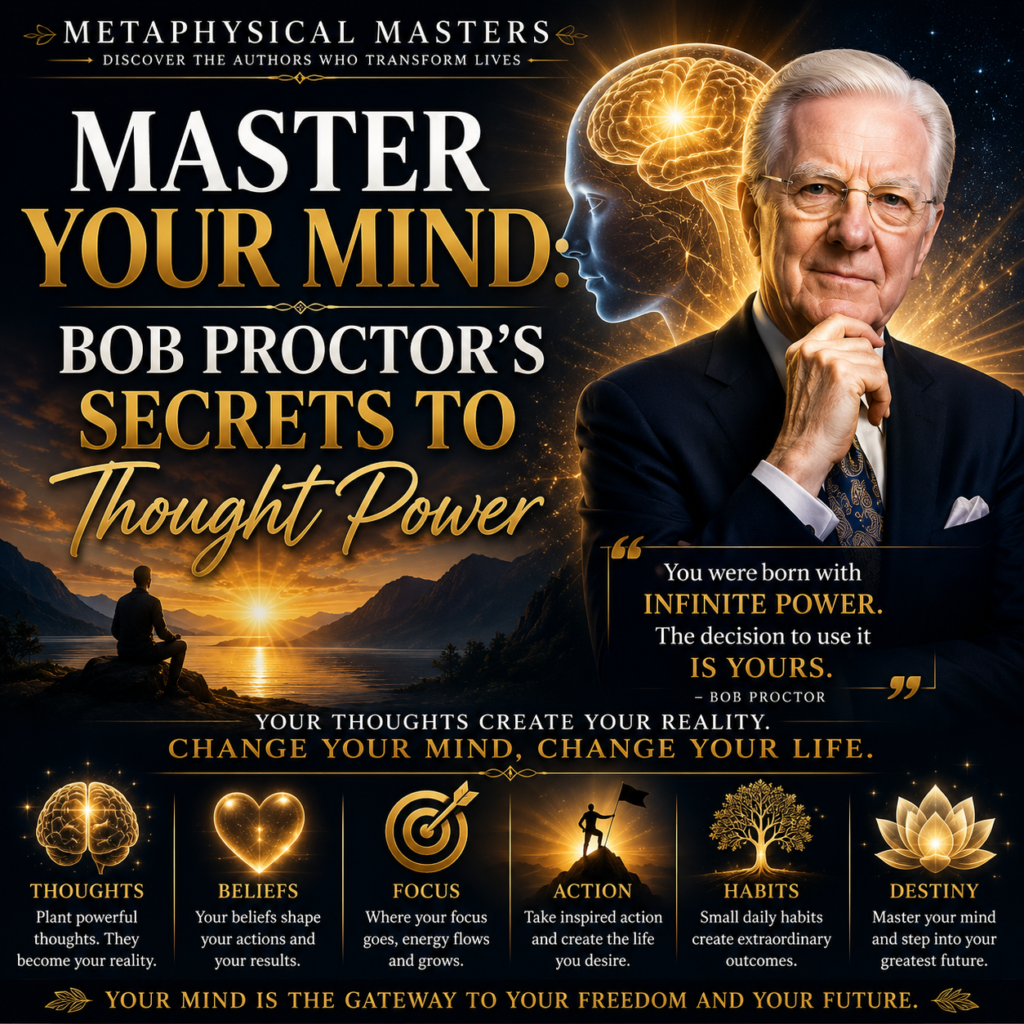
  • Master Your Mind: Bob Proctor’s Secrets to Thought Power

    How Your Thoughts Shape Your Habits, Decisions, and Future
    Have you ever wondered why some people consistently achieve extraordinary success while others remain stuck in the same patterns year after year?
    According to legendary personal development teacher Bob Proctor, the answer begins in one place: the mind.
    For decades, Proctor taught that our thoughts influence our beliefs, our beliefs shape our actions, and our actions ultimately determine the results we experience in life. His teachings inspired millions to become more intentional about how they think, what they believe, and the goals they pursue.
    If you’ve ever wanted to create lasting change, mastering your mind may be the first—and most important—step.
    Who Was Bob Proctor?
    Bob Proctor (1934–2022) was a Canadian author, speaker, and personal development coach. He became internationally known for teaching the principles of mindset, prosperity, and human potential. His work gained worldwide attention through the bestselling film The Secret, where he discussed the power of thought, belief, and focused intention.
    Throughout his career, Proctor emphasized that personal growth begins with changing the way we think. Rather than seeing ourselves as limited by circumstances, he encouraged people to develop empowering beliefs and align their daily actions with the future they wanted to create.
    Your Mind Is Like a Garden
    One of the easiest ways to understand thought power is to imagine your mind as a garden.
    Every thought is a seed.
    Positive thoughts, constructive habits, and meaningful goals can grow into confidence, opportunity, and progress.
    Negative thoughts, fear, and self-doubt can also take root if left unchecked.
    Just as a gardener chooses what to plant and removes weeds regularly, you can become more intentional about the ideas you allow to influence your life.
    Beliefs Shape Behavior
    Many of the beliefs we carry were formed early in life through our experiences, education, and environment.
    Some beliefs empower us.
    Others quietly limit us.
    For example:

    • “I’m capable of learning new skills.”
    • “I can improve with practice.”
    • “I deserve success.”
      These beliefs encourage growth.
      On the other hand:
    • “I’m not good enough.”
    • “I’ll never succeed.”
    • “People like me don’t achieve big goals.”
      These thoughts often become barriers long before we even take action.
      Recognizing limiting beliefs is the first step toward replacing them with healthier, more empowering perspectives.
      The Power of Repetition
      Bob Proctor often taught that repeated thoughts gradually become beliefs.
      This is why our daily mental habits matter.
      The words you speak to yourself, the information you consume, and the conversations you engage in all influence your mindset over time.
      Replacing negative self-talk with encouraging, realistic, and growth-oriented thoughts can gradually change the way you approach challenges and opportunities.
      Visualization with Purpose
      Visualization has long been used by athletes, performers, and successful professionals.
      When practiced intentionally, it helps you become familiar with your desired outcome and strengthens motivation.
      Try this simple exercise:
      Close your eyes for a few minutes each day.
      Imagine yourself successfully reaching one meaningful goal.
      Notice the details.
      Imagine how you would feel.
      Then ask yourself:
      “What action can I take today that moves me one step closer to that vision?”
      Visualization becomes most effective when paired with consistent effort.
      Action Creates Results
      Positive thinking alone is rarely enough.
      Bob Proctor encouraged people to align their mindset with purposeful action.
      Every meaningful goal requires:
    • Learning
    • Practice
    • Persistence
    • Flexibility
    • Consistency
      Your thoughts influence your actions—but your actions create measurable results.
      Daily Habits That Strengthen Thought Power
      Simple habits practiced consistently can help reinforce a positive mindset:
    • Read something inspiring each day.
    • Write down your goals.
    • Practice gratitude.
    • Limit negative self-talk.
    • Spend time with encouraging people.
    • Review your progress regularly.
    • Celebrate small wins.
      These habits help create an environment where growth becomes more natural.
      Five Daily Affirmations
      Repeat these each morning:
    • My thoughts support the life I am creating.
    • I choose empowering beliefs every day.
    • I grow stronger, wiser, and more confident with every challenge.
    • I take consistent action toward my goals.
    • My mindset helps me create a meaningful and successful life.
      Bob Proctor reminded millions that lasting change often begins long before external success becomes visible.
      It starts with your thoughts.
      By becoming more aware of your beliefs, choosing empowering perspectives, and taking consistent action toward meaningful goals, you can create momentum that carries into every area of your life.
      Master your thoughts.
      Strengthen your habits.
      Take purposeful action.
      Your future is shaped by what you choose to think—and what you choose to do—today.
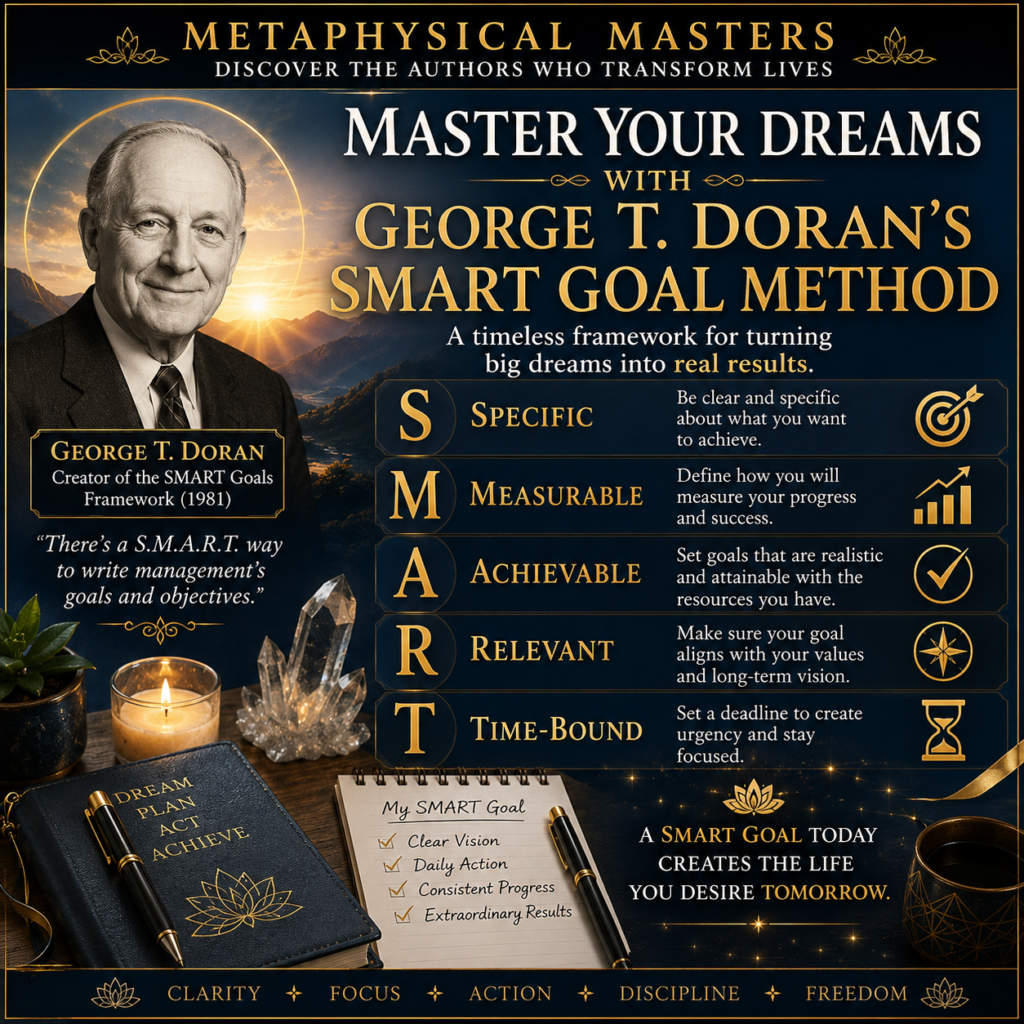
  • Master Your Dreams with George T. Doran’s SMART Goal Method

    Turn Big Dreams into Real Achievements with a Timeless Goal-Setting Framework
    Every great accomplishment begins with a dream—but dreams alone don’t create results. The bridge between vision and achievement is a clear, actionable plan.
    In 1981, management consultant George T. Doran introduced a simple yet powerful framework in his article, “There’s a S.M.A.R.T. Way to Write Management’s Goals and Objectives.” More than four decades later, the SMART Goal Method remains one of the world’s most respected systems for setting meaningful, achievable goals.
    Whether you’re pursuing financial freedom, improved health, a thriving business, a successful YouTube channel, or greater personal fulfillment, the SMART framework can help you move from wishing to doing.
    Who Was George T. Doran?
    George T. Doran was a management consultant who recognized that many organizations—and individuals—set goals that were too vague to achieve.
    People often said things like:

    • “I want to be successful.”
    • “I want to lose weight.”
    • “I want to make more money.”
    • “I want to be happier.”
      While these are admirable aspirations, they lack the clarity needed to guide consistent action.
      To solve this problem, Doran introduced the SMART framework, encouraging people to create goals that are well-defined, measurable, and realistic.
      His idea has since become one of the most widely used goal-setting systems in business, education, coaching, athletics, and personal development.

    What Does SMART Mean?

    S — Specific
    A goal should clearly define exactly what you want to accomplish.
    Instead of saying:
    “I want to grow my business.”
    Try:
    “I want to increase my monthly revenue by offering two new digital products.”
    The clearer your destination, the easier it becomes to create the path.
    M — Measurable
    If you can’t measure your progress, it’s difficult to know whether you’re moving forward.
    Ask yourself:

    • How will I know I’ve succeeded?
    • What numbers will I track?
    • How often will I measure progress?
      Tracking your progress helps maintain motivation and highlights areas for improvement.
      A — Achievable
      Great goals should challenge you—but they should also remain realistic.
      Ask yourself:
    • Do I have the necessary skills?
    • If not, what do I need to learn?
    • What resources can help me?
      An achievable goal stretches your abilities without becoming discouraging.
      R — Relevant
      Every goal should align with your larger vision.
      Ask:
    • Does this support the life I want to create?
    • Is this worth my time and energy?
    • Does it move me closer to my long-term purpose?
      When your goals match your values, staying committed becomes much easier.
      T — Time-Bound
      Without a deadline, goals often remain unfinished.
      Setting a completion date creates urgency and encourages consistent action.
      For example:
      “I will complete my online course within 90 days.”
      A timeline transforms intentions into commitments.
      Putting SMART into Practice
      Imagine your dream is to write a book.
      A vague goal might be:
      “I want to write a book someday.”
      A SMART goal could become:
      “I will write a 200-page personal development book by December 31 by writing 500 words every weekday.”
      Notice how much easier it is to create a daily plan when the goal is clearly defined.
      Why SMART Goals Work
      The SMART framework reduces overwhelm by breaking large dreams into manageable steps.
      Instead of focusing only on the finish line, you focus on today’s next action.
      Small, consistent progress builds momentum.
      Momentum builds confidence.
      Confidence builds success.
      Combining SMART Goals with Mindset
      Many people use visualization, affirmations, gratitude, and meditation to cultivate a positive mindset.
      These practices can strengthen your focus and motivation, but they become even more effective when paired with a clear plan.
      Think of it this way:
    • Your vision inspires you.
    • SMART goals organize your path.
    • Daily action moves you forward.
    • Consistency produces results.
      Mindset and action work best together.
      Common Goal-Setting Mistakes
      Avoid these common pitfalls:
    • Setting goals that are too vague.
    • Trying to accomplish too many goals at once.
    • Never reviewing your progress.
    • Quitting after temporary setbacks.
    • Focusing only on outcomes instead of daily habits.
      Success is rarely about perfection. It’s about persistence.
      Create Your First SMART Goal
      Take a few minutes today and answer these questions:
    • What is one goal I truly want to accomplish?
    • Why does it matter to me?
    • How will I measure success?
    • Is it realistic?
    • Does it align with my bigger vision?
    • When will I complete it?
      Write your answers down.
      A written goal is far more likely to become a completed goal.
      Five SMART Goal Affirmations
      Repeat these daily:
    • I create clear goals that lead me toward success.
    • Every day I take meaningful action toward my dreams.
    • I remain focused, disciplined, and committed.
    • I celebrate every step of my progress.
    • My consistent actions create extraordinary results.
      George T. Doran’s SMART Goal Method has stood the test of time because it transforms uncertainty into clarity.
      Instead of hoping success will happen, you create a roadmap that guides your actions one step at a time.
      Dream boldly.
      Plan wisely.
      Act consistently.
      And remember: every extraordinary achievement begins with one clearly defined goal.
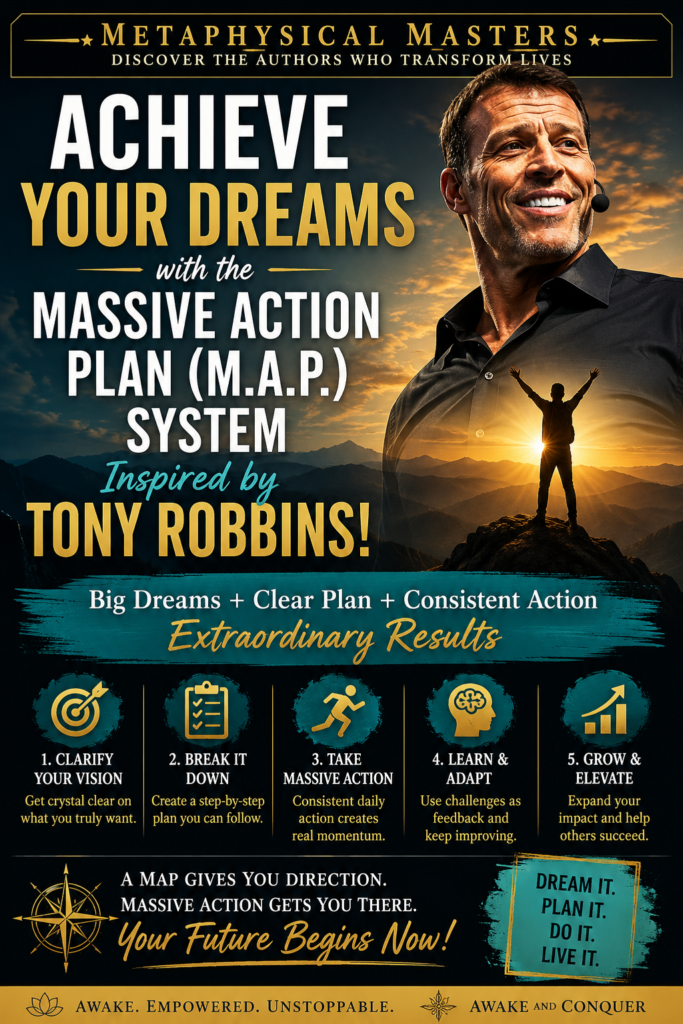
  • Achieve Your Dreams with the Massive Action Plan (M.A.P.) System Inspired by Tony Robbins

    Have you ever noticed that many people have incredible dreams but never seem to make meaningful progress toward them? The difference often isn’t talent, intelligence, or luck. More often than not, it’s consistent, focused action.
    One of the most influential ideas popularized by Tony Robbins is the concept of taking massive action. While goals and positive thinking are important, lasting success comes from combining a compelling vision with disciplined execution.
    Whether your dream is building a successful business, improving your health, strengthening relationships, or creating greater financial freedom, the Massive Action Plan (M.A.P.) offers a practical framework for turning ideas into reality.
    Why Massive Action Matters
    Many people wait until they feel completely ready before taking the first step. Unfortunately, that perfect moment rarely arrives.
    Progress is created by movement.
    Every action produces feedback. Every lesson creates improvement. Every improvement builds momentum.
    Success is rarely the result of one giant leap. Instead, it grows from hundreds of intentional decisions made consistently over time.
    Step 1: Create a Crystal-Clear Vision
    Every meaningful achievement begins with clarity.
    Ask yourself:

    • What do I truly want?
    • Why is this goal important?
    • How will my life improve when I achieve it?
    • Who will benefit from my success?
      The more vivid your vision becomes, the easier it is to stay motivated when challenges appear.
      Visualization can be a powerful tool. Spend a few minutes each day imagining yourself already living the life you’re working toward. Picture the details. Experience the emotions. Let your vision become familiar.
      Step 2: Break the Dream into Small Actions
      Large goals can feel overwhelming.
      Instead of focusing only on the destination, identify the next small step.
      For example:
    • Write one page.
    • Record one video.
    • Read one chapter.
    • Make one phone call.
    • Learn one new skill.
    • Save one dollar more than yesterday.
      Small actions performed consistently create extraordinary results.
      Step 3: Take Massive Action
      Massive action doesn’t necessarily mean working around the clock.
      It means becoming consistently engaged in activities that move you closer to your goal.
      Successful people continually ask:
    • What can I do today?
    • What can I improve?
    • What can I learn?
    • What can I test?
    • Who can I serve?
      The more meaningful action you take, the more opportunities begin to appear.
      Step 4: Learn from Every Outcome
      Not every strategy works the first time.
      That isn’t failure.
      It’s information.
      Successful people view obstacles as feedback rather than defeat. Every challenge teaches something valuable about what to improve next.
      When one approach doesn’t work, adjust your strategy instead of abandoning your goal.
      Flexibility often becomes one of the greatest predictors of long-term success.
      Step 5: Build Daily Momentum
      Momentum is created through consistency.
      Simple daily habits often outperform occasional bursts of motivation.
      Consider creating a morning success routine that includes:
    • Reviewing your goals
    • Reading something inspiring
    • Visualizing success
    • Practicing gratitude
    • Exercising your body
    • Completing your highest-priority task first
      These habits help keep your focus aligned with your long-term vision.
      Combining Action with Manifestation
      Many people are drawn to visualization, affirmations, and the Law of Attraction.
      These practices can strengthen your mindset by helping you maintain focus, confidence, and optimism. However, meaningful results generally come from pairing that mindset with practical action.
      Think of it this way:
      Vision gives you direction. Action moves you forward. Persistence keeps you going.
      When your thoughts, emotions, and daily actions support the same goal, you create a powerful foundation for personal growth.
      Questions to Ask Yourself Today
      Take a few quiet moments and reflect:
    • What dream have I been postponing?
    • What’s one action I can take today?
    • What habit is holding me back?
    • What skill would help me move forward faster?
    • Who could mentor or encourage me on this journey?
      Honest answers often reveal the next step.
      Five Daily Affirmations
      Repeat these each morning:
    • I take meaningful action toward my goals every day.
    • I create opportunities through consistent effort.
    • I learn, adapt, and grow from every experience.
    • My discipline creates the future I desire.
    • Every small action moves me closer to my dreams.
      Dreams become reality when inspiration is followed by action.
      The Massive Action Plan reminds us that success isn’t built on motivation alone. It’s built through clarity, commitment, learning, and consistent progress.
      No matter where you begin, today’s actions shape tomorrow’s possibilities.
      Start with one step.
      Then take another.
      Over time, those small actions become extraordinary achievements.
  • Laughing Buddha: The Alchemy of Euphoric Living

    Finding Lasting Happiness Through Joy, Gratitude, and Inner Transformation

    What if true wealth isn’t measured by the size of your bank account, but by the peace in your heart?

    For centuries, the image of the Laughing Buddha has inspired millions around the world. His joyful smile, carefree spirit, and generous heart remind us that happiness is not something we chase—it is something we cultivate.

    In Laughing Buddha: The Alchemy of Euphoric Living, Sakshi Chetana explores the transformative power of joy, mindfulness, and conscious living. The book encourages readers to shift their perspective from fear and scarcity toward gratitude, compassion, and inner abundance.

    Whether you’re beginning a spiritual journey or deepening an existing practice, its message is timeless: true prosperity begins within.


    Who Is the Laughing Buddha?

    The Laughing Buddha is commonly associated with Budai, a wandering monk who lived in China during the 10th century.

    Known for his infectious laughter, generous nature, and cloth sack filled with gifts, Budai became a beloved symbol of:

    • Joy
    • Generosity
    • Contentment
    • Prosperity
    • Compassion
    • Good Fortune
    • Optimism

    It’s important to note that Budai is not the historical Gautama Buddha. Instead, he represents a folk tradition that celebrates happiness, kindness, and abundance.


    What Does “Alchemy of Euphoric Living” Mean?

    Alchemy traditionally referred to transforming ordinary metals into gold.

    Spiritually, alchemy represents transforming the inner self.

    The “alchemy of euphoric living” is about turning:

    • Fear into confidence
    • Scarcity into gratitude
    • Stress into peace
    • Negativity into compassion
    • Limitation into possibility

    Rather than changing the outside world first, this philosophy begins with transforming your mindset, attitudes, and daily habits.


    Five Principles of Euphoric Living

    1. Choose Gratitude Every Day

    Gratitude helps shift attention from what is missing to what is already present.

    Consider ending each day by writing down three things you appreciate, no matter how small.

    2. Laugh More Often

    Laughter reduces stress, strengthens relationships, and reminds us not to carry every burden alone.

    The Laughing Buddha symbolizes finding light even during difficult seasons.


    3. Give Generously

    Generosity is about more than money.

    You can give:

    • Time
    • Encouragement
    • Kindness
    • Knowledge
    • Compassion
    • A listening ear

    Acts of generosity often enrich both the giver and the receiver.


    4. Release What You Cannot Control

    Holding onto worry rarely changes outcomes.

    Instead, focus your energy on actions you can take today while accepting that some circumstances remain beyond your control.


    5. Find Joy in Ordinary Moments

    Euphoric living doesn’t require extraordinary events.

    Joy can be found in:

    • A sunrise
    • A meaningful conversation
    • Quiet meditation
    • Time with loved ones
    • Helping another person
    • Appreciating nature

    Learning to notice these moments can make everyday life feel richer.


    A Daily Joy Practice

    Try this five-minute routine:

    1. Take three slow, mindful breaths.
    2. Smile intentionally.
    3. Repeat an uplifting affirmation.
    4. Reflect on one recent blessing.
    5. Choose one act of kindness for the day.

    Simple habits, practiced consistently, can shape how you experience life.

    The enduring appeal of the Laughing Buddha lies in his reminder that happiness is an inner practice rather than a destination.

    Books like Laughing Buddha: The Alchemy of Euphoric Living invite readers to cultivate gratitude, generosity, mindfulness, and resilience. While these practices cannot guarantee specific outcomes, they can help build a healthier mindset and a deeper appreciation for life’s everyday blessings.

    When you nurture joy from within, you often become better equipped to face challenges, recognize opportunities, and share encouragement with others.


    Key Takeaways

    • The Laughing Buddha symbolizes joy, generosity, and contentment.
    • Spiritual “alchemy” refers to inner transformation rather than material change.
    • Gratitude, kindness, and mindfulness are practical ways to cultivate a more joyful life.
    • Lasting abundance includes peace, purpose, relationships, and personal growth—not only financial success.
  • Wake vs. Awake: A Spiritual Journey

    Have you ever noticed how people say they’ve “woken up” spiritually? It’s a phrase that appears everywhere in conversations about personal growth, mindfulness, and consciousness. But is there a difference between being awake and simply waking up?
    While these words are often used interchangeably, they can describe different stages of a person’s journey toward greater awareness. Understanding that distinction can help you recognize where you are today and inspire you to keep growing.
    What Does It Mean to Wake Up?
    Waking up is the beginning.
    Just as we awaken from sleep each morning, a spiritual awakening often begins with a moment—or a series of moments—that causes us to see life differently.
    For some, this comes after a major life event:

    • The loss of a loved one
    • A serious illness
    • The end of a relationship
    • A career change
    • A personal crisis
    • An unexpected experience that changes their perspective
      Others awaken gradually through meditation, prayer, study, time in nature, or quiet reflection.
      The common thread is a growing realization that there may be more to life than routines, habits, and external success.
      Questions begin to arise:
    • Why am I here?
    • What is my purpose?
    • What truly brings lasting peace?
    • Am I living authentically?
    • What beliefs have I accepted without examining them?
      These questions often mark the first step toward greater awareness.
      What Does It Mean to Be Awake?
      If waking up is the doorway, being awake is the ongoing journey.
      Rather than a single event, many people view being awake as a continuing practice of living with greater awareness, compassion, and intention.
      Someone who considers themselves spiritually awake may strive to:
    • Notice thoughts without becoming controlled by them.
    • Respond thoughtfully instead of reacting impulsively.
    • Practice gratitude regularly.
    • Develop emotional resilience.
    • Seek wisdom instead of constant distraction.
    • Live according to their values.
    • Continue learning and growing.
      Being awake does not mean being perfect. It means remaining open to learning, self-reflection, and positive change.
      Signs You May Be Experiencing a Spiritual Awakening
      Everyone’s path is unique, but many people describe experiences such as:
    • Feeling drawn toward meditation or prayer.
    • Becoming more aware of recurring habits and thought patterns.
    • Wanting deeper meaning in life.
    • Feeling more connected to nature.
    • Developing greater empathy for others.
    • Letting go of relationships or habits that no longer support personal growth.
    • Becoming curious about different spiritual traditions or philosophies.
    • Feeling a stronger desire to live authentically.
      These experiences vary from person to person and can have many different explanations. They do not necessarily indicate a specific spiritual event, but they often accompany periods of personal reflection and growth.
      Awareness Is a Daily Practice
      Many people assume awakening is a destination.
      In reality, growth often happens one decision at a time.
      Each day offers opportunities to become more aware through simple practices like:
    • Spending a few minutes in quiet meditation.
    • Keeping a gratitude journal.
    • Reflecting on your emotions instead of avoiding them.
    • Practicing forgiveness.
    • Spending time outdoors.
    • Limiting distractions that leave you feeling overwhelmed.
    • Reading books that encourage thoughtful reflection.
    • Serving others with kindness and compassion.
      Small daily choices can gradually shape the way we experience ourselves and the world around us.
      Common Misconceptions About Spiritual Awakening
      There are many myths surrounding awakening.
      Myth 1: Awake People Never Struggle
      Personal growth does not eliminate life’s challenges. Difficult emotions and setbacks are part of being human.
      Myth 2: Awakening Happens Overnight
      While some people describe dramatic moments of insight, lasting transformation usually develops over time through consistent practice and reflection.
      Myth 3: There Is Only One Path
      People explore spirituality in many different ways. Meditation, prayer, contemplative traditions, service to others, time in nature, philosophy, and creative expression can all become meaningful parts of someone’s journey.
      Practices That Can Support Your Journey
      If you want to deepen your awareness, consider exploring practices such as:
    • Mindfulness meditation
    • Breathwork
    • Journaling
    • Prayer
    • Yoga
    • Acts of kindness and service
    • Time in nature
    • Creative expression through art, music, or writing
    • Reflecting on meaningful spiritual or philosophical teachings
      The most important practice is the one you can return to consistently.
      Daily Affirmations
    • I welcome greater awareness into my life.
    • I grow wiser with every experience.
    • I trust my inner guidance.
    • I choose peace over fear.
    • I remain open to learning and transformation.
    • I honor my journey one step at a time.
    • I live with intention, gratitude, and compassion.
      Your Journey Is Uniquely Yours
      No one can tell you exactly what awakening should look like.
      For some, it begins with a quiet realization. For others, it follows profound life changes. However it starts, the journey is deeply personal.
      Rather than striving to become someone else, awakening often invites us to become more fully ourselves—living with honesty, curiosity, and purpose.
      Whether you describe yourself as waking up or already awake, every moment offers another opportunity to learn, grow, and choose a path aligned with your values.
      Growth is not about reaching perfection. It is about continuing to move toward greater awareness, compassion, and wisdom.
      Continue Your Journey with Awake and Conquer
      If you’re exploring spirituality, mindfulness, manifestation, energy work, angelic teachings, or metaphysical traditions, you’re in the right place.
      At Awake and Conquer, we share practical guidance, thoughtful reflections, and spiritual tools designed to inspire personal growth while encouraging discernment and intentional living.
      Every day is another opportunity to awaken to your highest potential.
  • Metamorphosis: Unlock Your Potential Through the Chrysalis Breakthrough

    Have you ever felt like your life was on pause?
    Maybe you’ve been working hard but not seeing the results you expected. Perhaps you’ve outgrown old habits, relationships, or beliefs, yet the next chapter hasn’t fully revealed itself. It can feel uncomfortable—even discouraging.
    But what if that uncomfortable season isn’t holding you back?
    What if it’s preparing you for one of the greatest transformations of your life?
    Just as a caterpillar enters a chrysalis before becoming a butterfly, every meaningful transformation begins with a period of change. That process is called metamorphosis, and it offers one of the most powerful lessons for personal growth.

    What Is Metamorphosis?

    In nature, metamorphosis is the biological process through which an organism undergoes a dramatic transformation.
    A butterfly’s life unfolds in four stages:

    • Egg
    • Caterpillar (Larva)
    • Chrysalis (Pupa)
    • Butterfly (Adult)
      The chrysalis is often the most misunderstood stage. From the outside, it appears that nothing is happening.
      Inside, however, everything is changing.
      The caterpillar doesn’t simply grow wings—it is completely reorganized. Old structures break down, and new ones form. When the butterfly finally emerges, it is an entirely new creation, capable of something the caterpillar could never do: fly.
      That image is a powerful reminder that our greatest breakthroughs often begin in seasons that appear quiet, slow, or uncertain.
      Your Personal Chrysalis
      Every person experiences a chrysalis season.
      It may come after:
    • Losing a job
    • Ending a relationship
    • Beginning retirement
    • Recovering from illness
    • Starting a business
    • Changing careers
    • Deep spiritual searching
    • Personal setbacks
    • Major life transitions
      These seasons can feel lonely because outward progress seems to stop.
      Yet internally, your mindset, confidence, wisdom, and character are developing.
      Growth is often invisible before it becomes visible.

    Why Transformation Feels Uncomfortable

    The brain naturally prefers familiarity.
    Even unhealthy habits can feel comfortable simply because they are familiar. Real growth requires leaving behind old identities, routines, and beliefs.
    During transformation you may experience:

    • Self-doubt
    • Fear of failure
    • Uncertainty
    • Emotional ups and downs
    • Feeling “stuck”
    • Questioning your direction
      These experiences do not necessarily mean you’re moving backward.
      Sometimes they are signs that you’re growing beyond your previous limitations.
      The Chrysalis Breakthrough
      A breakthrough rarely happens overnight.
      It is built through small, consistent actions repeated day after day.
      Just as the butterfly develops strength before leaving the chrysalis, we build resilience through daily choices.
      Your breakthrough often begins when you:
    • Stop waiting for perfect conditions.
    • Replace limiting beliefs with empowering ones.
    • Learn new skills.
    • Take small, consistent action.
    • Practice patience.
    • Believe in your future before you can see it.
      Transformation is less about becoming someone else and more about becoming the fullest expression of who you already have the potential to be.
      Five Ways to Accelerate Your Transformation
    1. Change Your Self-Talk
      The stories you repeat become the foundation of your future.
      Replace: “I can’t.”
      With: “I’m learning.”
      Instead of saying: “I’m not ready.”
      Say: “I’m becoming ready every day.”
      Your mind believes what you consistently tell it.
    2. Embrace Discomfort
      Growth rarely happens inside your comfort zone.
      Every challenge teaches resilience.
      Every setback teaches wisdom.
      Every obstacle develops strength.
      Rather than asking, “Why is this happening to me?” try asking, “What is this teaching me?”
    3. Feed Your Mind
      Just as your body requires healthy food, your mind needs healthy input.
      Read inspiring books.
      Listen to educational podcasts.
      Study successful people.
      Surround yourself with uplifting conversations.
      Your environment shapes your thinking.
    4. Practice Daily Reflection
      Take a few minutes each evening to ask yourself:
    • What did I learn today?
    • What challenged me?
    • What am I grateful for?
    • What small step can I take tomorrow?
      Small reflections create powerful awareness over time.
    1. Celebrate Small Wins
      Many people only celebrate major accomplishments.
      But lasting confidence grows by recognizing consistent progress.
      Every positive habit…
      Every difficult conversation…
      Every fear you face…
      Every lesson you learn…
      Is evidence that transformation is already taking place.
      The Spiritual Meaning of the Butterfly
      Across many cultures, the butterfly represents:
    • Renewal
    • Hope
    • Freedom
    • Resurrection
    • Personal evolution
    • New beginnings
    • Spiritual awakening
    • Higher consciousness
      Its journey reminds us that endings often become beginnings.
      The version of yourself you are leaving behind makes room for the person you are becoming.
      Your Potential Has Always Been There
      A caterpillar already carries the blueprint of the butterfly.
      Likewise, your potential has always existed within you.
      It isn’t something you must create.
      It is something you uncover through growth, courage, learning, and persistence.
      Every challenge you overcome strengthens your character.
      Every lesson you embrace expands your perspective.
      Every day you refuse to quit brings you closer to your own breakthrough.
      Daily Transformation Affirmations
      Repeat these affirmations each morning:
    • I embrace positive change with confidence.
    • Every day I grow stronger and wiser.
    • My challenges are transforming me into my highest self.
    • I release old limitations and welcome new possibilities.
    • My potential is limitless.
    • I trust the timing of my life.
    • I become better with every experience.
    • I attract opportunities that support my growth.
    • I choose courage over fear.
    • My breakthrough is unfolding one step at a time.
      Every butterfly once appeared ordinary.
      Every success story once looked impossible.
      Every breakthrough began with someone who chose not to give up.
      If you feel like you’re in your own chrysalis season, remember that transformation often happens quietly before the world ever notices it.
      Stay patient.
      Stay consistent.
      Keep learning.
      Keep growing.
      One day you’ll look back and realize that what felt like waiting was actually becoming.
      Your wings have been forming all along.
      And when the time is right, you’ll rise higher than you ever imagined.
      If this article inspired you, visit Awake and Conquer for more resources on spiritual growth, manifestation, mindset, meditation, energy healing, affirmations, and personal transformation. Continue your journey toward becoming the highest version of yourself—one breakthrough at a time.
  • The Power of Mindset: How a Positive Mindset Shapes Your Reality

    The Power of Mindset: How a Positive Mindset Shapes Your Reality

    What if I told you that the key to unlocking your best life lies in something you already possess? Not wealth. Not status. Not connections. But something far more powerful—your mindset.

    Your thoughts create your reality. The way you perceive the world determines the opportunities that unfold before you. A positive mindset isn’t just about optimism; it’s about aligning yourself with the frequency of abundance, success, and spiritual awakening.

    Why Mindset Matters in Every Aspect of Life

    From ancient spiritual teachings to modern psychology, one truth remains constant: your mindset shapes your destiny. Whether you seek financial success, deeper spirituality, healing, or manifestation, it all starts with your inner world.

    • In Spirituality: A negative, fear-based mindset blocks energy flow, while a positive, open mind allows divine guidance to enter.
    • In the Law of Attraction: Your thoughts magnetize your experiences. A mindset of scarcity attracts lack, while one of abundance calls in prosperity.
    • In Metaphysical Practices: Energy follows thought. Whether working with affirmations, crystals, or visualization, your mindset determines how well these tools work for you.
    • In Personal Growth: Limiting beliefs create invisible barriers, but a growth mindset unlocks limitless potential.

    Developing a Positive Mindset: Reprogram Your Reality

    If you want to elevate your life, you must first elevate your thoughts. Here’s how:

    1. Master Your Inner Dialogue – Your subconscious mind listens to every word you speak and think. Replace self-doubt with empowering affirmations.
    2. Visualize Your Desired Reality – The mind doesn’t distinguish between imagination and reality. Envision your success, happiness, and spiritual alignment daily.
    3. Surround Yourself with High-Vibrational Energy – People, environments, and even the content you consume shape your mindset. Choose wisely.
    4. Practice Gratitude Relentlessly – Gratitude shifts your energy instantly. The more you appreciate, the more the universe gives you to be grateful for.
    5. Detach from Limiting Beliefs – Challenge societal programming and rewrite your personal narrative. You are limitless.

    How Far Can a Positive Mindset Take You?

    The most successful, enlightened, and fulfilled individuals all share one thing—unshakable belief in themselves and the universe. A positive mindset will:

    • Help you manifest your desires faster
    • Unlock doors to new opportunities
    • Strengthen your intuition and spiritual connection
    • Turn obstacles into stepping stones
    • Create an unbreakable inner peace that nothing can shake

    You hold the power to transform your life, but it all starts in the mind. Align your thoughts with your highest vision, and watch how quickly the universe conspires in your favor.

    Are you ready to reprogram your reality? The journey begins now.

    Stay Connected to Your Power

    If you’re ready to step into your full potential, subscribe to Awake and Conquer for more insights on spirituality, manifestation, and personal transformation. The universe is waiting for you to claim your power—will you answer the call?

  • Unlock Your Soul’s Blueprint:

    silhouette photography of person

    The Ultimate Guide to Spiritual Awakening & Manifestation

    Ever felt a nagging sense that there’s more to life than meets the eye? A whisper in your soul urging you to explore deeper truths? You’re not alone. The journey of spiritual awakening is a powerful transformation, and this article is your roadmap. Prepare to delve into the heart of consciousness, learn practical metaphysical techniques, and harness the power of manifestation to create the life you truly desire.

    Understanding Spiritual Awakening: The Call to Your Authentic Self

    Spiritual awakening is a profound shift in consciousness, a catalyst for self-discovery. It’s like shedding layers of conditioned beliefs and societal expectations to reveal the authentic you.

    • The “Call”: An inexplicable urge to find deeper meaning.
    • Intense Questioning: Grappling with doubts and existential concerns.
    • Moments of Clarity: Revelations that integrate into daily life.

    This journey fosters clarity, empathy, and a deep connection with yourself and the universe. It’s about re-evaluating life choices, priorities, and relationships, seeking knowledge, and cultivating a compassionate worldview.

    Metaphysical Insights and Techniques: Tools for Transformation

    Metaphysical practices provide tangible tools to navigate your spiritual journey.

    • Energy Healing (Reiki, Acupuncture): Balancing energy fields for physical, emotional, and spiritual well-being. Imagine your body as a network of energy pathways, and these practices are like tuning forks, bringing harmony.
    • Crystal Healing: Harnessing gemstone vibrations for specific healing aspects. Amethyst for calm, citrine for abundance. Think of crystals as resonators, each with a unique frequency that interacts with your energy.
    • Feng Shui: Harmonizing living spaces by optimizing energy flow (chi). Decluttering, arranging furniture – it’s like creating a sanctuary that supports your intentions.
    • Law of Attraction: Attracting desired outcomes through positive thoughts and emotions. Visualize your goals, practice gratitude, and align your energy. It’s like tuning a radio to the frequency of your desires.

    Harnessing the Power of Affirmations and Rituals: Conscious Creation

    Affirmations and rituals are powerful tools for conscious manifestation.

    • Positive Affirmations: Reprogramming the subconscious mind for abundance and success. “I am deserving of love and success.” Imagine affirmations as seeds planted in your mind, growing into your reality.
    • Visualization: Combining affirmations with vivid mental imagery. Amplify your emotional energy. It’s like creating a movie of your desired reality.
    • Rituals: Creating sacred spaces and moments for intention and focus. Lighting a candle, journaling, creating a vision board. These rituals are like anchors, grounding your intentions.
    • Example: Create a morning ritual. Light a candle, recite affirmations, visualize your day’s success, and write in a gratitude journal.

    Building a Spiritual Community and Resources for Growth: Collective Awakening

    Connecting with like-minded individuals is vital for spiritual growth.

    • Community Support: Learning, sharing, and growing together. It’s like having a tribe that understands your journey.
    • Online Resources: Blogs, YouTube channel. Access diverse spiritual knowledge and techniques.
    • Awake and Conquer Community: Join our community for shared knowledge, support, and communal growth.

    Conclusion

    Spiritual awakening is a transformative journey that leads to profound self-discovery and manifestation. By understanding its stages, utilizing metaphysical techniques, harnessing the power of affirmations and rituals, and building a supportive community, you can unlock your soul’s blueprint and create a life of purpose and fulfillment.