A Great Wagon by Rumi: Beyond Right and Wrong Into Spiritual Unity
Rumi’s A Great Wagon invites us to move beyond the divisions that so often shape human experience—right and wrong, judgment and blame, separation and belonging—and enter a deeper state of spiritual awareness. Its most famous passage begins, “Out beyond ideas of wrongdoing and rightdoing…” and points toward a symbolic meeting place beyond ordinary labels and conflict. The “field” Rumi describes can be understood not necessarily as a physical place, but as a state of consciousness where the ego’s need to judge, defend, compare, and separate begins to dissolve.
At the heart of the poem are themes of transcendence, unity, divine love, and awakening. Rumi encourages us to consider what becomes possible when we stop viewing ourselves and others entirely through opposing categories. Beyond those divisions lies an experience of connection—a recognition that beneath our differences, we participate in something greater than ourselves.
From a spiritual perspective, the poem can also be read as an invitation to awakening. The field represents the inner stillness we encounter when mental noise quiets and we become more receptive to presence, compassion, love, and the Divine. Rumi is not necessarily asking us to abandon discernment or pretend that actions have no consequences. Instead, his imagery points toward a level of consciousness deeper than the arguments and judgments that normally dominate our minds.
This is one reason A Great Wagon continues to resonate centuries after Rumi’s lifetime. Its message speaks to anyone who has felt exhausted by conflict, division, regret, or the constant pressure to decide who is right and who is wrong. Rumi offers another possibility: step beyond the argument for a moment, enter the field of awareness, and discover what remains when separation falls away.
Perhaps that is where true awakening begins—not by winning every argument, but by discovering the place within us where love, presence, and unity are greater than the divisions we have created.
What if the breakthrough you’ve been searching for doesn’t come from trying harder, controlling more, or forcing life to change? What if it begins when you finally let go? In Letting Go: The Pathway of Surrender, David R. Hawkins, M.D., Ph.D., presents a method centered on releasing emotional resistance rather than continually suppressing, avoiding, or fighting uncomfortable feelings. It’s a deceptively simple idea.mm Instead of allowing fear, anger, disappointment, guilt, resentment, or attachment to quietly control our lives, we learn to acknowledge what we’re feeling, allow the feeling to exist, and loosen our grip on it. For anyone interested in spiritual growth, manifestation, consciousness, emotional freedom, or personal transformation, the concept raises a powerful question: What could change in your life if you stopped carrying what you no longer needed?
What Does “Letting Go” Really Mean?
Letting go does not mean giving up. It doesn’t mean pretending something didn’t hurt. It doesn’t mean tolerating poor treatment, abandoning your goals, or refusing to take action. Instead, Hawkins’ approach focuses on surrendering our internal resistance to the emotions we experience. Think about something that upset you recently. Perhaps someone disappointed you. Maybe you’re worried about money. Perhaps an opportunity didn’t work out. Maybe you’re trying to manifest something you deeply desire, but underneath that desire is a constant fear that it won’t happen. We often respond to uncomfortable feelings by suppressing them, distracting ourselves, overthinking them, blaming someone else, or desperately trying to replace them with positive thoughts. But sometimes fighting an emotion gives it even more attention. The letting-go approach asks us to do something different: Allow the feeling to be present without continually feeding the story surrounding it.
What Does “Letting Go” Really Mean?
Letting go does not mean giving up. It doesn’t mean pretending something didn’t hurt. It doesn’t mean tolerating poor treatment, abandoning your goals, or refusing to take action. Instead, Hawkins’ approach focuses on surrendering our internal resistance to the emotions we experience. Think about something that upset you recently. Perhaps someone disappointed you. Maybe you’re worried about money. Perhaps an opportunity didn’t work out. Maybe you’re trying to manifest something you deeply desire, but underneath that desire is a constant fear that it won’t happen. We often respond to uncomfortable feelings by suppressing them, distracting ourselves, overthinking them, blaming someone else, or desperately trying to replace them with positive thoughts. But sometimes fighting an emotion gives it even more attention. The letting-go approach asks us to do something different: Allow the feeling to be present without continually feeding the story surrounding it. Feel the Emotion Without Becoming the Emotion Imagine that you’re angry because someone said something hurtful. The emotion is anger. But then the mind begins creating a story: “They don’t respect me.” “People always treat me this way.” “I should have said something different.” “I’ll never forgive them.” Hours—or even days—later, the original conversation is over, but you’re still experiencing it internally. This is where letting go becomes powerful. Instead of repeatedly replaying the story, you turn your attention toward the emotion itself.
Ask: What am I actually feeling right now? Fear? Anger? Disappointment? Jealousy? Frustration? Sadness? Whatever appears, allow yourself to acknowledge it. Take a slow breath. And quietly tell yourself: “I allow myself to feel this without becoming this.” You are experiencing an emotion. You are not the emotion.
That distinction can create space between what you feel and how you choose to respond.
David R. Hawkins and the Levels of Consciousness Hawkins is also widely known for his spiritual framework often called the Map of Consciousness. Within his framework, emotional states such as shame, guilt, apathy, grief, fear, desire, anger, and pride are positioned below more expansive states such as courage, acceptance, reason, love, joy, peace, and enlightenment. An important distinction should be made here. Hawkins’ Map of Consciousness is best understood as his spiritual and philosophical framework, not as a scientifically established measurement system. You don’t have to accept every aspect of the framework to use it as a tool for personal reflection. Ask yourself: What emotional state am I living from most often? Am I making decisions from fear? Am I reacting from anger?
Am I constantly seeking approval? Am I desperately trying to control outcomes? Or am I increasingly operating from courage, acceptance, compassion, gratitude, and peace? That can be an illuminating question.
Letting Go and Manifestation
This is where letting go becomes especially interesting for anyone practicing manifestation. Sometimes we assume manifestation means wanting something harder. We visualize. We affirm. We journal. We create vision boards. We repeat our intentions. But underneath all those practices there can sometimes be another message: “I desperately need this to happen” That desperation may be connected to fear. “I need more money because I’m afraid there won’t be enough.” “I need this relationship because I’m afraid of being alone.” “I need this opportunity because I’m afraid I’ll never succeed.” “I need this manifestation because I can’t be happy until I have it.” Letting go offers another perspective. You don’t necessarily abandon the desire. You release the fear surrounding the desire. Instead of: “I need this or I won’t be happy.” Try: “I welcome this desire into my life while releasing the belief that my happiness depends upon it.” Instead of: “What if it never happens?” Try: “I take aligned action while releasing my need to control every detail of the outcome.” There is an important practical benefit here. When we aren’t consumed by desperation, we may be able to see opportunities more clearly, make calmer decisions, and recognize possibilities we previously overlooked. Manifestation then becomes less about forcing life and more about combining intention with action, openness, and emotional flexibility.
A Simple Letting-Go Practice
You can experiment with the concept without beginning with the most painful experience of your life. In fact, start small. Choose something manageable. Maybe someone irritated you today. Perhaps you’re disappointed about something. Maybe you’re worried about an upcoming situation. Now ask: “What am I feeling? Don’t immediately answer with what happened. Name the emotion. Fear. Anger. Disappointment. Frustration. Sadness Whatever appears, acknowledge it. Take a slow breath. Notice where you feel the emotion in your body. Don’t judge yourself for feeling it. Don’t immediately try to change it. Allow it to exist for a moment. Then quietly say: “I allow myself to feel this without becoming this.” Breathe again. Then say: “I am willing to release what I no longer need to carry.” There is no need to force an emotional breakthrough. Simply practice observing, allowing, and releasing.
What Are You Ready to Put Down?
One of the most empowering realizations is that every emotion doesn’t require an immediate reaction. Every thought doesn’t require your belief. Every disagreement doesn’t require another argument. Every disappointment doesn’t deserve permanent residence in your mind. And every chapter of your past doesn’t deserve a seat at the table of your future. Sometimes transformation isn’t about adding another technique. Sometimes it’s about asking: What am I finally ready to release? Maybe it’s resentment. Maybe it’s guilt. Maybe it’s fear. Maybe it’s the need for someone’s approval. Maybe it’s an old relationship. Maybe it’s disappointment about something that didn’t happen. Maybe it’s the belief that you’re running out of time. Or perhaps it’s simply an outdated version of yourself that no longer belongs in the life you’re creating.
10 Affirmations for Letting Go
Use these affirmations during meditation, journaling, or whenever you notice yourself becoming emotionally attached to an unwanted thought or situation.
“I release what no longer serves my highest good.”
“I allow my emotions to move through me without controlling me.”
“I am free from the need to control every outcome.”
“I choose peace over emotional resistance.”
“I release fear and move forward with courage.”
“I trust myself to handle what comes next.”
“I release the need to control, and I trust life to unfold in my favor.”
“I am free from the emotional weight of my past, and I move forward with confidence.”
“I release attachment to outcomes and remain open to opportunities greater than I imagined.”
“I let go with trust, receive with gratitude, and allow abundance to flow into my life.”
Let Go and Make Room for Something New
There is something powerful about realizing that letting go isn’t always about losing something. Sometimes letting go is how we make room. Room for peace. Room for clarity. Room for healthier relationships. Room for better decisions. Room for opportunities. Room for abundance. Room for the person we’re becoming. You don’t have to know exactly what comes next before releasing what has already ended. So today, ask yourself: What am I carrying that I no longer want to carry into tomorrow? Start with one thing. One fear. One resentment. One attachment. One limiting belief. One emotional burden. Take a breath. Acknowledge it. And give yourself permission to begin releasing it. Let go of what weighs you down. Keep what strengthens you. And make room for what comes next.
Continue Your Journey With Awake and Conquer If you’re interested in manifestation, spiritual growth, consciousness, affirmations, abundance, metaphysics, and personal transformation, continue exploring these topics with Awake and Conquer. And remember: Sometimes the next level of your life doesn’t begin when you finally get something. It begins when you finally let something go. This article discusses spiritual and personal-development concepts for educational purposes. Hawkins’ consciousness framework should not be treated as a scientifically validated diagnostic or measurement system, and emotional self-help practices are not substitutes for professional mental-health care when it is needed.
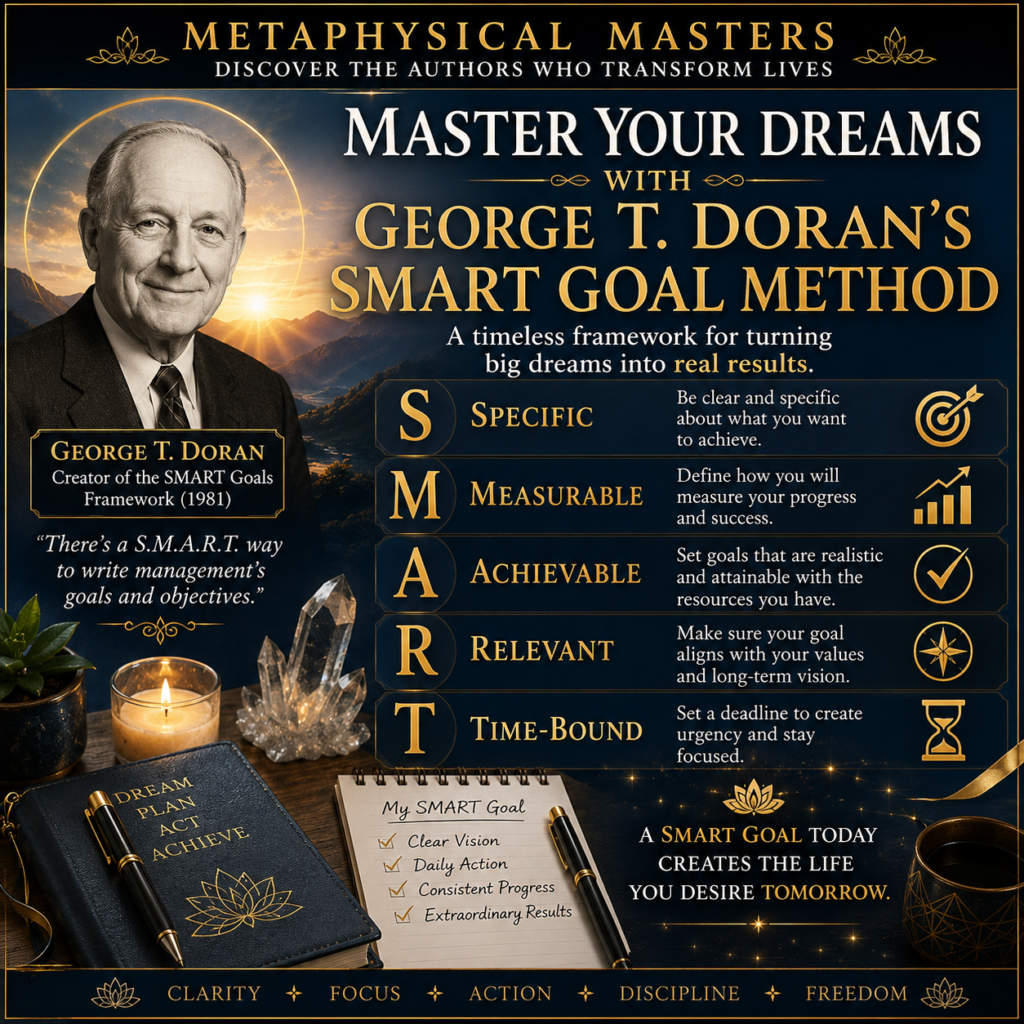
Turn Big Dreams into Real Achievements with a Timeless Goal-Setting Framework Every great accomplishment begins with a dream—but dreams alone don’t create results. The bridge between vision and achievement is a clear, actionable plan. In 1981, management consultant George T. Doran introduced a simple yet powerful framework in his article, “There’s a S.M.A.R.T. Way to Write Management’s Goals and Objectives.” More than four decades later, the SMART Goal Method remains one of the world’s most respected systems for setting meaningful, achievable goals. Whether you’re pursuing financial freedom, improved health, a thriving business, a successful YouTube channel, or greater personal fulfillment, the SMART framework can help you move from wishing to doing. Who Was George T. Doran? George T. Doran was a management consultant who recognized that many organizations—and individuals—set goals that were too vague to achieve. People often said things like:
“I want to be successful.”
“I want to lose weight.”
“I want to make more money.”
“I want to be happier.” While these are admirable aspirations, they lack the clarity needed to guide consistent action. To solve this problem, Doran introduced the SMART framework, encouraging people to create goals that are well-defined, measurable, and realistic. His idea has since become one of the most widely used goal-setting systems in business, education, coaching, athletics, and personal development.
What Does SMART Mean?
S — Specific A goal should clearly define exactly what you want to accomplish. Instead of saying: “I want to grow my business.” Try: “I want to increase my monthly revenue by offering two new digital products.” The clearer your destination, the easier it becomes to create the path. M — Measurable If you can’t measure your progress, it’s difficult to know whether you’re moving forward. Ask yourself:
How will I know I’ve succeeded?
What numbers will I track?
How often will I measure progress? Tracking your progress helps maintain motivation and highlights areas for improvement. A — Achievable Great goals should challenge you—but they should also remain realistic. Ask yourself:
Do I have the necessary skills?
If not, what do I need to learn?
What resources can help me? An achievable goal stretches your abilities without becoming discouraging. R — Relevant Every goal should align with your larger vision. Ask:
Does this support the life I want to create?
Is this worth my time and energy?
Does it move me closer to my long-term purpose? When your goals match your values, staying committed becomes much easier. T — Time-Bound Without a deadline, goals often remain unfinished. Setting a completion date creates urgency and encourages consistent action. For example: “I will complete my online course within 90 days.” A timeline transforms intentions into commitments. Putting SMART into Practice Imagine your dream is to write a book. A vague goal might be: “I want to write a book someday.” A SMART goal could become: “I will write a 200-page personal development book by December 31 by writing 500 words every weekday.” Notice how much easier it is to create a daily plan when the goal is clearly defined. Why SMART Goals Work The SMART framework reduces overwhelm by breaking large dreams into manageable steps. Instead of focusing only on the finish line, you focus on today’s next action. Small, consistent progress builds momentum. Momentum builds confidence. Confidence builds success. Combining SMART Goals with Mindset Many people use visualization, affirmations, gratitude, and meditation to cultivate a positive mindset. These practices can strengthen your focus and motivation, but they become even more effective when paired with a clear plan. Think of it this way:
Your vision inspires you.
SMART goals organize your path.
Daily action moves you forward.
Consistency produces results. Mindset and action work best together. Common Goal-Setting Mistakes Avoid these common pitfalls:
Setting goals that are too vague.
Trying to accomplish too many goals at once.
Never reviewing your progress.
Quitting after temporary setbacks.
Focusing only on outcomes instead of daily habits. Success is rarely about perfection. It’s about persistence. Create Your First SMART Goal Take a few minutes today and answer these questions:
What is one goal I truly want to accomplish?
Why does it matter to me?
How will I measure success?
Is it realistic?
Does it align with my bigger vision?
When will I complete it? Write your answers down. A written goal is far more likely to become a completed goal. Five SMART Goal Affirmations Repeat these daily:
I create clear goals that lead me toward success.
Every day I take meaningful action toward my dreams.
I remain focused, disciplined, and committed.
I celebrate every step of my progress.
My consistent actions create extraordinary results. George T. Doran’s SMART Goal Method has stood the test of time because it transforms uncertainty into clarity. Instead of hoping success will happen, you create a roadmap that guides your actions one step at a time. Dream boldly. Plan wisely. Act consistently. And remember: every extraordinary achievement begins with one clearly defined goal.
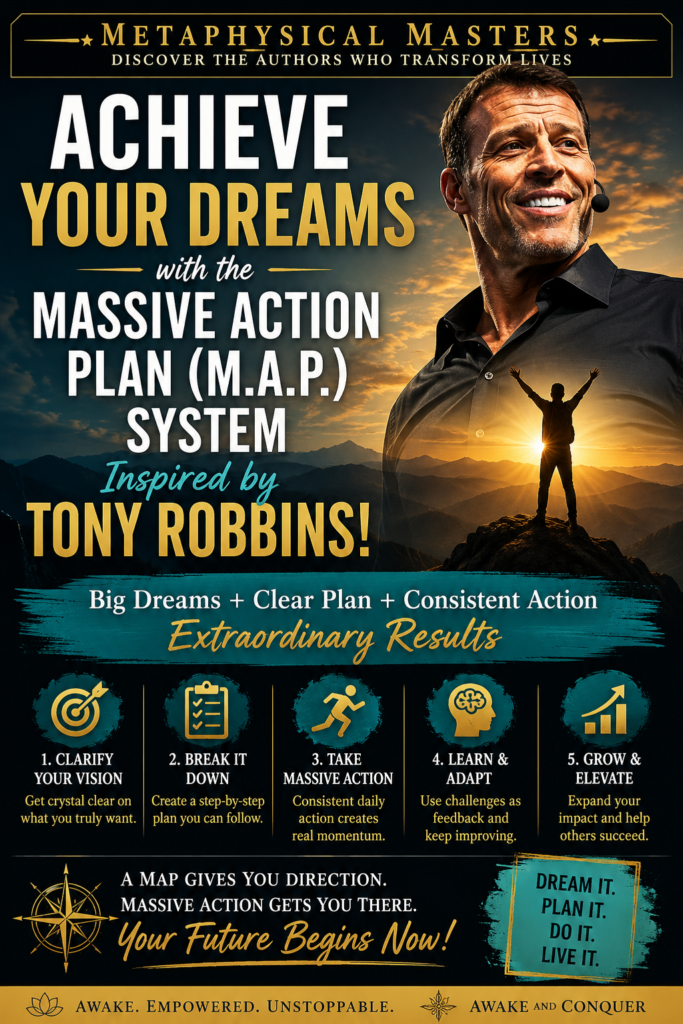
Have you ever noticed that many people have incredible dreams but never seem to make meaningful progress toward them? The difference often isn’t talent, intelligence, or luck. More often than not, it’s consistent, focused action. One of the most influential ideas popularized by Tony Robbins is the concept of taking massive action. While goals and positive thinking are important, lasting success comes from combining a compelling vision with disciplined execution. Whether your dream is building a successful business, improving your health, strengthening relationships, or creating greater financial freedom, the Massive Action Plan (M.A.P.) offers a practical framework for turning ideas into reality. Why Massive Action Matters Many people wait until they feel completely ready before taking the first step. Unfortunately, that perfect moment rarely arrives. Progress is created by movement. Every action produces feedback. Every lesson creates improvement. Every improvement builds momentum. Success is rarely the result of one giant leap. Instead, it grows from hundreds of intentional decisions made consistently over time. Step 1: Create a Crystal-Clear Vision Every meaningful achievement begins with clarity. Ask yourself:
What do I truly want?
Why is this goal important?
How will my life improve when I achieve it?
Who will benefit from my success? The more vivid your vision becomes, the easier it is to stay motivated when challenges appear. Visualization can be a powerful tool. Spend a few minutes each day imagining yourself already living the life you’re working toward. Picture the details. Experience the emotions. Let your vision become familiar. Step 2: Break the Dream into Small Actions Large goals can feel overwhelming. Instead of focusing only on the destination, identify the next small step. For example:
Write one page.
Record one video.
Read one chapter.
Make one phone call.
Learn one new skill.
Save one dollar more than yesterday. Small actions performed consistently create extraordinary results. Step 3: Take Massive Action Massive action doesn’t necessarily mean working around the clock. It means becoming consistently engaged in activities that move you closer to your goal. Successful people continually ask:
What can I do today?
What can I improve?
What can I learn?
What can I test?
Who can I serve? The more meaningful action you take, the more opportunities begin to appear. Step 4: Learn from Every Outcome Not every strategy works the first time. That isn’t failure. It’s information. Successful people view obstacles as feedback rather than defeat. Every challenge teaches something valuable about what to improve next. When one approach doesn’t work, adjust your strategy instead of abandoning your goal. Flexibility often becomes one of the greatest predictors of long-term success. Step 5: Build Daily Momentum Momentum is created through consistency. Simple daily habits often outperform occasional bursts of motivation. Consider creating a morning success routine that includes:
Reviewing your goals
Reading something inspiring
Visualizing success
Practicing gratitude
Exercising your body
Completing your highest-priority task first These habits help keep your focus aligned with your long-term vision. Combining Action with Manifestation Many people are drawn to visualization, affirmations, and the Law of Attraction. These practices can strengthen your mindset by helping you maintain focus, confidence, and optimism. However, meaningful results generally come from pairing that mindset with practical action. Think of it this way: Vision gives you direction. Action moves you forward. Persistence keeps you going. When your thoughts, emotions, and daily actions support the same goal, you create a powerful foundation for personal growth. Questions to Ask Yourself Today Take a few quiet moments and reflect:
What dream have I been postponing?
What’s one action I can take today?
What habit is holding me back?
What skill would help me move forward faster?
Who could mentor or encourage me on this journey? Honest answers often reveal the next step. Five Daily Affirmations Repeat these each morning:
I take meaningful action toward my goals every day.
I create opportunities through consistent effort.
I learn, adapt, and grow from every experience.
My discipline creates the future I desire.
Every small action moves me closer to my dreams. Dreams become reality when inspiration is followed by action. The Massive Action Plan reminds us that success isn’t built on motivation alone. It’s built through clarity, commitment, learning, and consistent progress. No matter where you begin, today’s actions shape tomorrow’s possibilities. Start with one step. Then take another. Over time, those small actions become extraordinary achievements.
Have you ever wondered why some people seem to attract abundance effortlessly while others feel like they’re constantly pushing against invisible barriers? You work hard, practice affirmations, visualize your goals, and stay positive—yet financial breakthroughs, meaningful relationships, or career opportunities still seem just out of reach.
According to Christie Marie Sheldon, the answer may lie beneath the surface. She teaches that many people unknowingly carry energetic patterns and subconscious beliefs that quietly influence their ability to receive abundance.
Her work encourages people to look beyond external circumstances and explore the inner patterns that may be affecting their lives. Whether you are new to manifestation or have been studying metaphysics for years, understanding these hidden abundance blocks can become a powerful step toward personal growth.
Who Is Christie Marie Sheldon?
Christie Marie Sheldon is an energy healer, author, and teacher best known for her work on abundance consciousness and energetic transformation. She has worked with thousands of individuals around the world, helping them identify subconscious patterns they believe may influence finances, relationships, health, career success, and overall well-being.
Rather than focusing only on positive thinking, Sheldon emphasizes that deeply rooted beliefs and emotional experiences can shape how people perceive opportunities and respond to them.
Her teachings encourage developing greater self-awareness, emotional healing, and intentional action alongside a positive mindset.
What Are Hidden Abundance Blocks?
Abundance blocks are recurring mental, emotional, or behavioral patterns that may interfere with achieving personal goals.
These blocks often develop gradually through life experiences, family beliefs, culture, education, or stressful events.
Examples may include:
Fear of success
Fear of failure
Feeling undeserving
Scarcity thinking
Negative self-talk
Perfectionism
Difficulty receiving help
Financial guilt
Fear of judgment
Limiting beliefs about money
While different teachers explain these ideas in different ways, the common theme is that increasing awareness of these patterns may help people make more intentional choices.
The 24 Hidden Abundance Blocks
Christie Marie Sheldon describes twenty-four common patterns that can influence how people relate to success, prosperity, and opportunity. Although the wording may vary across her teachings, they generally include areas such as:
1. Feeling Unworthy
Believing you don’t deserve happiness, wealth, or success.
2. Fear of Success
Concern that success may create unwanted responsibilities, criticism, or change.
3. Fear of Failure
Avoiding opportunities because of the possibility of disappointment.
4. Scarcity Mindset
Believing there is never enough money, opportunity, love, or time.
5. Limiting Family Beliefs
Adopting financial beliefs passed down through generations without questioning them.
6. Negative Self-Image
Allowing self-doubt to limit personal growth.
7. Difficulty Receiving
Feeling uncomfortable accepting compliments, gifts, assistance, or opportunities.
8. Emotional Attachment to Struggle
Believing success must always require hardship.
9. Fear of Being Seen
Avoiding visibility despite having valuable gifts to share.
10. Fear of Criticism
Allowing other people’s opinions to determine your choices.
11. Lack of Self-Trust
Second-guessing your own decisions.
12. Perfectionism
Waiting for everything to be perfect before taking action.
13. Resentment
Holding onto unresolved anger that affects emotional well-being.
14. Guilt Around Money
Feeling guilty about earning or having financial success.
15. Comparison
Measuring your progress against others instead of your own growth.
16. Victim Mentality
Believing outside circumstances completely control your future.
17. Fear of Change
Resisting new opportunities because they require stepping outside your comfort zone.
18. Overworking
Believing worth is determined only through constant effort.
19. Lack of Boundaries
Giving so much to others that little energy remains for yourself.
20. Impatience
Expecting immediate results and becoming discouraged too quickly.
21. Self-Sabotage
Creating habits that unintentionally interfere with long-term goals.
22. Living in the Past
Allowing previous disappointments to define future possibilities.
23. Resistance to Receiving Support
Trying to accomplish everything alone.
24. Forgetting Gratitude
Overlooking progress because attention remains fixed on what hasn’t happened yet.
Recognizing Your Own Patterns
Personal growth often begins with honest reflection.
Ask yourself:
What beliefs about money did I hear growing up?
What fears keep appearing whenever I pursue a big goal?
Do I feel comfortable receiving compliments or help?
Do I celebrate my progress?
Am I allowing past experiences to shape present decisions?
Awareness doesn’t instantly solve every challenge, but it can provide a starting point for intentional change.
Practical Ways to Work on Abundance Blocks
Many people find it helpful to combine mindset work with practical action.
Ideas include:
Journaling
Write honestly about recurring fears and limiting beliefs.
Meditation
Develop greater awareness of habitual thoughts and emotions.
Affirmations
Use positive statements to reinforce healthier perspectives over time.
Gratitude Practice
Regularly acknowledge progress, opportunities, and supportive relationships.
Goal Setting
Break large goals into manageable, consistent actions.
Learning
Read books, take courses, and explore ideas that encourage personal development while evaluating them thoughtfully.
Remember That Action Matters
Mindset practices can be valuable for many people, but they work best when paired with consistent action.
Learning new skills, improving financial habits, strengthening relationships, and taking practical steps toward your goals remain essential parts of creating meaningful change.
Rather than waiting for life to change on its own, use increased self-awareness as motivation to make thoughtful decisions each day.
Christie Marie Sheldon’s work encourages people to examine the hidden beliefs and emotional patterns that may influence how they approach abundance and opportunity.
Whether or not you agree with every aspect of her teachings, taking time to reflect on your own mindset can be a worthwhile exercise. Recognizing limiting beliefs, cultivating gratitude, building healthier habits, and taking purposeful action are practices that many people find beneficial for personal growth.
True abundance isn’t only measured by financial success. It can also include peace of mind, meaningful relationships, good health, purposeful work, and the confidence to pursue the life you envision.
As you continue your journey, remember that growth is often less about becoming someone new and more about removing the barriers that keep you from expressing your best self.
Key Takeaways
Hidden beliefs can influence how people approach opportunity and success.
Self-awareness is an important first step toward personal growth.
Gratitude, reflection, and intentional action can complement mindset work.
Consistent effort and practical decisions remain essential for achieving long-term goals.
Personal transformation is an ongoing journey rather than a single breakthrough.
Frequently Asked Questions
Does Christie Marie Sheldon guarantee financial success?
No. Her teachings focus on identifying mindset and behavioral patterns that she believes can affect how people approach abundance. There is no guarantee of specific financial outcomes.
Are abundance blocks scientifically proven?
Some related concepts, such as limiting beliefs, cognitive biases, and habitual thought patterns, are studied within psychology. However, energetic explanations for abundance blocks are spiritual or metaphysical perspectives rather than established scientific fact.
Can affirmations remove abundance blocks?
Affirmations may help reinforce positive thinking for some people, especially when combined with self-reflection and consistent action. They are generally most effective as part of a broader personal development practice.
Have you ever noticed how people say they’ve “woken up” spiritually? It’s a phrase that appears everywhere in conversations about personal growth, mindfulness, and consciousness. But is there a difference between being awake and simply waking up? While these words are often used interchangeably, they can describe different stages of a person’s journey toward greater awareness. Understanding that distinction can help you recognize where you are today and inspire you to keep growing. What Does It Mean to Wake Up? Waking up is the beginning. Just as we awaken from sleep each morning, a spiritual awakening often begins with a moment—or a series of moments—that causes us to see life differently. For some, this comes after a major life event:
The loss of a loved one
A serious illness
The end of a relationship
A career change
A personal crisis
An unexpected experience that changes their perspective Others awaken gradually through meditation, prayer, study, time in nature, or quiet reflection. The common thread is a growing realization that there may be more to life than routines, habits, and external success. Questions begin to arise:
Why am I here?
What is my purpose?
What truly brings lasting peace?
Am I living authentically?
What beliefs have I accepted without examining them? These questions often mark the first step toward greater awareness. What Does It Mean to Be Awake? If waking up is the doorway, being awake is the ongoing journey. Rather than a single event, many people view being awake as a continuing practice of living with greater awareness, compassion, and intention. Someone who considers themselves spiritually awake may strive to:
Notice thoughts without becoming controlled by them.
Respond thoughtfully instead of reacting impulsively.
Practice gratitude regularly.
Develop emotional resilience.
Seek wisdom instead of constant distraction.
Live according to their values.
Continue learning and growing. Being awake does not mean being perfect. It means remaining open to learning, self-reflection, and positive change. Signs You May Be Experiencing a Spiritual Awakening Everyone’s path is unique, but many people describe experiences such as:
Feeling drawn toward meditation or prayer.
Becoming more aware of recurring habits and thought patterns.
Wanting deeper meaning in life.
Feeling more connected to nature.
Developing greater empathy for others.
Letting go of relationships or habits that no longer support personal growth.
Becoming curious about different spiritual traditions or philosophies.
Feeling a stronger desire to live authentically. These experiences vary from person to person and can have many different explanations. They do not necessarily indicate a specific spiritual event, but they often accompany periods of personal reflection and growth. Awareness Is a Daily Practice Many people assume awakening is a destination. In reality, growth often happens one decision at a time. Each day offers opportunities to become more aware through simple practices like:
Spending a few minutes in quiet meditation.
Keeping a gratitude journal.
Reflecting on your emotions instead of avoiding them.
Practicing forgiveness.
Spending time outdoors.
Limiting distractions that leave you feeling overwhelmed.
Reading books that encourage thoughtful reflection.
Serving others with kindness and compassion. Small daily choices can gradually shape the way we experience ourselves and the world around us. Common Misconceptions About Spiritual Awakening There are many myths surrounding awakening. Myth 1: Awake People Never Struggle Personal growth does not eliminate life’s challenges. Difficult emotions and setbacks are part of being human. Myth 2: Awakening Happens Overnight While some people describe dramatic moments of insight, lasting transformation usually develops over time through consistent practice and reflection. Myth 3: There Is Only One Path People explore spirituality in many different ways. Meditation, prayer, contemplative traditions, service to others, time in nature, philosophy, and creative expression can all become meaningful parts of someone’s journey. Practices That Can Support Your Journey If you want to deepen your awareness, consider exploring practices such as:
Mindfulness meditation
Breathwork
Journaling
Prayer
Yoga
Acts of kindness and service
Time in nature
Creative expression through art, music, or writing
Reflecting on meaningful spiritual or philosophical teachings The most important practice is the one you can return to consistently. Daily Affirmations
I welcome greater awareness into my life.
I grow wiser with every experience.
I trust my inner guidance.
I choose peace over fear.
I remain open to learning and transformation.
I honor my journey one step at a time.
I live with intention, gratitude, and compassion. Your Journey Is Uniquely Yours No one can tell you exactly what awakening should look like. For some, it begins with a quiet realization. For others, it follows profound life changes. However it starts, the journey is deeply personal. Rather than striving to become someone else, awakening often invites us to become more fully ourselves—living with honesty, curiosity, and purpose. Whether you describe yourself as waking up or already awake, every moment offers another opportunity to learn, grow, and choose a path aligned with your values. Growth is not about reaching perfection. It is about continuing to move toward greater awareness, compassion, and wisdom. Continue Your Journey with Awake and Conquer If you’re exploring spirituality, mindfulness, manifestation, energy work, angelic teachings, or metaphysical traditions, you’re in the right place. At Awake and Conquer, we share practical guidance, thoughtful reflections, and spiritual tools designed to inspire personal growth while encouraging discernment and intentional living. Every day is another opportunity to awaken to your highest potential.
Have you ever felt like your life was on pause? Maybe you’ve been working hard but not seeing the results you expected. Perhaps you’ve outgrown old habits, relationships, or beliefs, yet the next chapter hasn’t fully revealed itself. It can feel uncomfortable—even discouraging. But what if that uncomfortable season isn’t holding you back? What if it’s preparing you for one of the greatest transformations of your life? Just as a caterpillar enters a chrysalis before becoming a butterfly, every meaningful transformation begins with a period of change. That process is called metamorphosis, and it offers one of the most powerful lessons for personal growth.
What Is Metamorphosis?
In nature, metamorphosis is the biological process through which an organism undergoes a dramatic transformation. A butterfly’s life unfolds in four stages:
Egg
Caterpillar (Larva)
Chrysalis (Pupa)
Butterfly (Adult) The chrysalis is often the most misunderstood stage. From the outside, it appears that nothing is happening. Inside, however, everything is changing. The caterpillar doesn’t simply grow wings—it is completely reorganized. Old structures break down, and new ones form. When the butterfly finally emerges, it is an entirely new creation, capable of something the caterpillar could never do: fly. That image is a powerful reminder that our greatest breakthroughs often begin in seasons that appear quiet, slow, or uncertain. Your Personal Chrysalis Every person experiences a chrysalis season. It may come after:
Losing a job
Ending a relationship
Beginning retirement
Recovering from illness
Starting a business
Changing careers
Deep spiritual searching
Personal setbacks
Major life transitions These seasons can feel lonely because outward progress seems to stop. Yet internally, your mindset, confidence, wisdom, and character are developing. Growth is often invisible before it becomes visible.
Why Transformation Feels Uncomfortable
The brain naturally prefers familiarity. Even unhealthy habits can feel comfortable simply because they are familiar. Real growth requires leaving behind old identities, routines, and beliefs. During transformation you may experience:
Self-doubt
Fear of failure
Uncertainty
Emotional ups and downs
Feeling “stuck”
Questioning your direction These experiences do not necessarily mean you’re moving backward. Sometimes they are signs that you’re growing beyond your previous limitations. The Chrysalis Breakthrough A breakthrough rarely happens overnight. It is built through small, consistent actions repeated day after day. Just as the butterfly develops strength before leaving the chrysalis, we build resilience through daily choices. Your breakthrough often begins when you:
Stop waiting for perfect conditions.
Replace limiting beliefs with empowering ones.
Learn new skills.
Take small, consistent action.
Practice patience.
Believe in your future before you can see it. Transformation is less about becoming someone else and more about becoming the fullest expression of who you already have the potential to be. Five Ways to Accelerate Your Transformation
Change Your Self-Talk The stories you repeat become the foundation of your future. Replace: “I can’t.” With: “I’m learning.” Instead of saying: “I’m not ready.” Say: “I’m becoming ready every day.” Your mind believes what you consistently tell it.
Embrace Discomfort Growth rarely happens inside your comfort zone. Every challenge teaches resilience. Every setback teaches wisdom. Every obstacle develops strength. Rather than asking, “Why is this happening to me?” try asking, “What is this teaching me?”
Feed Your Mind Just as your body requires healthy food, your mind needs healthy input. Read inspiring books. Listen to educational podcasts. Study successful people. Surround yourself with uplifting conversations. Your environment shapes your thinking.
Practice Daily Reflection Take a few minutes each evening to ask yourself:
What did I learn today?
What challenged me?
What am I grateful for?
What small step can I take tomorrow? Small reflections create powerful awareness over time.
Celebrate Small Wins Many people only celebrate major accomplishments. But lasting confidence grows by recognizing consistent progress. Every positive habit… Every difficult conversation… Every fear you face… Every lesson you learn… Is evidence that transformation is already taking place. The Spiritual Meaning of the Butterfly Across many cultures, the butterfly represents:
Renewal
Hope
Freedom
Resurrection
Personal evolution
New beginnings
Spiritual awakening
Higher consciousness Its journey reminds us that endings often become beginnings. The version of yourself you are leaving behind makes room for the person you are becoming. Your Potential Has Always Been There A caterpillar already carries the blueprint of the butterfly. Likewise, your potential has always existed within you. It isn’t something you must create. It is something you uncover through growth, courage, learning, and persistence. Every challenge you overcome strengthens your character. Every lesson you embrace expands your perspective. Every day you refuse to quit brings you closer to your own breakthrough. Daily Transformation Affirmations Repeat these affirmations each morning:
I embrace positive change with confidence.
Every day I grow stronger and wiser.
My challenges are transforming me into my highest self.
I release old limitations and welcome new possibilities.
My potential is limitless.
I trust the timing of my life.
I become better with every experience.
I attract opportunities that support my growth.
I choose courage over fear.
My breakthrough is unfolding one step at a time. Every butterfly once appeared ordinary. Every success story once looked impossible. Every breakthrough began with someone who chose not to give up. If you feel like you’re in your own chrysalis season, remember that transformation often happens quietly before the world ever notices it. Stay patient. Stay consistent. Keep learning. Keep growing. One day you’ll look back and realize that what felt like waiting was actually becoming. Your wings have been forming all along. And when the time is right, you’ll rise higher than you ever imagined. If this article inspired you, visit Awake and Conquer for more resources on spiritual growth, manifestation, mindset, meditation, energy healing, affirmations, and personal transformation. Continue your journey toward becoming the highest version of yourself—one breakthrough at a time.
What is Spirituality? Spirituality is a deeply personal and transformative journey—one that transcends religious structures and rigid doctrines. It is the pursuit of a connection with something greater than oneself, whether that be the universe, divine consciousness, or the higher self. Unlike organized religion, spirituality is fluid and individualized, allowing each person to explore their own beliefs, practices, and experiences. At its core, it is about seeking meaning, inner peace, and a profound understanding of existence.
The Importance of Spirituality In today’s fast-paced and often chaotic world, spirituality serves as an anchor—a refuge from stress, uncertainty, and external pressures. It offers a path to inner harmony, emotional resilience, and a deeper awareness of life’s interconnectedness. Spiritual practices such as meditation, mindfulness, breathwork, and energy healing can cultivate a heightened sense of presence, intuition, and inner strength.
Beyond personal growth, spirituality also nurtures compassion, gratitude, and a sense of unity with all living beings. It opens the heart to divine wisdom, fosters self-discovery, and empowers individuals to live authentically, guided by their highest truth.
Ways to Cultivate Spirituality There is no single path to spiritual awakening—each journey is unique. Here are some powerful ways to deepen your spiritual connection:
Meditation & Mindfulness – Quiet the mind, expand awareness, and tune into the present moment. Sacred Rituals & Prayer – Engage in spiritual practices that align with your beliefs, such as chanting, affirmations, or lighting candles. Energy Healing & Reiki – Balance and cleanse your energetic field to promote spiritual and emotional well-being. Journaling & Self-Reflection – Explore your inner world by writing down thoughts, intentions, and experiences. Nature Connection – Spend time outdoors to absorb the healing energy of the Earth and align with its rhythms. Sacred Texts & Wisdom Teachings – Learn from ancient spiritual traditions, esoteric knowledge, and mystical philosophies. Manifestation & Visualization – Harness the power of intention and the law of attraction to create your highest reality.
True spirituality is about embracing the journey—being open to transformation, seeking higher wisdom, and living in alignment with your soul’s purpose. Whether through silent contemplation or cosmic exploration, the path is yours to walk, and the universe is waiting to guide you.