Tag: #protectyourpeace

  • Maa Mahagauri: Peace & Renewal | Navratri Day 8

    Maa Mahagauri: Peace & Renewal | Navratri Day 8

    You deserve moments of peace—even when there is still more to do.

    On the eighth day of Navratri, devotees honor Maa Mahagauri, the eighth of the nine forms of Goddess Durga. Associated with purity and serenity, she offers an opportunity to learn about Hindu devotion while reflecting on renewal and compassion.

    At Awake and Conquer, today’s reflection invites you to release an unnecessary demand, make room for rest, and approach yourself with greater kindness.

    Who Is Maa Mahagauri?

    Maa Mahagauri is a form of Goddess Parvati honored within the Navadurga tradition. Her name is commonly translated as “the greatly radiant” or “the exceedingly fair,” referring to her traditional luminous appearance.

    Accounts of her transformation vary. A widely told story describes Parvati’s appearance being restored to radiance after her intense spiritual austerities.

    These descriptions belong to her sacred narrative. For our reflection, purity concerns sincerity and intention; it is not a measure of anyone’s skin color, appearance, or worth.

    Her Traditional Appearance

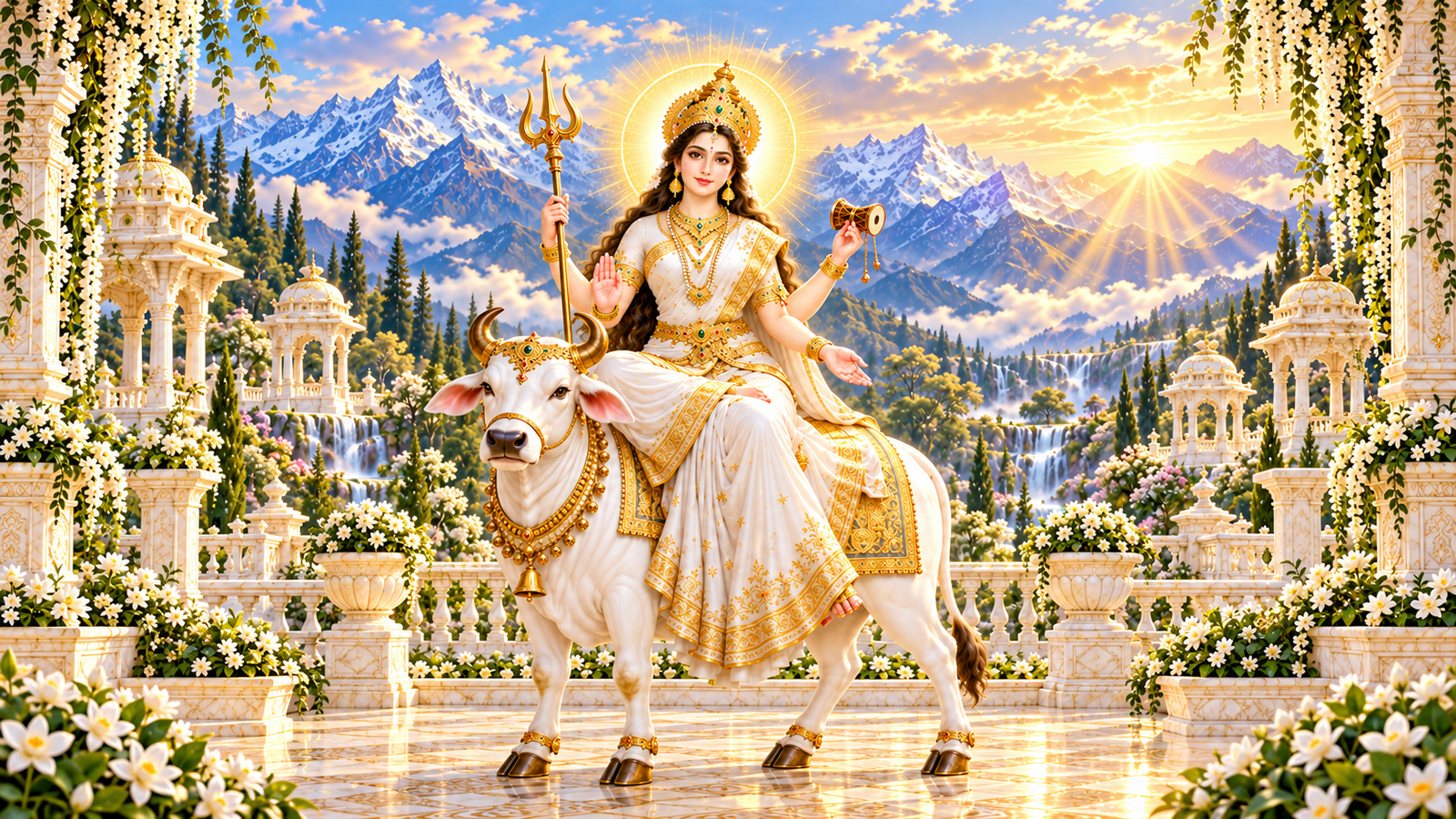
    Maa Mahagauri is traditionally depicted wearing white and riding a white bull. She has four arms.

    Her hands hold a trident and a damaru, a small hourglass-shaped drum. Her other hands offer gestures of protection and blessing.

    Her composed expression and white garments give her imagery a serene quality. She follows Maa Kalaratri in the Navadurga sequence and precedes Maa Siddhidatri.

    An Invitation to Renewal

    For our everyday reflection, renewal can begin with a small adjustment.

    Perhaps you need to reconsider a commitment, clear a little space in your schedule, or return to something that helps you feel settled.

    Ask yourself:

    What would give me a little more room to breathe today?

    Allow the answer to be practical. You might postpone a nonessential task, spend a few minutes outdoors, or ask someone to share a responsibility.

    Choose something that responds to what you actually need.

    Release an Unnecessary Demand

    Some responsibilities deserve your attention. Others may come from expectations you have never paused to question.

    Notice the thoughts that begin with “I should.”

    Do you need to do everything today? Does every task require the same level of effort? Could you accept help or choose a simpler approach?

    Releasing an unnecessary demand can leave more attention for the commitments that matter most.

    Speak to Yourself with Kindness

    Pay attention to the words you use when you are tired or disappointed.

    Instead of “I should have done more,” try:

    “I can recognize what I completed and decide what comes next.”

    Instead of “I cannot get this right,” try:

    “I am learning, and I can adjust my approach.”

    Kindness can remain honest. You can acknowledge a mistake, make a repair, and keep your dignity.

    A Quiet Peace and Renewal Reflection

    Sit comfortably and let your shoulders relax. Take one slow, comfortable breath.

    Ask yourself:

    What can wait?

    What would support my well-being today?

    What kinder thought can I practice?

    Write down one answer. Then choose one gentle action you can complete.

    This is an original reflection inspired by serenity and renewal, rather than a traditional Navratri worship ritual.

    Five Affirmations for Peace and Self-Compassion

    These original affirmations can accompany your reflection:

    I welcome moments of peace.

    I treat myself with compassion.

    I make room for rest and renewal.

    I release expectations that no longer serve my priorities.

    I approach my next step with a clearer intention.

    Choose one affirmation and connect it with an action. Let “I make room for rest” become a few minutes you deliberately set aside.

    Honoring Her Sacred Roots

    Maa Mahagauri belongs to a living Hindu devotional tradition. Her significance extends beyond a general message about relaxation or personal renewal.

    Learning her name, recognizing her traditional imagery, and understanding her place among the nine forms of Durga helps us approach her story respectfully.

    Our personal reflections accompany that learning while remaining distinct from traditional worship.

    Your Day 8 Message

    Give yourself permission to notice what you need.

    A quieter moment, a clearer intention, or a kinder response to yourself can become the beginning of a more thoughtful day.

    Write “I welcome peace” in the comments and share one gentle action you are choosing.

    Watch Maa Mahagauri: Peace & Renewal on Awake and Conquer, and continue our Navratri journey with Maa Siddhidatri, the ninth form of Durga.

    Explore our Hindu Goddesses: Divine Feminine Wisdom & Sacred Stories playlist, and visit awakeandconquer.com for more spiritual inspiration.
  • Maa Chandraghanta: Courage & Protection | Navratri Day 3

    Maa Chandraghanta: Courage & Protection | Navratri Day 3

    You can be gentle and still stand strong. You can care deeply for others while honoring your own boundaries.

    On the third day of Navratri, devotees honor Maa Chandraghanta, the third of the nine forms of Goddess Durga. Revered for courage and protection, she brings together a peaceful presence and a powerful readiness to confront harm.

    Her sacred image invites us to learn about this Hindu devotional tradition and reflect on how we practice courage in everyday life.

    Who Is Maa Chandraghanta?

    In Hindu tradition, Maa Chandraghanta is associated with Goddess Parvati after her marriage to Lord Shiva.

    Her name refers to the half-moon adorning her forehead, described as resembling a bell. “Chandra” means moon, while “ghanta” means bell.

    Devotees worship her during Navratri as a protective form of the Divine Mother. Her strength and compassion are central to her sacred identity.

    Her Traditional Appearance

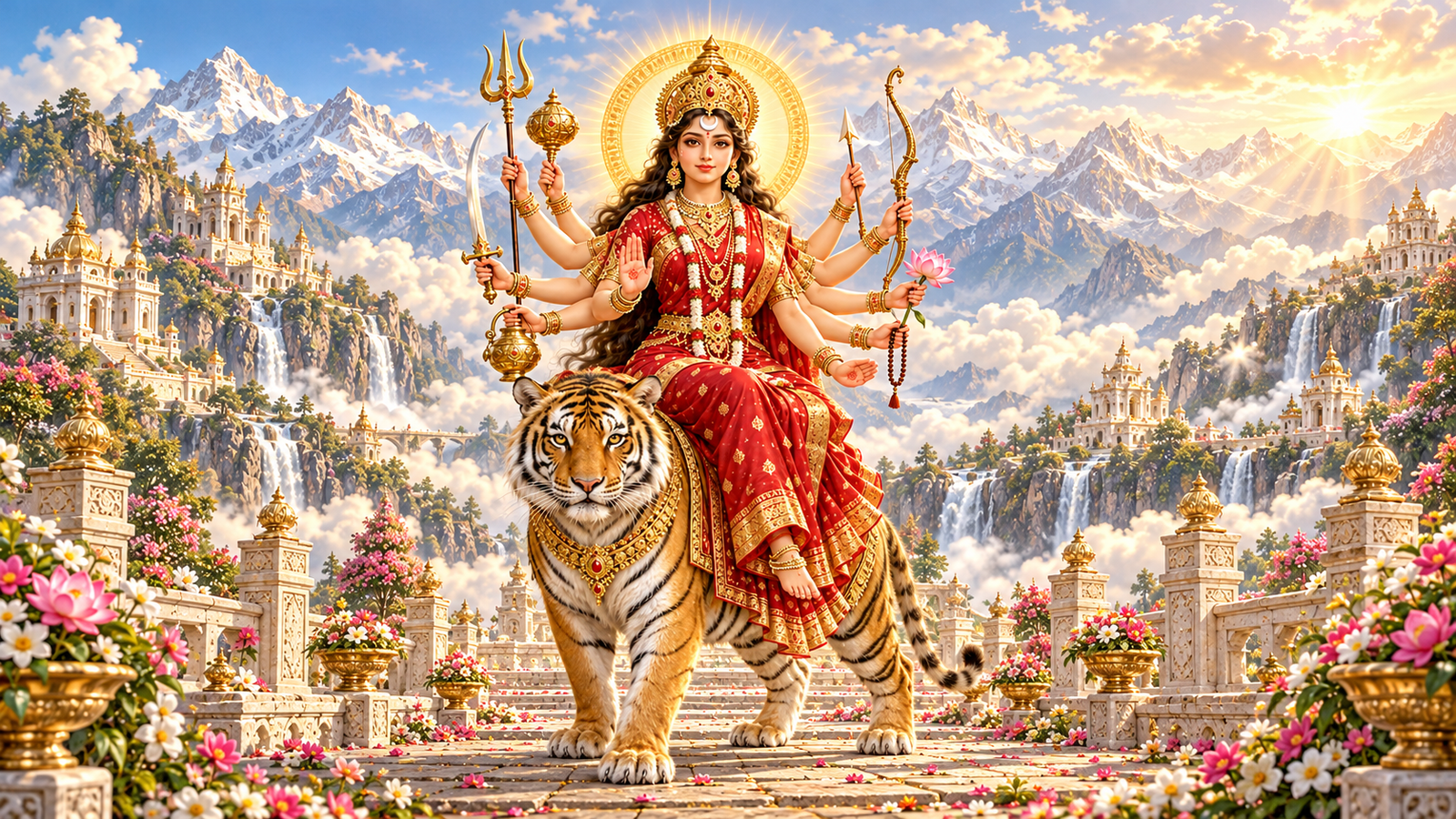
    Maa Chandraghanta is commonly depicted riding a tiger, although some traditions and artworks show a lion.

    She has ten arms bearing sacred objects and weapons, including a trident, sword, mace, bow, and arrow. Other hands hold devotional objects or offer gestures of blessing and reassurance.

    Her appearance conveys readiness and resolve, while her expression remains composed. This combination reflects her protective character: fierce toward harmful forces and compassionate toward her devotees.

    Courage in Everyday Life

    For our reflection at Awake and Conquer, courage can begin with a practical choice.

    It might mean speaking honestly, asking for support, keeping a commitment, or addressing something you have avoided.

    You do not have to wait until every trace of nervousness disappears. Consider what matters, identify the support you need, and choose a thoughtful next step.

    Ask yourself: Where would a little more courage help me today?

    Let your answer be specific enough to act on.

    Protection and Healthy Boundaries

    Maa Chandraghanta’s protection belongs to a sacred devotional context. As an everyday reflection inspired by this theme, we can also consider how we care for our well-being.

    Healthy boundaries may include:

    • Being clear about what you can realistically take on.
    • Giving yourself time before agreeing to a request.
    • Speaking respectfully when something makes you uncomfortable.
    • Seeking help when a situation exceeds what you can manage alone.

    A boundary works best when it is clear and supported by action. You might say, “I can help tomorrow,” or “I need some time to think before I answer.”

    Protecting your peace can include staying connected to people who treat you with care.

    A Quiet Courage Reflection

    Sit comfortably and let your shoulders relax. Take one slow, comfortable breath.

    Ask yourself:

    Where do I need to speak with greater clarity?

    What boundary would support my well-being?

    What courageous action can I take today?

    Write down one answer. Then choose a manageable step: prepare what you want to say, ask a trusted person for support, or make time for a conversation.

    This is an original reflection inspired by courage and protection, rather than a traditional Navratri worship ritual.

    Five Affirmations for Courage and Clarity

    These original affirmations can accompany your reflection:

    I honor my courage.

    My needs deserve thoughtful attention.

    I communicate my boundaries with clarity and respect.

    I welcome support from people I trust.

    I move forward with strength and compassion.

    Choose one affirmation and connect it with a meaningful action.

    Your Day 3 Message

    Maa Chandraghanta’s sacred image reminds us that strength and compassion can exist together.

    As we honor her place in Hindu tradition, we can reflect on our own choices with care. Where do you need to stand firm? Where could you respond with greater compassion? What support would help you move forward?

    Write “I choose courage” in the comments and share one thoughtful step you are taking today.

    Watch Maa Chandraghanta: Courage & Protection on Awake and Conquer, and explore our Hindu Goddesses: Divine Feminine Wisdom & Sacred Stories playlist.

    Visit awakeandconquer.com for more spiritual inspiration and reflections.