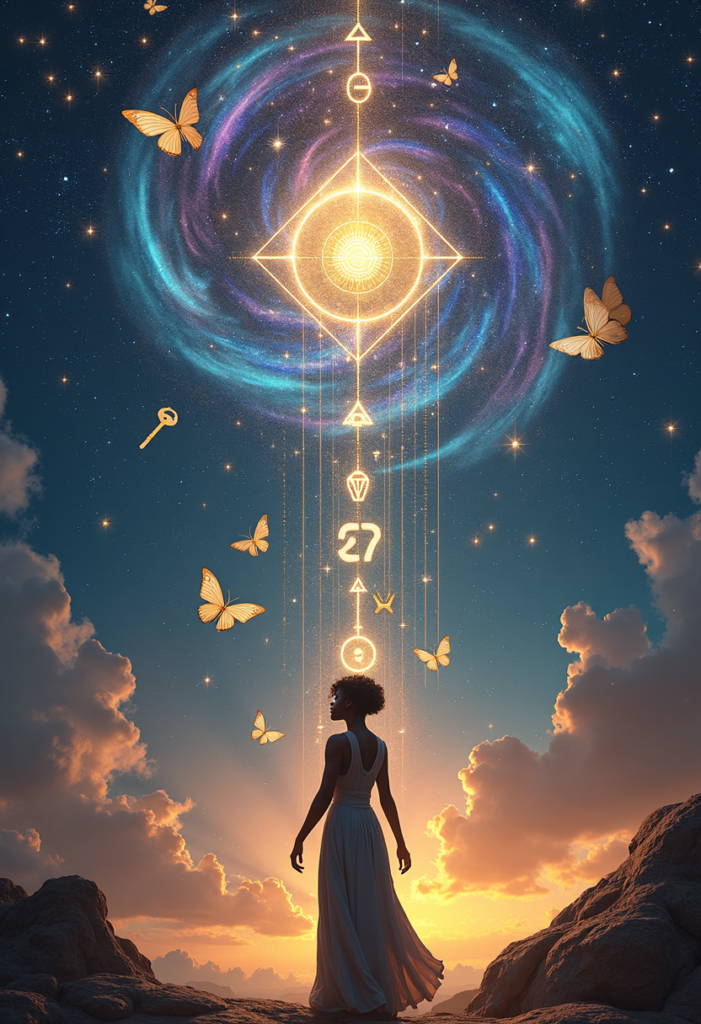
“Coincidences are God’s way of remaining anonymous.” While this quote is often attributed to others rather than Carl Jung himself, it captures a feeling many people experience: moments in life that seem too meaningful to be mere chance.
Have you ever looked at the clock and seen 11:11 repeatedly? Thought about someone moments before they called? Met a stranger who completely changed the direction of your life? Or noticed the same symbol, animal, or message appearing again and again?
Many people dismiss these moments as coincidence. But Swiss psychiatrist Carl Jung proposed a fascinating possibility: perhaps some coincidences carry meaning.
He called this phenomenon synchronicity.
For nearly a century, Jung’s theory has influenced psychology, spirituality, philosophy, dream analysis, and modern manifestation teachings. Today, countless people use the idea of synchronicity as a way to reflect on life’s unexpected connections and deepen their understanding of themselves.
Let’s explore what synchronicity really means—and why so many people believe nothing in life is entirely random.
Who Was Carl Jung?
Carl Jung (1875–1961) was one of the most influential psychologists in modern history.
Originally a colleague of Sigmund Freud, Jung eventually developed his own school of thought known as Analytical Psychology.
His work introduced concepts that remain influential today, including:
- The Collective Unconscious
- Archetypes
- The Shadow
- Individuation
- Dream Symbolism
- Psychological Types
- Synchronicity
Unlike many psychologists of his era, Jung believed that symbols, myths, dreams, and spiritual experiences could provide valuable insight into human development.
What Is Synchronicity?
Jung defined synchronicity as:
A meaningful coincidence between an inner psychological state and an external event that lacks a direct causal relationship.
In simple terms:
Two events occur that are not connected by cause and effect, yet they feel deeply related in meaning.
For example:
- You think about an old friend, and they contact you unexpectedly.
- You repeatedly encounter the same number sequence during a major life transition.
- You begin researching a topic, and books, conversations, and opportunities related to it seem to appear everywhere.
- A chance meeting leads to a career, friendship, or relationship that changes your life.
According to Jung, these experiences invite reflection rather than immediate conclusions.
Synchronicity Is Different From Chance
Random coincidence happens all the time.
Synchronicity, according to Jung, is different because it carries personal significance.
The event resonates emotionally.
It feels as though something important is trying to capture your attention.
Whether interpreted psychologically, spiritually, or symbolically, synchronicities often inspire people to pause and ask:
- What does this mean to me?
- Why am I noticing this now?
- What is happening in my life?
The meaning comes from the individual’s experience, not from a universal rule.
The Collective Unconscious
To understand synchronicity, it’s helpful to know another of Jung’s most influential ideas:
The Collective Unconscious.
Jung proposed that beneath our personal unconscious lies a deeper layer of the psyche shared by all humanity.
Within this collective unconscious exist universal patterns called archetypes.
These include timeless figures and themes such as:
- The Wise Old Sage
- The Hero
- The Mother
- The Shadow
- The Child
- The Trickster
Across cultures and throughout history, these archetypes appear in myths, dreams, religions, and stories.
Jung believed synchronicities often arise when these deeper psychological patterns become active in our lives.
Common Examples of Synchronicity
Many people describe experiences such as:
Repeating Numbers
Seeing sequences like:
- 111
- 222
- 333
- 444
- 777
- 1111
While Jung did not specifically teach “angel numbers,” many modern spiritual traditions interpret repeated number patterns as invitations to reflect on one’s current circumstances.
Meaningful Encounters
Meeting exactly the right person at exactly the right moment.
A conversation changes everything.
Symbolic Animals
Butterflies.
Owls.
Ravens.
Dragonflies.
Many people assign symbolic meaning to recurring animals, though interpretations vary widely by culture and tradition.
Dreams
Dreams sometimes seem to mirror events that later occur or highlight issues we later encounter in waking life. Jung saw dreams as a rich source of symbolic insight.
Books That Find You
Have you ever noticed that the “right” book seems to appear just when you need it?
Many people experience this as a meaningful coincidence.
Can Synchronicity Support Manifestation?
Many modern manifestation teachers connect synchronicity with the process of pursuing meaningful goals.
As people clarify their intentions and become more attentive, they may notice opportunities, patterns, and connections that previously went overlooked.
Psychology also offers an explanation: when we focus on something important, our attention naturally becomes more sensitive to related information. This selective attention can make meaningful connections feel more visible.
Whether viewed psychologically, spiritually, or both, synchronicity can encourage openness, curiosity, and intentional action.
How to Become More Aware of Synchronicities
You don’t need to force synchronicity.
Instead, cultivate awareness.
Keep a Journal
Write down unusual coincidences, dreams, repeating symbols, or unexpected encounters.
Over time, patterns may emerge.
Practice Mindfulness
Slowing down can make it easier to notice experiences that might otherwise be overlooked.
Reflect Before Reacting
Rather than assuming every coincidence has a hidden message, ask thoughtful questions about what the experience means to you.
Explore Your Dreams
Dream journaling was one of Jung’s favorite tools for self-discovery.
Stay Curious
Approach unusual experiences with openness rather than certainty.
Curiosity leaves room for both wonder and critical thinking.
Synchronicity and Spirituality
Although Jung approached synchronicity through psychology, many spiritual traditions have embraced the concept.
People may interpret meaningful coincidences as:
- Moments of divine timing
- Spiritual encouragement
- Intuitive guidance
- Symbolic reminders
- Invitations to personal growth
These interpretations vary according to individual beliefs and traditions.
A Balanced Perspective
Synchronicity can be a meaningful framework for reflecting on life, but it’s also important not to assume that every event carries hidden significance.
Human beings are naturally skilled at recognizing patterns, and sometimes coincidences are simply coincidences.
Jung himself encouraged careful reflection rather than unquestioning acceptance.
The value of synchronicity lies less in proving supernatural causes and more in the insight these experiences may inspire.
Carl Jung’s theory of synchronicity continues to inspire psychologists, spiritual seekers, writers, and curious minds around the world.
Whether you interpret meaningful coincidences through the lens of psychology, spirituality, or personal reflection, they can encourage you to slow down, pay attention, and consider how your inner life connects with the world around you.
Perhaps the greatest gift of synchronicity is not providing definitive answers, but inviting us to ask deeper questions about purpose, meaning, and the unfolding journey of our lives.
The next time life surprises you with an unexpected connection, pause for a moment. Rather than asking, “Was this random?” you might instead ask, “What can I learn from this experience?”
That simple shift in perspective may open the door to greater self-awareness and a richer appreciation of life’s mysteries.
Key Takeaways
- Carl Jung introduced the concept of synchronicity to describe meaningful coincidences that are not linked by direct cause and effect.
- Synchronicity emphasizes personal meaning, not prediction or certainty.
- Jung connected synchronicity with the collective unconscious and universal archetypes.
- Many people use synchronicity as a tool for self-reflection, mindfulness, and personal growth.
- Staying curious and grounded helps balance wonder with critical thinking.
Frequently Asked Questions
Did Carl Jung believe in angel numbers?
No. Jung did not teach the modern concept of angel numbers. However, his work on symbols, archetypes, and synchronicity has influenced many contemporary spiritual interpretations of repeating numbers.
Is synchronicity scientifically proven?
Synchronicity is a psychological and philosophical concept rather than a scientifically established law. While psychology recognizes pattern recognition and selective attention, Jung’s broader interpretation remains a topic of discussion and personal belief.
Can everyone experience synchronicity?
Many people report meaningful coincidences throughout their lives. Whether these experiences are viewed as psychological, spiritual, or simply memorable coincidences depends on individual perspective.